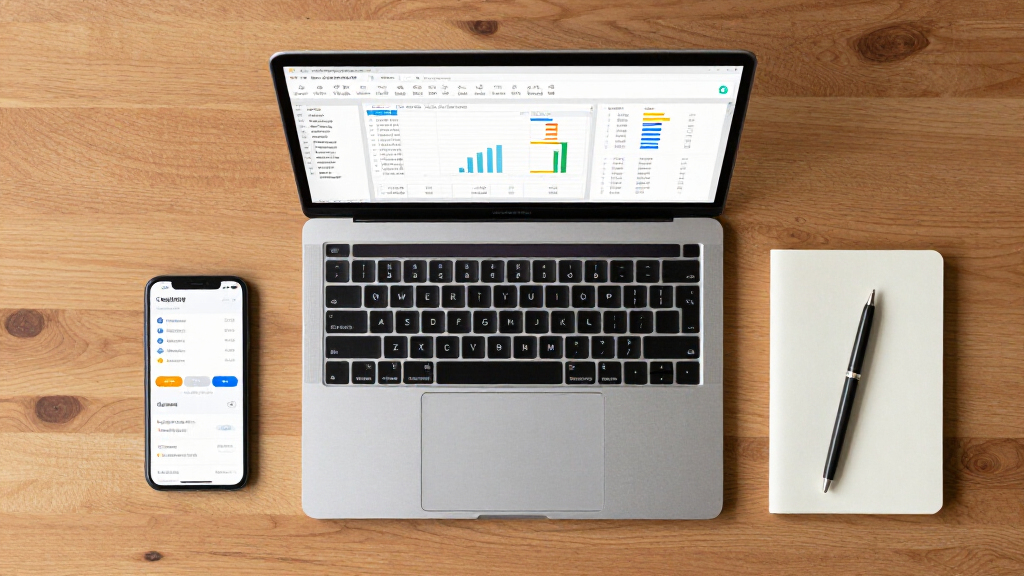

📊 Full opportunity report: The Future Of Spreadsheets: Using AI And Sheets Canvas For Dynamic Data on ThorstenMeyerAI.com — validation score, market gap, and execution plan.

Get the latest gadgets delivered free — and shop member deals
- Fast, free delivery on millions of items
- Access to Prime Big Deal Days deals on October 6–7
- Prime Video, Amazon Music and more included
TL;DR
Google has announced Sheets Canvas, a Gemini-powered feature that transforms spreadsheet data into interactive visual interfaces via natural language prompts. Available to select subscribers, it aims to simplify dashboard creation and data presentation within Sheets.
Google has announced the launch of Sheets Canvas, a new Gemini-powered feature within Google Sheets that allows users to create interactive dashboards and visual tools from spreadsheet data using natural-language prompts. The feature is currently rolling out globally to select Google AI Pro and Ultra subscribers, with broader access expected in the coming weeks. This development marks a significant step toward making data visualization and interface creation more accessible within standard spreadsheet workflows.
Sheets Canvas operates as a read-write visual layer over existing spreadsheet data, enabling users to generate interactive interfaces such as trackers, dashboards, and planning tools without writing formulas or code. This development marks a significant step toward making data visualization and interface creation more accessible within standard spreadsheet workflows, as detailed in the original analysis. Users can describe their desired interface in natural language, and Gemini generates the corresponding visual layout within a dedicated tab. The generated canvas remains linked to the source data, with real-time synchronization of edits made either in the canvas or directly in the spreadsheet.
Access is limited initially to English-language users on specific subscription plans, including Google AI Pro and Ultra, with rollout starting August 13 for Workspace customers on Business, Enterprise Standard, and Plus plans, as well as Google AI Pro for Education subscribers. Google emphasizes that the feature aims to lower technical barriers for creating purpose-built data interfaces, especially for users managing large or complex datasets in Sheets. For more on the future of enterprise AI ecosystems, see this analysis.
Potential Impact on Data Presentation and Collaboration
The introduction of Sheets Canvas could significantly simplify the process of creating interactive data visualizations directly within spreadsheets, reducing reliance on manual dashboard building or external tools. This may enhance collaboration by making data more accessible and understandable for non-technical users, such as students, households, and small businesses. However, the actual performance, especially with complex datasets or formulas, remains to be fully tested in real-world scenarios.
interactive data dashboard software
As an affiliate, we earn on qualifying purchases.
As an affiliate, we earn on qualifying purchases.
Evolution of AI Integration in Google Workspace
Google has been progressively integrating AI features across its Workspace suite, including assistance with generating and interpreting spreadsheet content. The launch of Sheets Canvas builds on this trend, extending AI capabilities beyond cell-level suggestions to creating entire visual interfaces. Previous updates have focused on automating data analysis and content generation, making this a notable step toward more interactive and user-friendly spreadsheet experiences.
“Sheets Canvas transforms how users interact with their data by enabling the creation of interactive dashboards through simple prompts.”
— Google spokesperson
AI-powered spreadsheet visualization tools
As an affiliate, we earn on qualifying purchases.
As an affiliate, we earn on qualifying purchases.
Performance, Limits, and Broader Support Still Unclear
Details about the technical limits of Sheets Canvas, such as dataset size, handling of complex formulas, and performance speed, have not been disclosed. It is also unclear how well the feature functions with shared or permission-restricted sheets, or how it performs across different languages beyond English. The reliability of real-time synchronization and the amount of manual adjustment needed for complex requests remain unconfirmed.
As an affiliate, we earn on qualifying purchases.
Next Steps: Broader Rollout and Performance Evaluation
Google is expected to expand access to Sheets Canvas gradually, gather user feedback, and refine its capabilities. Future updates may include support for additional languages, clearer usage limits, and improved handling of complex data structures. Monitoring user experiences and technical performance will be key in assessing its long-term utility and integration within the Google Workspace ecosystem.
data visualization tools for Google Sheets
As an affiliate, we earn on qualifying purchases.
As an affiliate, we earn on qualifying purchases.
Key Questions
What is Sheets Canvas?
Sheets Canvas is an AI-powered feature in Google Sheets that enables users to create interactive dashboards and visual tools from spreadsheet data using natural language prompts, without needing to write formulas or code.
Do I need coding skills to use Sheets Canvas?
No, Google states that no coding or formulas are required. Users simply describe their desired interface, and Gemini generates the visual layout automatically.
Will changes in the canvas update the spreadsheet?
Yes, Google claims that the canvas and spreadsheet are linked, with real-time synchronization of edits made in either place.
When will Sheets Canvas be available in other languages?
Currently, access is limited to English. Google has not announced a timeline for support in additional languages.
Are there limitations on dataset size or complexity?
Google has not provided specific technical limits or performance benchmarks, so the effectiveness with large or complex datasets remains to be seen.
Source: ThorstenMeyerAI.com
Fall Picks
fall essentials
As an affiliate, we earn on qualifying purchases.