
TL;DR
Toshiba has announced a Quantum-Safe Networking Platform that combines post-quantum cryptography, quantum key distribution and quantum random number generation under centralized network control. The company says it can integrate with existing infrastructure and use optical switching to connect multiple remote sites, but pricing, availability and independent performance data were not provided in the announcement.
Toshiba Corporation has launched its Quantum-Safe Networking (QSN) Platform, a system combining post-quantum cryptography, quantum key distribution and quantum random number generation with centralized network control and key management. The company says the platform is designed to protect selected connections across existing infrastructure and expand coverage without requiring organizations to rebuild their networks.
Toshiba describes QSN as an interoperable architecture for network operators, data center providers, enterprises and public-sector organizations. It is intended to support deployments ranging from one dedicated connection to metro, hub-and-spoke, ring, mesh and long-distance networks. Organizations can select protections according to their use cases and expand deployments as operational or security needs change, the company said.
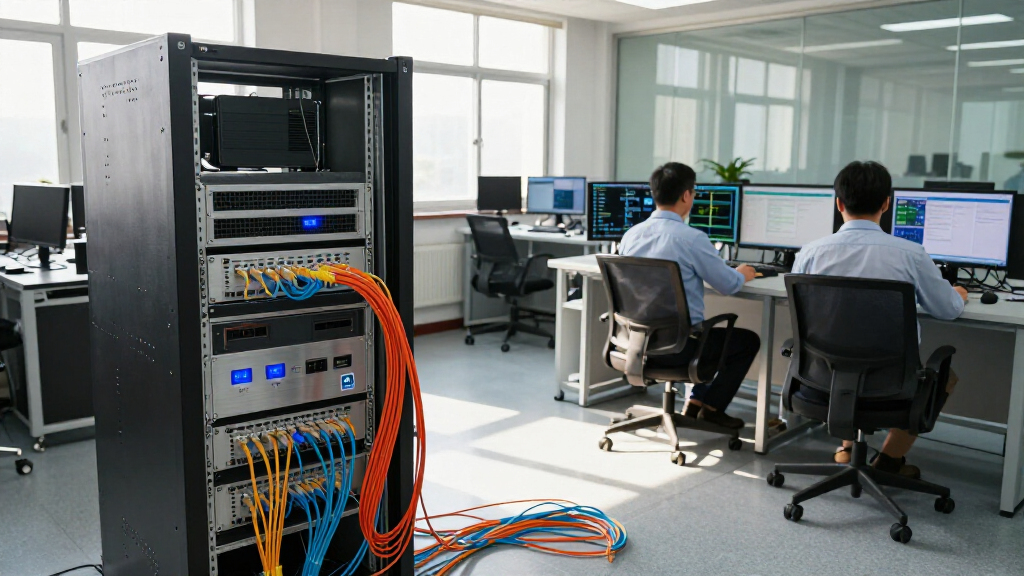
The platform combines post-quantum cryptography (PQC) for quantum-resistant key exchange with quantum key distribution (QKD) and quantum random number generation (QRNG). Toshiba says centralized management brings the components together in one system. Its product lineup includes transceivers, hubs, spokes, point-to-point links and multiplexing equipment; the supplied announcement describes equipment operating at 1310 or 1550 nanometers.
To limit equipment needs, Toshiba says its transceivers combine transmit and receive functions in one chassis, while hubs use active optical switching to connect a central location with multiple remote sites. The company says a single hub can serve hundreds of sites. It presents these features as a way to reduce equipment footprint, power use and deployment costs compared with conventional point-to-point layouts. The announcement does not provide independent cost comparisons or detailed performance results.
Scaling Protection Across Existing Networks
The announcement addresses a practical obstacle for organizations considering quantum-safe security: protecting many sites can require new equipment, network design and operational planning. Toshiba’s stated approach is to start with the most sensitive connections and extend protection over time, rather than replace an entire network at once. If the platform works as described in varied deployments, that could make staged adoption more manageable for organizations with distributed infrastructure.
The issue is relevant to organizations holding information that must remain confidential for many years. Toshiba points to “harvest now, decrypt later” risks, in which attackers collect encrypted data today in hopes of decrypting it in the future. Its platform also gives service providers a potential basis for offering quantum-safe services to customers. These are intended benefits, however; the announcement does not establish customer uptake, commercial results or protection against every form of attack.
As an affiliate, we earn on qualifying purchases.
Why Quantum-Safe Networks Are Emerging
Quantum-safe networking responds to the possibility that future, sufficiently capable quantum computers could weaken some cryptographic methods in use today. Governments, regulators and standards organizations have been setting migration guidance and timelines for critical systems, Toshiba says. The company frames its launch as a move from targeted trials and commercial deployments toward broader coverage across sites and network types.
The three technologies in the platform have different roles. PQC uses cryptographic algorithms designed to resist attacks from quantum computers; QKD uses quantum properties to distribute encryption keys over a link; and QRNG generates random numbers using quantum processes. Bringing them together does not mean every connection must use the same method: Toshiba says organizations can tailor security levels to specific environments. The announcement provides no independent assessment of the platform’s security or compatibility with particular standards.
“The quantum-safe transition represents the largest cryptographic transformation in history. A transformation of that scale cannot happen overnight.”
— Hiroshi Tsukino, vice president of Toshiba’s ICT Solutions Division
quantum key distribution equipment
As an affiliate, we earn on qualifying purchases.
As an affiliate, we earn on qualifying purchases.
Pricing, Rollout and Testing Remain Unclear
Toshiba’s announcement does not state pricing, shipping dates, regional availability or the names of customers that have adopted the platform. It also does not provide measured key rates, distance limits, service-level terms or independently verified savings. While Toshiba says a hub can serve hundreds of remote sites, the announcement gives no conditions or deployment results to show how that capacity varies with network design.
The company characterizes QKD and QRNG as providing advanced security and says its technologies are designed to withstand future computational attacks. Those are vendor claims, not independent test findings supplied with the launch. The material also does not detail certification status, interoperability with named third-party systems, or how the platform’s components will be updated as standards and requirements change.
optical switching hubs for networks
As an affiliate, we earn on qualifying purchases.
As an affiliate, we earn on qualifying purchases.
Partner Expansion and Deployment Details
Toshiba says it plans to expand the platform with telecommunications providers, data center operators and other critical-infrastructure providers across Europe, the Middle East and Africa (EMEA), North America and Asia-Pacific (APAC). The announcement does not give a timetable or identify specific partners. Further product specifications, availability information and deployment examples would help organizations evaluate where the system fits into existing networks.
For prospective buyers, the next steps are likely to depend on published technical details and local requirements, including compatibility testing and security review. Any announced customer deployments or third-party evaluations could clarify the platform’s reach, performance and operating costs. Until such information is available, claims about scale and efficiency should be treated as Toshiba’s descriptions of the system rather than independently established outcomes.
post-quantum cryptography hardware
As an affiliate, we earn on qualifying purchases.
As an affiliate, we earn on qualifying purchases.
Key Questions
What did Toshiba announce?
Toshiba announced its Quantum-Safe Networking Platform, a centrally managed system that combines post-quantum cryptography, quantum key distribution and quantum random number generation for network connections.
Does the platform require organizations to replace existing networks?
Toshiba says the platform integrates with existing network infrastructure and is designed to support staged deployments. Independent compatibility details and tested configurations were not included in the announcement.
What does Toshiba say the hub can do?
The company says its optical-switching hub can connect a central system to hundreds of remote sites. Toshiba did not provide deployment conditions or independently verified performance figures for that claim.
When will the platform be available, and how much will it cost?
The announcement does not specify pricing, delivery dates or availability by region. Toshiba also did not name confirmed customers or deployment partners.
Has the platform’s security been independently verified?
The supplied announcement contains Toshiba’s descriptions of the platform’s security design but does not include independent test results or certification details. Those would be needed to assess its performance against specific standards and operational requirements.
Source: rss