
TL;DR
At ISC 2026, the LineShine Supercomputer in China was confirmed as the new number 1 on the TOP500 list, achieving over 2.2 exaflops in FP64 performance. This marks China’s first exascale system on the list in nine years and signals a significant shift in global supercomputing leadership.
At ISC 2026 in Hamburg, Germany, the LineShine Supercomputer in Shenzhen, China, was confirmed as the new number 1 on the TOP500 list, marking China’s first exascale system to reach this ranking in nine years.
The LineShine Supercomputer is powered by the new LX2 CPU, an Armv9-compliant processor with 304 active cores per CPU, each running at 1.55 GHz. The system comprises over 22,000 nodes and 13 million CPU cores, totaling a 2.198 exaflops of sustained FP64 performance, with a peak of 2.735 exaflops.
It achieved a FP64 efficiency of 52.07 gigaflops per watt and topped the HPCG benchmark with 22.004 petaflops, outperforming other top systems like El Capitan. This is the first Chinese system in nearly a decade to reach the top of the list, signaling a major development in global HPC leadership.
Implications of China’s Exascale Entry
The LineShine Supercomputer’s rise to number 1 indicates a significant shift in the global HPC landscape, showcasing China’s capabilities in exascale computing. It could lead to increased funding and development of large-scale systems in the US and elsewhere, impacting research, industry, and national security priorities.
This milestone also demonstrates China’s progress in CPU architecture and system integration, challenging existing leadership and potentially accelerating innovation in supercomputing technology worldwide.

Cloud, Grid and High Performance Computing: Emerging Applications
As an affiliate, we earn on qualifying purchases.
As an affiliate, we earn on qualifying purchases.
Historical Context of TOP500 and Recent Developments
The TOP500 list has historically been led by US and European supercomputers, with China absent from the top spot for nearly a decade. The last Chinese system to rank highly was Tianhe-2, which held the top position in 2013. The emergence of LineShine marks China’s return to the forefront of supercomputing after years of progress in exascale development, including systems like Sunway Oceanlight and CNIS, which have yet to appear on TOP500.
Prior to this, the list was dominated by US systems like Fugaku and El Capitan, with the former still ranking at number 9. The recent performance of the HPC7 system from Italy also highlights Europe’s growing presence in high-performance computing, though China’s new entry shifts the global balance.
“The LineShine system’s performance and efficiency demonstrate China’s significant advancements in exascale computing, challenging traditional leadership.”
— an anonymous researcher

Software for Exascale Computing – SPPEXA 2016-2019 (Lecture Notes in Computational Science and Engineering Book 136)
As an affiliate, we earn on qualifying purchases.
As an affiliate, we earn on qualifying purchases.
Unanswered Questions About Future Submissions
It remains unclear whether China will submit results from other exascale systems like Sunway Oceanlight or CNIS to the TOP500. There is also uncertainty about if the US Department of Energy (DOE) will increase funding in response to this development, potentially leading to more large-scale systems in North America.
Additionally, the reasons behind the absence of major AI-focused systems, such as xAI’s Colossus 2, on the TOP500 list are still not fully understood, raising questions about the criteria and priorities for future submissions.

HPC Optics Compatible with HPE 813874-B21 10GBASE-T Copper SFP+ Transceiver | 10G TX RJ-45 30m 813874-B21-HPC
Fully Compatible with HPE 813874-B21
As an affiliate, we earn on qualifying purchases.
As an affiliate, we earn on qualifying purchases.
Next Steps in Global Supercomputing Competition
Following this milestone, the focus will likely shift to whether other Chinese exascale systems will be officially ranked and how the US and European HPC communities respond with new system deployments and funding initiatives. The upcoming TOP500 list will reveal if China’s new system maintains its top position or if other systems challenge it.
Moreover, the transition of the TOP500 list management to ACM SIGHPC, with dedicated DOI referencing, will improve transparency and tracking of future developments in supercomputing rankings.
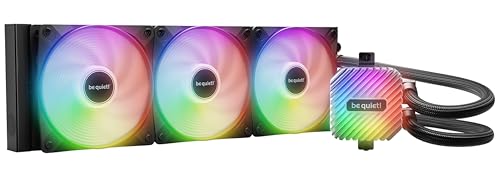
be quiet! Light Loop 360mm Black CPU Liquid Cooler for Heavily Overclocked Systems, 3X Light Wings LX 120mm PWM high-Speed ARGB Fan, Stylish ARGB Cooling Block, Extremely high Cooling Performance
Light Loop 360mm Black features 64 LEDs in total, leading stunning visuals. Since your PC is not like…
As an affiliate, we earn on qualifying purchases.
As an affiliate, we earn on qualifying purchases.
Key Questions
What is the significance of the LineShine Supercomputer’s new ranking?
The ranking marks China’s first exascale supercomputer to top the TOP500 list in nine years, signaling a major shift in global HPC leadership and technological capabilities.
What technology powers the LineShine Supercomputer?
The system uses the LX2 CPU, an Armv9-compliant processor with 304 active cores per CPU, supported by high-bandwidth memory and extensive networking, achieving over 2.2 exaflops in performance.
Will China submit other exascale systems to the TOP500?
It is currently unclear whether China will submit results from other systems like Sunway Oceanlight or CNIS, as this has not been officially confirmed.
How might this development affect US supercomputing investments?
This milestone could prompt increased funding and development of large-scale systems by the US Department of Energy and other agencies to maintain competitiveness.
What does the change in TOP500 management mean for future rankings?
The transition to ACM SIGHPC with DOI assignment aims to improve transparency, referencing, and tracking of future supercomputing achievements.
Source: Hacker News