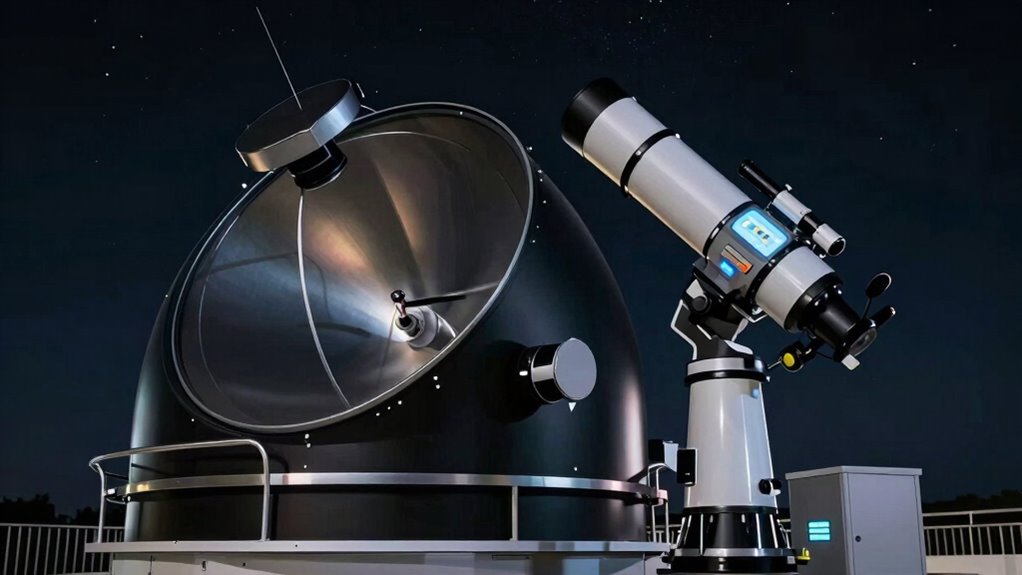

Choosing a telescope for deep space observation in 2026 requires balancing power, automation, portability, and user experience. The Celestron NexStar 8SE stands out for its compact Schmidt-Cassegrain design coupled with advanced GoTo automation, making it ideal for those seeking detailed deep-sky views with minimal setup fuss. The Celestron StarSense Explorer 10-inch offers a larger aperture and smartphone-guided navigation, perfect for enthusiasts who want vivid images and easier target identification. Meanwhile, the Celestron NexStar Evolution 8” combines high optical quality with WiFi control and long-lasting power, making it suited for both serious visual observation and astrophotography. Each option involves tradeoffs—larger apertures improve viewing but add bulk, automation simplifies use but can increase complexity and cost, and portability varies significantly across these models.

Get the latest gadgets delivered free with Prime
- Fast, free delivery on millions of items
- Prime Video, Amazon Music and more included
- Member-only deals all year
Complete the kit



Key Takeaways
- The Celestron NexStar 8SE offers a compact, automated experience perfect for intermediate users seeking precision.
- The StarSense Explorer 10” Dobsonian combines a large aperture with smartphone navigation, ideal for detailed deep-sky viewing and ease of use.
- The NexStar Evolution 8” balances portability, automation, and high optical quality, suitable for versatile deep space exploration.
- The SVBONY APO excels in astrophotography with its triplet ED lens but sacrifices some portability and accessories.
- The Odyssey PRO Smart Telescope emphasizes quick setup and digital imaging, better suited for city environments and citizen scientists.
| Celestron NexStar 8SE Computerized Telescope – Schmidt-Cassegrain |  | Best Overall for Precision and Automation | Aperture: 8 inches | Optics: Schmidt-Cassegrain | Mount: Computerized GoTo | VIEW ON AMAZON | See Our Full Breakdown |
| Celestron StarSense Explorer 10″ App-Enabled Dobsonian Telescope |  | Best for Beginners and Large-Aperture Views | Aperture: 10 inches | Type: Newtonian reflector | Coatings: XLT high-reflectivity | VIEW ON AMAZON | See Our Full Breakdown |
| Celestron NexStar Evolution 8″ WiFi Telescope for Deep-Sky Views |  | Best for Versatility and Imaging | Optical System: Schmidt-Cassegrain | Aperture: 8 inches | Optical Coatings: StarBright XLT | VIEW ON AMAZON | See Our Full Breakdown |
| SVBONY SV550 Triplet APO Telescope, 122mm F7 ED Glass |  | Best for Astrophotography and High-Quality Imaging | Aperture: 122mm | Focal Ratio: F7 | Focal Length: 854mm | VIEW ON AMAZON | See Our Full Breakdown |
| Odyssey PRO Unistellar Smart Telescope with Eyepiece, 85mm f/3.9 |  | Best for Citizen Science and Quick Observation | Mount: Motorized Alt-Az | GoTo: Yes, one-click | Mirror Diameter: 85 mm | VIEW ON AMAZON | See Our Full Breakdown |
| telescope for deep space premium | Aperture |
|---|---|
| Celestron NexStar 8SE Computer | 8 inches |
| Celestron StarSense Explorer 1 | 10 inches |
| Celestron NexStar Evolution 8" | 8 inches |
| SVBONY SV550 Triplet APO Teles | 122mm |
| Odyssey PRO Unistellar Smart T | 85mm |
More Details on Our Top Picks
Celestron NexStar 8SE Computerized Telescope – Schmidt-Cassegrain
This model is distinguished by its powerful 8-inch Schmidt-Cassegrain optics combined with a fully automated GoTo mount. Its SkyAlign technology simplifies setup, making it a favorite among enthusiasts looking for reliable deep-sky viewing with minimal hassle. Compared to larger manual scopes, the NexStar 8SE provides a compact form factor, though its initial alignment process might challenge absolute beginners. Its upgrade potential with accessories makes it a versatile choice for those committed to deep space observation.
Pros:- Powerful 8-inch aperture for detailed deep-sky imagery
- Automated GoTo mount with SkyAlign for quick object location
- Compact, portable design
- Upgradeable with accessories
Cons:- Requires initial alignment for accurate tracking
- Higher price point compared to manual scopes
- Complexity for first-time users
Best for: Intermediate astronomers seeking detailed views with automation
Not ideal for: Complete beginners who prefer manual scopes or those prioritizing portability over power
- Aperture:8 inches
- Optics:Schmidt-Cassegrain
- Mount:Computerized GoTo
- Hand Control:NexStar+
- Object Database:40,000+ objects
- Warranty:2 years
Our verdict“Ideal for those wanting a powerful, automated deep space telescope with a manageable size.”
Celestron StarSense Explorer 10″ App-Enabled Dobsonian Telescope
This scope provides a generous 10-inch aperture, delivering vivid images of deep-sky objects, planets, and nebulae. Its standout feature is the StarSense Explorer app, which guides users through sky navigation and object identification via smartphone. Compared with the more automated and compact NexStar models, this Dobsonian’s manual mount offers a more tactile experience but requires smartphone dependence for target locating. Its large size makes it less portable, yet it compensates with stunning views for dedicated deep-sky observers.
Pros:- Large 10-inch aperture for detailed celestial views
- Smartphone app simplifies sky navigation
- Stable manual altazimuth mount for smooth tracking
- Vivid imaging of deep-sky objects
Cons:- Requires smartphone and app for optimal use
- Manual tracking can be challenging for some
- Bulky and less portable
Best for: Beginners who want easy setup combined with a large aperture for deep-sky viewing
Not ideal for: Travelers or those seeking a lightweight, portable telescope
- Aperture:10 inches
- Type:Newtonian reflector
- Coatings:XLT high-reflectivity
- Warranty:2 years
Our verdict“Best for newcomers who want large aperture views and guided sky navigation without complex automation.”
Celestron NexStar Evolution 8″ WiFi Telescope for Deep-Sky Views
The NexStar Evolution 8” combines high-quality Schmidt-Cassegrain optics with WiFi control, allowing remote operation via the SkyPortal app. Its built-in 10-hour lithium battery makes it suitable for field use, while manual clutches provide flexibility for precise pointing. This scope is especially appealing to users interested in both visual deep-sky observation and astrophotography, though it demands a compatible smartphone or tablet for full functionality. Compared with the NexStar 8SE, it adds the convenience of wireless control and extended power, but at a higher price and weight.
Pros:- WiFi control with smartphone app
- High-quality Schmidt-Cassegrain optics
- Built-in 10-hour battery for extended use
- Manual clutches for fine adjustments
Cons:- Requires compatible mobile device for full control
- Heavier and bulkier than smaller models
- Higher price point
Best for: Serious amateurs who want a flexible scope for both imaging and visual observations
Not ideal for: Beginners who prefer simple, plug-and-play setups or those prioritizing portability
- Optical System:Schmidt-Cassegrain
- Aperture:8 inches
- Optical Coatings:StarBright XLT
- Battery:Built-in 10-hour lithium iron phosphate
- Control:WiFi with SkyPortal app
- Included Accessories:StarPointer, 2 Plossl eyepieces, star diagonal, AC adapter
Our verdict“Great for experienced users seeking a versatile, WiFi-enabled deep space telescope with astrophotography potential.”
SVBONY SV550 Triplet APO Telescope, 122mm F7 ED Glass
The SV550 APO refractor offers exceptional optical clarity with its high-end triplet FPL-51 ED lens, reducing chromatic aberration for sharp, color-accurate images of deep-sky objects. Its portable 122mm aperture and dual-speed focuser make it an excellent choice for astrophotographers needing precise focus. Compared with larger, more complex telescopes, this model prioritizes optical excellence and portability, though it comes at a higher cost and with limited included accessories. It is particularly well-suited for those who want to capture detailed images without sacrificing image quality.
Pros:- High-quality triplet ED lens for sharp images
- Portable and lightweight design
- Dual-speed focuser for precise focusing
- Reduced chromatic aberration
Cons:- Relatively heavy for travel
- Fragile optics requiring careful handling
- Limited included accessories
Best for: Astrophotographers seeking premium optical clarity in a portable package
Not ideal for: Beginners or those needing a scope primarily for visual use without imaging
- Aperture:122mm
- Focal Ratio:F7
- Focal Length:854mm
- Focuser:Dual speed 2.5-inch
- Weight:6.44kg / 14.18lb
- Dovetail Length:300mm
Our verdict“Perfect for serious astrophotographers who prioritize optical quality and portability over size and affordability.”
Odyssey PRO Unistellar Smart Telescope with Eyepiece, 85mm f/3.9
The Odyssey PRO offers rapid setup and automated alignment, making it an attractive choice for city dwellers and casual deep-sky observers. Its digital imaging capabilities, combined with app control, enable immersive views and citizen science participation. Its relatively small 85mm aperture limits the level of detail compared to larger scopes, but its ease of use and integrated tech make it appealing for those who want a quick, connected experience. The limited battery life and reliance on smartphone connectivity are tradeoffs for its convenience.
Pros:- Quick setup with automated alignment
- Integrated digital imaging and app control
- Compact, lightweight design
- Extensive star catalog and citizen science features
Cons:- Limited battery life for extended use
- Requires compatible smartphone or tablet
- Smaller aperture limits detail resolution
Best for: Urban astronomers and citizen scientists wanting quick, app-controlled deep-sky views
Not ideal for: Experienced astronomers seeking maximum detail or astrophotography
- Mount:Motorized Alt-Az
- GoTo:Yes, one-click
- Mirror Diameter:85 mm
- Focal Length:320 mm
- Aperture:85mm
- F/Number:3.9
- Field of View:33.6 × 45 arcmin
- Limiting Magnitude:17.2
- Pixel Size:1.45 µm
- Resolving Power:1.68″
Our verdict“An excellent choice for city-based observers or those interested in citizen science and quick deep-sky views.”

How We Picked
Our selection process focused on premium deep space telescopes that deliver exceptional optical performance, automation features, and user experience improvements. We prioritized aperture sizes of 8 inches or more, as larger apertures reveal finer details in deep-sky objects. Automation, whether through WiFi, GoTo, or smartphone apps, was essential for ease of locating faint objects. We also considered portability, build quality, and additional features like astrophotography capabilities to provide a well-rounded ranking for dedicated enthusiasts willing to invest in their deep space pursuits.
Factors to Consider When Choosing Telescope For Deep Space Premium
When selecting a premium deep space telescope, it’s important to weigh optical quality, automation, portability, and your specific observing goals. Larger apertures generally provide more detailed views of faint objects, but they also tend to be bulkier and more expensive. Automation features like WiFi control and smart apps make setup easier and object finding more precise, especially for those who want to spend more time observing than aligning. Photographers should prioritize high-quality optics and stable mounts, while casual observers might prefer easier, more integrated solutions. Understanding these factors will help narrow down the perfect choice for your deep space pursuits.
Optical Quality and Aperture
The core of any deep space telescope is its optical system and aperture size. Larger apertures, such as 10 inches or more, reveal more detail and enable viewing of faint nebulae, galaxies, and star clusters. However, bigger scopes tend to be heavier and less portable, making them less suitable for field use. For astrophotography, high-quality triplet ED lenses or Schmidt-Cassegrain optics offer sharp, color-accurate images that justify higher costs. Balance your desire for detail with your capacity to handle a larger, heavier instrument.
Automation and Control Features
Automation significantly eases deep space observation, especially for those who dislike manual star alignment. WiFi-enabled scopes like the NexStar Evolution allow remote control via smartphones, offering convenience and flexibility. Apps with star databases, such as SkyPortal or StarSense Explorer, simplify target acquisition, saving time and reducing frustration. However, these features often come with increased complexity and cost, so consider your comfort with technology and your budget before prioritizing automation.
Portability and Ease of Use
Portability varies widely. Smaller scopes like the SVBONY APO are lightweight and travel-friendly but may sacrifice some aperture size and brightness. Larger models like the StarSense Explorer 10” provide stunning views but are bulkier and less suitable for frequent transport. Ease of use is also influenced by mount type: Dobsonian mounts are simple and stable, while computerized mounts offer automation but require power sources and setup time. Define your typical observing environment to choose a scope that balances size, weight, and user interface.
Astrophotography Capabilities
If capturing images is a priority, opt for high-quality optics, stable mounts, and features like dual-speed focusers and tracking accuracy. The SVBONY APO excels here, offering minimized chromatic aberration and precise focusing. Integrated power sources and WiFi control, as seen in the NexStar Evolution, also add convenience. Keep in mind, astrophotography demands more setup time and technical knowledge, so select a scope that matches your experience level and ambitions.
Frequently Asked Questions
What is the best aperture size for deep space viewing?
Generally, an aperture of at least 8 inches provides good detail for deep sky objects, but larger apertures such as 10 inches or more will reveal fainter objects and finer details. The ideal size depends on your portability needs and observing environment; bigger scopes require more space and effort to transport and set up.
How important is automation in choosing a deep space telescope?
Automation can greatly simplify locating faint objects and reduce setup time, especially for those who prefer to spend more time observing rather than aligning. Features like WiFi control, GoTo mounts, and smartphone apps are highly beneficial, but they also add cost and complexity. Consider your comfort with technology and how much you value convenience versus manual control.
Are portable scopes suitable for deep sky observation?
Yes, portable scopes like the SVBONY APO offer excellent optical quality in a compact form, making them ideal for travel and field use. However, they typically have smaller apertures, limiting their ability to observe very faint objects. Larger scopes, while providing brighter images, tend to be bulkier and less portable.
Can I use these telescopes for astrophotography?
Many of these scopes, especially the SVBONY APO and NexStar Evolution, are equipped or adaptable for astrophotography thanks to stable mounts and high-quality optics. However, dedicated astrophotography requires precise focusing, tracking, and sometimes additional accessories. For beginners, scopes with built-in tracking and WiFi control are more forgiving, while more advanced users may prefer specialized mounts and cameras.
What should I consider if I want a telescope for city or light-polluted skies?
For urban environments, scopes with high-contrast optics and good light pollution mitigation are essential. The Odyssey PRO, with its digital imaging and citizen science features, is designed for such conditions, allowing for quick setup and bright imaging even in light-polluted areas. Larger apertures help gather more light, but portability and ease of setup are equally critical in managing city skies.
Conclusion
For serious deep space observers who value automation, high optical quality, and versatility, the NexStar Evolution 8″ offers a compelling package. Those new to astronomy or seeking large views with guided navigation should consider the StarSense Explorer 10-inch. Experienced astrophotographers can find their match in the SVBONY SV550 APO for its sharp optics and portability. Urban astronomers or casual sky watchers will benefit from the quick setup and citizen science features of the Odyssey PRO. Ultimately, your choice depends on your experience, mobility needs, and whether imaging or visual observation is your priority.
Halloween Picks
halloween
As an affiliate, we earn on qualifying purchases.