📊 Full opportunity report: A Small Business Guide To Scanning And Organizing Documents on IdeaNavigator AI — validation score, market gap, and execution plan.
TL;DR
IdeaNavigator AI has proposed testing an auto-filing document scanner for paper-heavy small offices, rather than reporting a launched product. The suggested one-week pilot would ask five offices to scan 200 backlog documents each and measure classification accuracy and willingness to pay; no results or participating offices have been identified.
IdeaNavigator AI has outlined a proposed document-scanning product for paper-heavy small offices, along with a pilot plan to test whether it can file records accurately enough to justify a subscription. The concept targets office managers at small nonprofits, clinics and law firms, but no product launch, pilot results or customer commitments are reported.
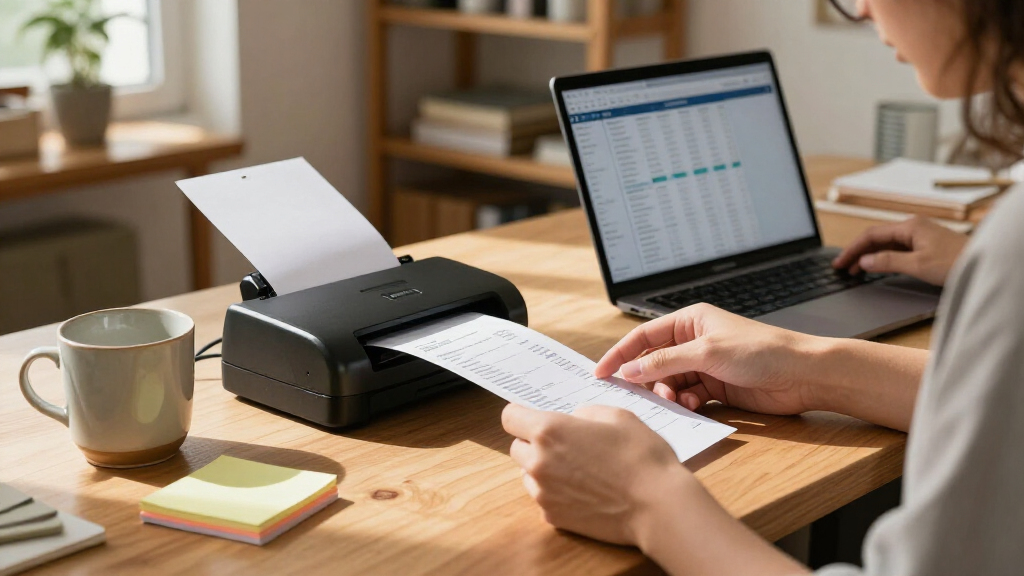
According to the IdeaNavigator AI concept, the proposed app would let a user photograph a stack of documents on a phone, then use optical character recognition (OCR) and document-layout analysis to suggest a type and filename for each item. An example is an invoice labeled with its date and vendor. The app would then save searchable PDFs to a shared folder, rather than leaving users with a pile of unsorted image files.
The IdeaNavigator AI proposal frames this as a limited first workflow for offices that handle intake forms, invoices and records. It proposes a one-week pilot at five small offices, with each office scanning a real backlog of 200 documents. The suggested measures are the rate of correct automatic classification and participants’ willingness to pay per seat. No accuracy target, pricing figure or pilot outcome is supplied in the material.
The proposed business model is a per-seat monthly subscription, with a page-volume allowance and additional charges for pages above that cap, according to the concept. That remains a suggested pricing structure, not a reported commercial offer. The material does not name a developer, identify an existing app or establish that organizations are already using the system.
Testing a Smaller Office Workflow
Small offices may have limited time and technical support for organizing paper records. A tool that turns scans into searchable, consistently named files could reduce the manual work of saving and locating documents. That potential depends on whether the system correctly recognizes varied forms and extracts useful details, not simply whether it can create a digital image.
The pilot plan described by IdeaNavigator AI focuses on those practical questions: classification accuracy and willingness to pay. A one-week test involving 1,000 documents in total, if completed as described, could offer an initial view of the workflow across several offices. It would not by itself establish long-term reliability, performance across different document types or broad market demand. Those conclusions would require results and more extensive testing.
As an affiliate, we earn on qualifying purchases.
From Scanning to Searchable Filing
The concept responds to a familiar distinction in document handling: scanning a page is not the same as organizing its contents. A generic scanner app may produce image files without useful names or extracted information, leaving a person to identify, rename and file each document. The product proposed by IdeaNavigator AI aims to combine capture with OCR, classification and suggested filenames.
IdeaNavigator AI presents on-device and API-based OCR, alongside layout-aware models, as technologies that may make this workflow affordable for small organizations without dedicated IT staff. That is the rationale in the proposal for exploring the idea, not independent evidence that a particular system has reached a given accuracy level or cost. The proposal is specifically aimed at small nonprofits, clinics and law offices, where records can include sensitive information and access controls may matter as much as filing speed.
As an affiliate, we earn on qualifying purchases.
Pilot Results Are Not Available
The IdeaNavigator AI material describes a product opportunity and validation plan, not a completed study or a deployed service. It does not say whether five offices have agreed to participate, when a pilot might begin, or whether a scanner app is being built. There are no reported test results for OCR quality, classification accuracy, time saved or user satisfaction.
Important implementation details are also unspecified in the proposal. It does not explain how documents would be stored, who could access shared folders, how long files would be retained, or how sensitive records would be protected. Those points are particularly relevant for clinics and law firms. Pricing, page limits, overage charges and integrations with existing office systems have not been set out either.
As an affiliate, we earn on qualifying purchases.
Accuracy and Demand Need Testing
As outlined by IdeaNavigator AI, the next step would be to recruit five small offices for the suggested one-week, 200-document-per-office pilot. The test would need to record whether each document type and filename suggestion is correct, and ask office managers whether they would pay per seat. The material does not provide a schedule or say that recruitment has started.
If a pilot proceeds, its results would help determine whether the concept merits further development and what workflows need improvement. Any next-stage assessment would also need to address handling of sensitive records, storage and permissions, alongside accuracy and pricing. Until those details and results are reported, the scanner should be understood as an idea under consideration, not a proven solution for small offices.
Source: IdeaNavigator AI
automatic document filing software
As an affiliate, we earn on qualifying purchases.
As an affiliate, we earn on qualifying purchases.
Key Questions
Has the document-scanning app launched?
No launch is reported. IdeaNavigator AI describes a product concept and a suggested pilot; it does not identify an available app or announce customers.
What would the proposed scanner do?
According to the IdeaNavigator AI concept, users would photograph documents, and the app would use OCR and document analysis to suggest a document category and filename before saving searchable PDFs to a shared folder.
How would the idea be tested?
The pilot proposed by IdeaNavigator AI is a one-week test with five small offices, each scanning 200 backlog documents. The plan would measure classification accuracy and willingness to pay per seat.
What remains unknown?
No pilot results, confirmed participants, launch date or subscription price are provided in the IdeaNavigator AI material. The concept also does not specify how it would protect and manage sensitive records.
Source: IdeaNavigator AI