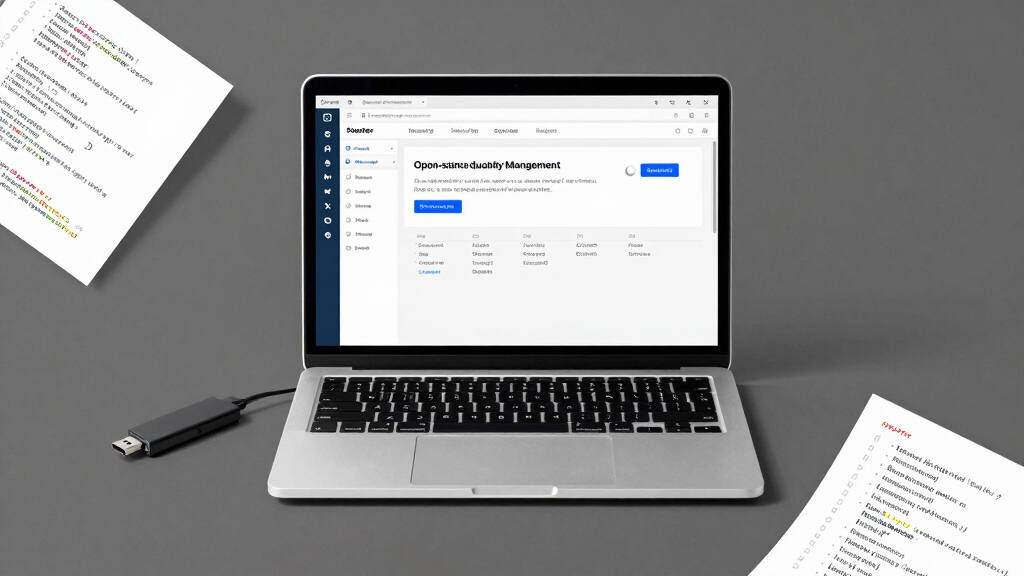

QAtrial Launches Enterprise-Ready Open-Source Quality Management System
The latest version offers comprehensive features including Docker deployment, single sign-on, validation documentation, and seamless integrations for regulated industries.

Producing Open Source Software: How to Run a Successful Free Software Project
Used Book in Good Condition
As an affiliate, we earn on qualifying purchases.
As an affiliate, we earn on qualifying purchases.
Introduction of QAtrial v3.0.0: A Fully Functional Open-Source Quality Platform
QAtrial, an open-source solution tailored for industries with strict compliance requirements, has announced the release of its version 3.0.0. This milestone marks the culmination of a development process spanning five phases, evolving QAtrial from a prototype focused on requirements management into a robust, production-ready quality management environment. The new release introduces Docker-based deployment, integrated single sign-on (SSO), comprehensive validation documentation, and connectivity with popular tools used by engineering and quality teams.
Built on a stack that combines Hono, PostgreSQL, and Prisma, QAtrial v3.0.0 offers over 60 REST API endpoints, 15 database models, and JWT authentication supporting five distinct user roles. Deployment is simplified through a single command, docker-compose up, which initializes the application server, PostgreSQL 16 database, and static file hosting, complete with health monitoring and persistent storage configurations by default.
Docker deployment tools for QA systems
As an affiliate, we earn on qualifying purchases.
As an affiliate, we earn on qualifying purchases.
Core Features and Functionalities
Single Sign-On (SSO) Integration
QAtrial now supports SSO via providers such as Okta, Azure Active Directory/Entra ID, Auth0, Keycloak, and Google Workspace. When users log in for the first time, they are automatically provisioned with a role that can be customized, removing the need for manual account setup for organizations utilizing these identity systems.
Built-in Validation Documentation
The platform includes five validation documents: an Installation Qualification with nine test steps, an Operational Qualification with eighteen steps, a Performance Qualification template, a Compliance Statement aligning QAtrial with regulations like 21 CFR Part 11 (covering 15 sections), EU Annex 11 (covering 17 sections), and GAMP 5 Category 4. Additionally, a Traceability Matrix maps 75 regulatory requirements directly to specific features and test IDs within the system.
Pre-Configured Compliance Packages
Four ready-to-use compliance packs are provided—covering FDA Software Validation (GAMP 5), EU MDR Medical Device Quality Management Systems, FDA Good Manufacturing Practice (GMP) for pharmaceuticals, and ISO 27001 plus GDPR. These packs automatically populate setup options with relevant country, industry vertical, modules, and project type details.
Webhooks and Integration Capabilities
The platform supports fourteen webhook events related to requirement updates, test failures, CAPA status changes, approval workflows, electronic signatures, and evidence uploads. Payloads are secured using HMAC-SHA256 signatures. Additionally, two-way synchronization with Jira Cloud and GitHub pull request linking, including CI test result imports, are accessible via the settings interface.
Audit Mode for External Review
Administrators can generate temporary, read-only links (valid for 24 hours, 72 hours, or one week) that provide auditors with a comprehensive, seven-tab view of the project—covering overview, requirements, testing, traceability, evidence, audit trail, and signatures—without requiring user login credentials.
SSO authentication devices for enterprise
As an affiliate, we earn on qualifying purchases.
As an affiliate, we earn on qualifying purchases.
Open-Source Commitment to Quality Management
Representatives of the QAtrial project team emphasize that proprietary quality management software has often been priced beyond reach, especially for smaller and mid-sized organizations. They state, “Organizations in regulated sectors, including small manufacturers, biotech firms, and software developers, should have access to transparent, auditable, and cost-effective tools. By releasing QAtrial under the AGPL-3.0 license, any organization can deploy a validated quality management workspace on their own infrastructure at no licensing cost, with full transparency for auditors to review source code that manages their compliance records.”
webhook monitoring tools
As an affiliate, we earn on qualifying purchases.
As an affiliate, we earn on qualifying purchases.
Industry Context and Market Demand
The worldwide market for quality management software is expected to surpass $12.5 billion by 2028. As regulatory requirements tighten—such as the FDA’s new QMS Regulation (QMSR), effective from February 2026, mandating ISO 13485 compliance—companies face increased pressure to adopt systems that are both rigorous and accessible. Data from the FDA indicates a 115% rise in medical device recalls over the last decade, highlighting the need for reliable, compliant quality management solutions.
QAtrial responds to this demand with a platform supporting ten industry sectors including pharmaceuticals, biotech, medical devices, clinical research, logistics, software, cosmetics, aerospace, and environmental sciences. It offers 37 countries and 15 modular components, ranging from audit trails and electronic signatures to CAPA, risk management, and supplier qualification modules.
Immediate Availability and Deployment Instructions
QAtrial version 3.0.0 is now accessible on GitHub at https://github.com/MeyerThorsten/QAtrial, licensed under AGPL-3.0.
To get started:
git clone https://github.com/MeyerThorsten/QAtrial.git
cd QAtrial
cp .env.example .env
docker-compose up
The platform can be accessed via http://localhost:3001 within minutes of deployment.
Official Website and Additional Resources
Further details, including comprehensive documentation, deployment tutorials, feature overviews, and community support, are available on the QAtrial website at https://qatrial.com/. The site provides in-depth explanations of compliance packs, validation procedures, and integration options, enabling organizations to evaluate QAtrial thoroughly before implementation.
About QAtrial
QAtrial is an open-source, AI-enhanced quality management platform designed for organizations operating in regulated environments. It integrates requirements management, testing, risk evaluation, CAPA tracking, electronic signatures, and audit trails into a single, accessible workspace. Supporting 12 languages, 10 industry sectors, 37 countries, and four compliance starter packs, QAtrial also features an AI co-pilot that assists with test case creation, risk analysis, gap detection, CAPA recommendations, and requirement validation across multiple LLM providers, including Anthropic, OpenAI, and local Ollama deployments. The platform comprises over 130 source files and more than 25,000 lines of TypeScript code.
Official website: https://qatrial.com/
GitHub repository: https://github.com/MeyerThorsten/QAtrial
License: AGPL-3.0
Key Facts
- QAtrial version 3.0.0 introduces Docker deployment, SSO, validation documentation, webhooks, and Jira/GitHub integrations.
- The platform supports multiple identity providers including Okta, Azure AD, Auth0, Keycloak, and Google Workspace.
- Includes five validation documents and a traceability matrix covering 75 regulatory requirements.
- Offers four pre-configured compliance starter packs for FDA, EU MDR, GMP, and ISO 27001 + GDPR.
- Available immediately on GitHub under the AGPL-3.0 license at https://github.com/MeyerThorsten/QAtrial.
“For too long, quality management software has been confined behind high licensing costs. Our goal is to provide transparent, auditable, and affordable tools for regulated organizations, especially smaller ones. With QAtrial under the AGPL-3.0 license, any organization can deploy a validated quality workspace on their own infrastructure at zero license expense, while auditors can review the source code that manages their compliance data.”
— QAtrial project team
Availability
QAtrial v3.0.0 is accessible now on GitHub at https://github.com/MeyerThorsten/QAtrial. Users can clone the repository, configure environment variables, and deploy with Docker using the provided instructions. The system is operational within minutes after deployment, accessible at http://localhost:3001.
About
QAtrial is an open-source, AI-assisted platform designed to streamline quality management processes for regulated industries. It consolidates requirements management, test tracking, risk assessment, CAPA workflows, electronic signatures, and audit trails into a single, customizable workspace. Supporting multiple languages, industry sectors, and compliance standards, QAtrial features an AI co-pilot that aids in test case development, risk classification, and requirement validation, leveraging various large language model providers including Anthropic, OpenAI, and Ollama. The platform is built with over 130 source files and more than 25,000 lines of TypeScript code, reflecting its comprehensive and scalable architecture.
Frequently Asked Questions
How can I deploy QAtrial version 3.0.0?
You can clone the repository from GitHub, copy the environment configuration, and run docker-compose up. The application will be accessible at http://localhost:3001 shortly after deployment.
What are the main features included in this release?
The release introduces Docker deployment, single sign-on support, validated documentation packages, webhooks for automation, Jira and GitHub integrations, and pre-configured compliance starter packs for various regulatory standards.
Is QAtrial open-source and free to use?
Yes, QAtrial is licensed under the AGPL-3.0 license, making it freely available for deployment on your own infrastructure, with full source code transparency for auditors.
Which compliance standards does QAtrial support?
The platform includes packs for FDA Software Validation (GAMP 5), EU MDR Medical Device QMS, FDA GMP Pharmaceutical Quality, and ISO 27001 + GDPR, among others, covering key regulatory requirements worldwide.
Where can I find more information about QAtrial?
Additional resources, including documentation, deployment guides, and community support, are available on the official website at https://qatrial.com/, as well as on the GitHub repository linked above.