
📊 Full opportunity report: VigilSAR: The Object That Isn’t Transmitting on ThorstenMeyerAI.com — validation score, market gap, and execution plan.
TL;DR
VigilSAR is a radar-based platform that detects vessels not broadcasting transponder signals, crucial for maritime security and safety. Its core capability is demonstrated using public satellite data, with broader deployment still in development.
VigilSAR has publicly demonstrated its capability to detect vessels operating without transponders, a key challenge in maritime security. This development matters because it enhances surveillance and law enforcement efforts in challenging conditions, such as darkness and bad weather, where optical systems fail. The platform’s core technology is based on radar detection and data fusion, making it a significant step forward in all-weather maritime awareness.
The core capability of VigilSAR is built on the use of Sentinel-1 / Copernicus SAR data, which provides open, publicly available satellite radar imagery. The platform combines detection algorithms with neural classifiers to identify objects in radar images and then correlates these detections with transponder signals like AIS and ADS-B. When a vessel appears on radar but lacks a corresponding transponder signal, VigilSAR flags it as an anomaly, which could indicate illegal activity, smuggling, or distress.
While the detection and classification techniques used are established methods in remote sensing, VigilSAR’s unique contribution is in its data fusion process. By subtracting explained detections—those with transponder signals—it isolates vessels that are “dark,” meaning they are not broadcasting identifying information. This capability is particularly relevant for maritime law enforcement, coast guard operations, and search-and-rescue missions, where identifying unreported vessels can prevent illegal activities and save lives.
VigilSAR — the object that isn’t transmitting
Radar sees through cloud and darkness, when cameras can’t. Fuse it with transponder data and the signal is the one detection no transponder explains.
Independent commentary on public positioning, produced with AI assistance under human editorial oversight. The views are the author’s own and may change. This does not verify or endorse VigilSAR’s capabilities, contracts, or performance. Capabilities on Sentinel-1 / Copernicus reflect a free, public data foundation; commercial-constellation and air-gapped-deployment references reflect stated positioning, not independently demonstrated fact. ISR and related technologies may be subject to export controls and dual-use regulations — lawful, ethical use is solely the operator’s responsibility. Nothing here is an offer, pricing, or operational/safety/legal advice. AI detection and classification can err and require human verification. Product and company names are trademarks of their respective owners; mention does not imply endorsement.
Why Unreported Vessels Pose Critical Risks
The ability to detect vessels that are not broadcasting transponder signals directly impacts maritime security, safety, and law enforcement. Such vessels often engage in illegal fishing, sanctions evasion, or smuggling, and can be in distress without radio signals. VigilSAR’s detection of these “dark” objects enhances situational awareness, helping authorities respond more effectively to threats and emergencies. Its deployment broadens the scope of maritime surveillance beyond traditional optical systems, especially under adverse weather or nighttime conditions, making it a vital tool for global maritime governance.
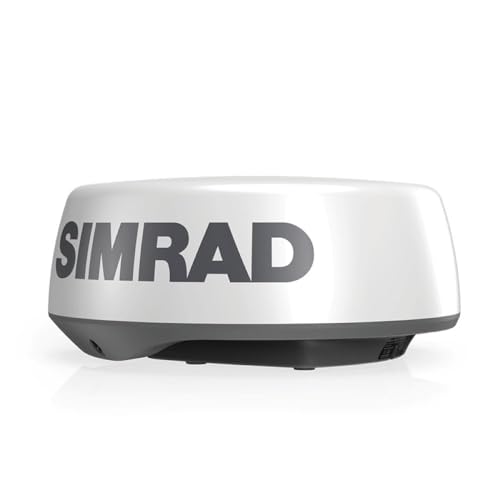
Simrad Marine Electronics, HALO20 Radar System, 24 Nautical Mile Range, Compact 20 Inch Dome, White, 000-14537-001
- Dome Size: 20-inch compact dome
- Detection Range: 24 nautical miles
- Performance: Reliable situational awareness
As an affiliate, we earn on qualifying purchases.
As an affiliate, we earn on qualifying purchases.
Background on SAR and Maritime Surveillance Challenges
Optical satellite imagery, while visually detailed, is limited by weather and lighting conditions, often rendering it ineffective during storms, night, or smoke. Synthetic-aperture radar (SAR) overcomes these limitations as it actively illuminates the surface with microwave signals, providing reliable imagery regardless of weather or darkness. However, interpreting SAR data requires sophisticated AI and data fusion techniques. VigilSAR leverages these technologies to turn raw radar signals into actionable intelligence, focusing on identifying vessels that operate covertly by turning off transponders.
The core detection technology is based on publicly available Sentinel-1 data, which has made the initial demonstration feasible. Broader commercial and military applications are in development, with specific capabilities and deployment details still under review and not publicly priced. The platform’s emphasis on fusion and anomaly detection aligns with ongoing efforts to improve maritime domain awareness in an increasingly complex environment.
“VigilSAR’s fusion approach, subtracting explained detections, offers a promising method to identify vessels that are deliberately dark or unreported.”
— Thorsten Meyer, AI Remote Sensing Expert

Optimus 3.0 GPS Tracker – Over 1 Month Battery – with Heavy Duty Waterproof Case and Powerful Magnets for Vehicles and Assets
- Real-Time GPS Tracking: Accurate and discreet tracking
- Heavy Duty Magnet Case: Secure attachment to assets
- Long Battery Life: Up to 2 months on a single charge
As an affiliate, we earn on qualifying purchases.
As an affiliate, we earn on qualifying purchases.
Capabilities Beyond Demonstrated Data Sources
While VigilSAR’s detection capability has been demonstrated using Sentinel-1 data, broader deployment involving commercial satellite constellations and air-gapped systems remains in development. Details about its operational readiness, cost, and full integration with existing maritime surveillance systems are not yet publicly available. Additionally, the platform’s effectiveness in diverse maritime environments and its ability to distinguish benign from malicious unreported vessels require further validation.

Escort MAX 4 Radar Detector, 2X The Filtering Accuracy
- Enhanced Filtering Accuracy: Reduces false signals with AutoLearn AI
- Long Detection Range: Early alerts with advanced technology
- Community Alerts: Receive live updates from other drivers
As an affiliate, we earn on qualifying purchases.
As an affiliate, we earn on qualifying purchases.
Next Steps for Broader Deployment and Validation
VigilSAR plans to expand its deployment, integrating additional satellite sources and refining its AI models through field testing. Industry and government agencies are expected to evaluate its performance in operational scenarios, with potential pilot programs and contract awards in the pipeline. Public release of detailed capabilities and pricing information is anticipated once the platform reaches full operational status, likely within the next 12 months.

Chargeable Helicopter Magnetic Digital Pitch Ruler/Metal Gauge Degree Angle Fit For 200-800 RC(Standard Version)
- Compatibility: Fits various small outboard systems
- Easy Setup: Quick tool-free disassembly and reassembly
- Reliable Operation: Maintains consistent coolant flow
As an affiliate, we earn on qualifying purchases.
As an affiliate, we earn on qualifying purchases.
Key Questions
How does VigilSAR detect vessels without transponders?
It uses radar detection in satellite imagery to identify objects and then correlates these with transponder signals like AIS and ADS-B. Vessels visible on radar but not broadcasting transponder signals are flagged as anomalies.
What are the main applications of VigilSAR?
Its primary uses include maritime law enforcement, border security, fisheries regulation, and search-and-rescue operations, especially in adverse weather or darkness.
Is VigilSAR available for commercial or government use now?
Currently, VigilSAR’s core detection capability is demonstrated using public satellite data. Broader deployment and commercial availability are still in development, with no public pricing announced.
What are the limitations of VigilSAR’s technology?
Its effectiveness depends on the quality of radar data, and distinguishing benign from malicious dark vessels requires further validation. Deployment at scale also involves integration with existing maritime systems.
Source: ThorstenMeyerAI.com