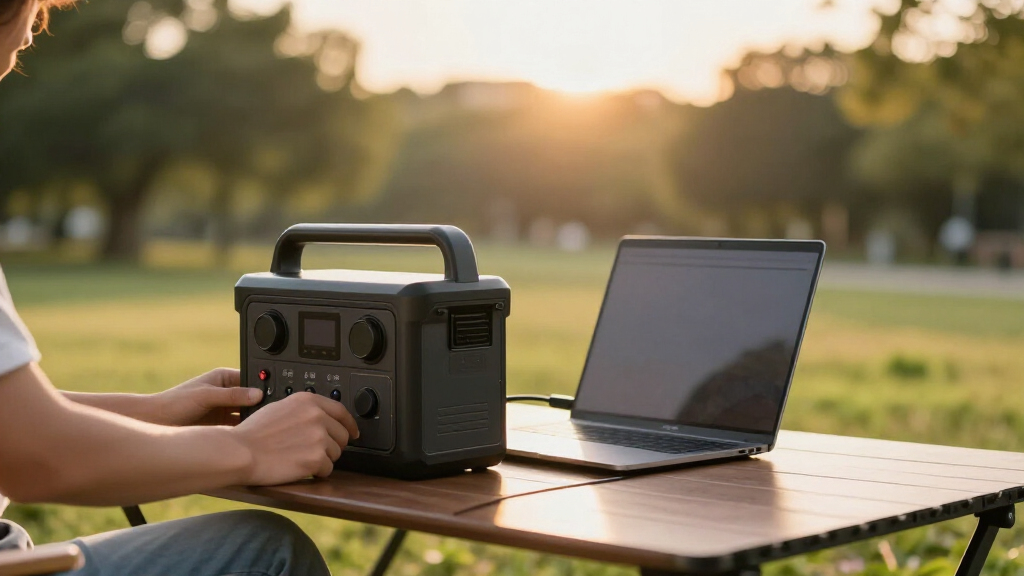

🔍 Read the full analysis: 2026 Portable Power Stations That Enhance AI Performance on ThorstenMeyerAI.com

Get the latest gadgets delivered free with Prime
- Fast, free delivery on millions of items
- Prime Video, Amazon Music and more included
- Member-only deals all year
TL;DR
In 2026, new portable power stations are emerging with advanced features that support AI performance. These devices offer higher capacity, better portability, and solar compatibility. The development aims to improve AI deployment in remote and mobile environments.
Portable power stations in 2026 are being optimized to significantly enhance AI performance in remote, outdoor, and industrial settings. These devices are characterized by increased capacity, improved portability, and better compatibility with renewable energy sources, making them critical for expanding AI deployment outside traditional data centers.
Leading manufacturers like Jackery and Anker have unveiled models with capacities exceeding 2000 watt-hours, capable of supporting high-power AI hardware such as edge computing units and autonomous systems. For a detailed overview, see the original analysis. These stations incorporate advanced battery chemistries like LiFePO4, which offer longer cycle life and improved safety, crucial for sustained AI operations.
Compared to previous generations, the 2026 models emphasize portability without sacrificing power. You can also explore top portable power banks for more options. For example, the Jackery Explorer 1500 weighs under 20 kg, yet provides enough wattage to run AI-enabled drones, robots, or off-grid data processing units for hours. Solar panel integration is also a key feature, enabling off-grid recharging and reducing reliance on grid power, which is vital for remote AI applications. Learn more about portable power solutions in the comprehensive guide.
Industry experts suggest that these innovations could accelerate AI deployment in sectors such as agriculture, disaster management, and autonomous transportation, where reliable portable power is essential. However, detailed specifications, pricing, and availability remain to be confirmed as manufacturers finalize their latest models.
The 9 picks
- 1
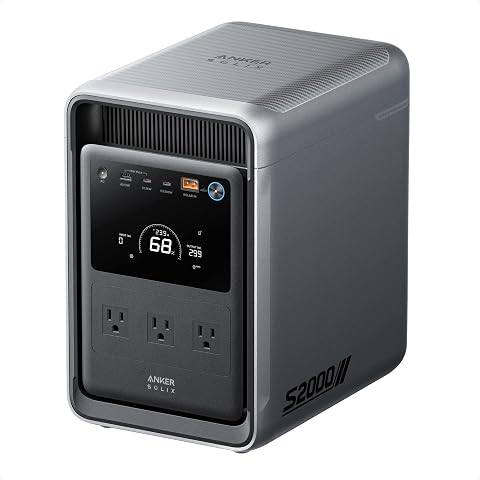 Anker SOLIX S2000 Portable Power Station, 2010Wh, 3000W PeakView on Amazon →
- 2
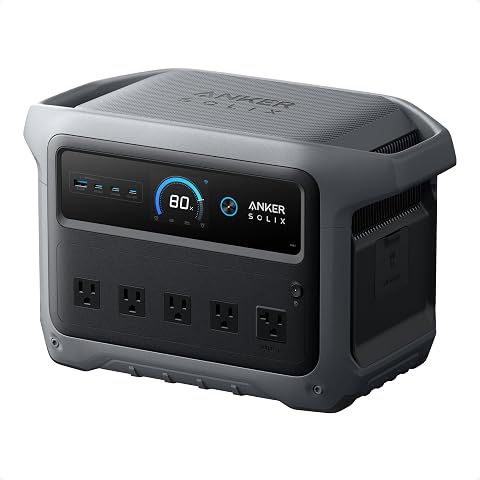 Anker SOLIX C1000 Gen 2 Portable Power Station, 1024Wh, 2000WView on Amazon →
- 3
 Jackery Explorer 1000 v2 Portable Power Station, 1070Wh, 1500WView on Amazon →
- 4
 BLUETTI Elite 100 V2 Portable Power Station for Camping 1024Wh 1800WView on Amazon →
- 5
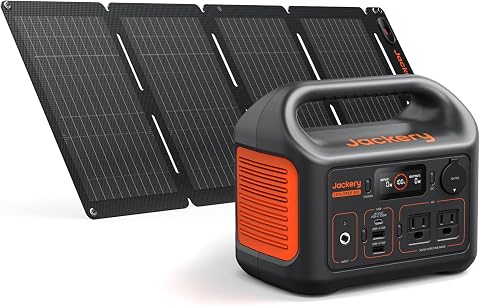 Jackery Solar Generator 300 and 40W Solar PanelView on Amazon →
- 6
 Jackery Explorer 300 Portable Power Station, 292WhView on Amazon →
- 7
 VTOMAN Jump 600X Portable Power Station, 600W, 268.8Wh LiFePO4 BatteryView on Amazon →
- 8
 Portable Solar Generator 300W with 60W Solar PanelView on Amazon →
- 9
 ALLWEI Portable Power Station 300W, 256Wh Solar Generator LiFePO4 BatteryView on Amazon →
Implications for AI Deployment and Remote Operations
The emergence of high-capacity, portable power stations in 2026 significantly impacts the ability to deploy AI systems in remote or off-grid environments. Enhanced portability combined with increased watt-hour ratings allows AI hardware to operate continuously in locations previously limited by power constraints. This development could lead to more autonomous vehicles, mobile robots, and field data centers, expanding AI’s reach into new sectors and challenging traditional infrastructure dependencies.
Furthermore, improved battery chemistries and solar compatibility support sustainable and resilient AI operations, reducing downtime and enabling real-time data processing in disaster zones, agriculture fields, or remote research stations. As a result, industries that rely on AI for critical tasks may see increased efficiency, safety, and innovation, making these power stations a foundational component of future AI ecosystems.
Products Worth Considering

EcoFlow DELTA 3 Portable Power Station, 1024Wh, 1800W

Apple MacBook Air 13-inch Laptop with M5 Chip, 16GB Memory, 512GB SSD, Midnight

Bose QuietComfort Headphones (2nd Gen) – Wireless Over-Ear Noise Cancelling Headphones, Eucalyptus Green
As an affiliate, we earn on qualifying purchases.
Evolution of Portable Power for AI Applications
Over the past decade, portable power stations have evolved from simple backup devices to sophisticated systems capable of supporting high-demand electronics. In 2023, models like the Jackery Explorer 1000 became popular among outdoor enthusiasts and emergency responders. By 2026, manufacturers have integrated advanced battery chemistries, higher wattage outputs, and solar recharging, driven by the growing need to support AI hardware in diverse environments.
This shift aligns with the broader trend of edge AI, where processing occurs closer to data sources rather than centralized data centers. The need for reliable, portable power sources capable of supporting AI compute units, sensors, and communication devices has become critical for applications ranging from autonomous vehicles to remote scientific research. The new models reflect this demand, emphasizing lightweight design, high capacity, and renewable energy compatibility.
While specific models and their specifications are still emerging, industry insiders agree that 2026 marks a pivotal year in making AI more accessible outside traditional infrastructure, with portable power stations serving as a key enabler.
Unconfirmed Details and Future Model Specifications
While initial announcements indicate significant advancements, specific models, pricing, and availability are still pending. It is not yet clear how these stations will perform under real-world AI workloads or their long-term durability in harsh environments. Additionally, the extent of solar compatibility and recharge speeds remains to be validated through independent testing and user feedback.
Upcoming Releases and Industry Adoption Milestones
Manufacturers are expected to unveil detailed specifications and commercial availability throughout 2026. Industry adoption will likely accelerate as AI developers and field operators test these power stations in practical settings. Future updates may include real-world performance data, comparisons with existing models, and integration with AI hardware ecosystems. Monitoring these developments will be essential for stakeholders planning to deploy AI in remote or mobile environments.
Key Questions
How much capacity do these 2026 portable power stations offer?
Most new models provide between 2000 and 3000 watt-hours, sufficient to run AI hardware and support extended operations in remote locations.
Can these power stations support AI hardware like edge computing units?
Yes, their high wattage output and multiple ports are designed to support AI hardware, including edge processors, sensors, and communication devices.
Are solar panels included or sold separately for these stations?
Many models support solar input, but panels are typically sold separately. Compatibility and wattage vary by model, so buyers should verify before purchase.
How long do these power stations last with continuous use?
With LiFePO4 batteries, expected cycle life exceeds 2000 charge cycles, translating to several years of reliable use under typical conditions.
Will these stations be affordable for small businesses or individual users?
Pricing is expected to vary, with high-capacity models costing more initially, but falling within a range accessible to professional and serious hobbyist users.
Source: ThorstenMeyerAI.com