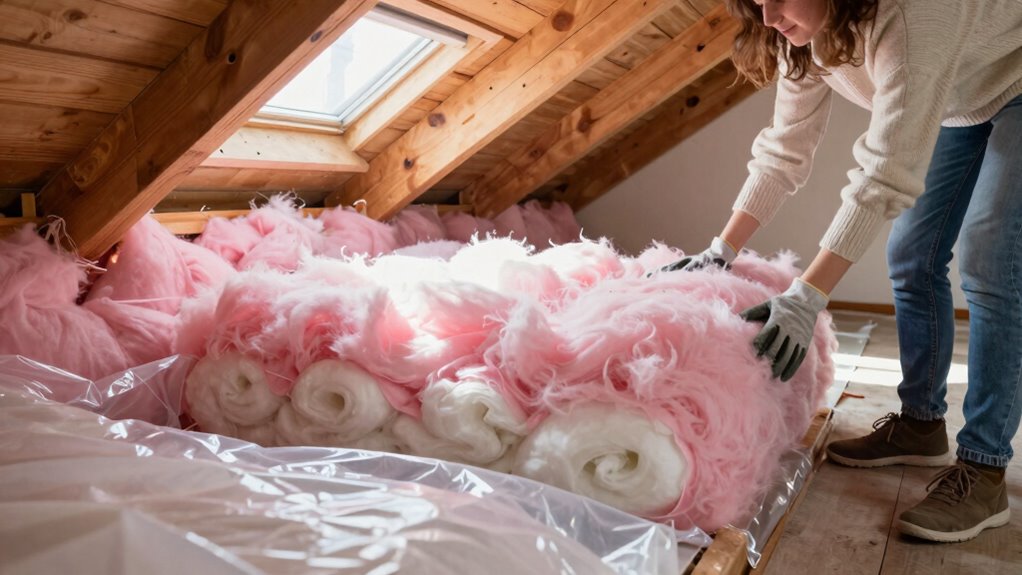

Home insulation helps keep your house comfortable, energy-efficient, and protected from moisture damage. It works by slowing heat transfer, so your home stays warm in winter and cool in summer. There are different types, like fiberglass, foam, and cellulose, each with pros and cons. Signs you need better insulation include drafts and higher bills. Simple DIY upgrades and knowing when to call a pro can make a big difference—keep exploring to learn more.

Get the latest gadgets delivered free — and shop member deals
- Fast, free delivery on millions of items
- Access to Prime Big Deal Days deals on October 6–7
- Prime Video, Amazon Music and more included
Key Takeaways
- Home insulation helps keep your house warm in winter and cool in summer by reducing heat transfer.
- Common insulation materials include fiberglass, spray foam, mineral wool, and cellulose, each with pros and cons.
- Signs you need better insulation include drafts, uneven temperatures, high energy bills, and moisture issues.
- Proper installation and sealing air leaks are essential to maximize insulation effectiveness and avoid common mistakes.
- When unsure or dealing with complex projects, professional help ensures safe, efficient, and long-lasting insulation.
As an affiliate, we earn on qualifying purchases.
What Is Home Insulation and Why Is It Important?
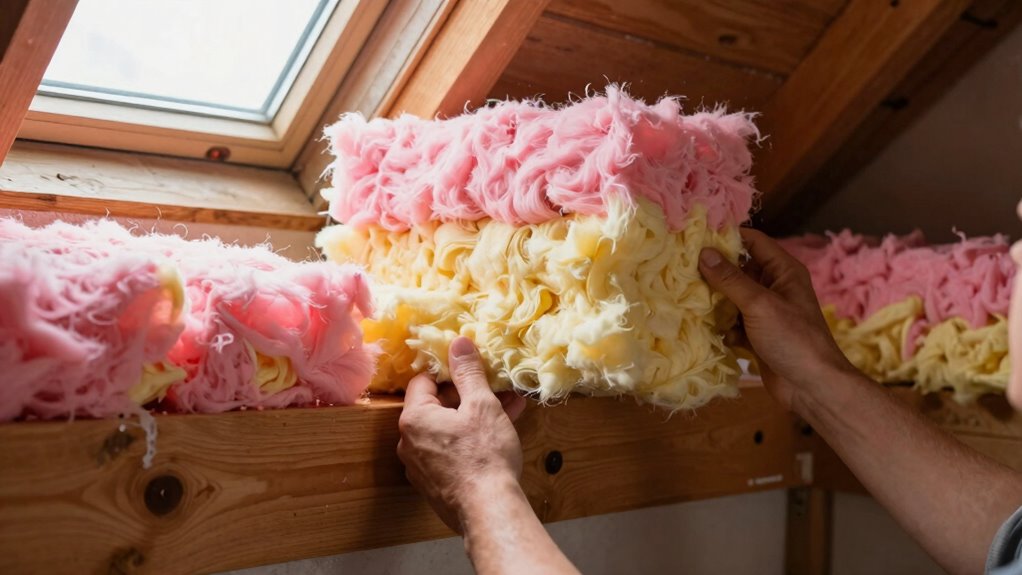
Home insulation is materials installed in your walls, attic, floors, and ceilings that help regulate your home’s temperature. It works by reducing heat transfer through processes like thermal bridging, which occurs when heat bypasses insulation through less insulated areas. Proper insulation also includes moisture barriers that prevent moisture buildup, reducing the risk of mold and structural damage. By blocking heat flow, insulation keeps your home warmer in winter and cooler in summer, boosting comfort and energy efficiency. Without insulation, your heating and cooling systems work harder, increasing costs and wear. Good insulation not only improves comfort but also protects your home from moisture-related issues, ensuring a healthier, more durable living space. Understanding thermal bridging and how insulation minimizes it is essential for effective home energy management. Additionally, having proper insulation can help mitigate air leaks, which can significantly decrease your home’s energy efficiency. Recognizing insulation types can help you choose the right materials for your specific needs.
As an affiliate, we earn on qualifying purchases.
How Does Insulation Keep Your Home Comfortable Year-Round?
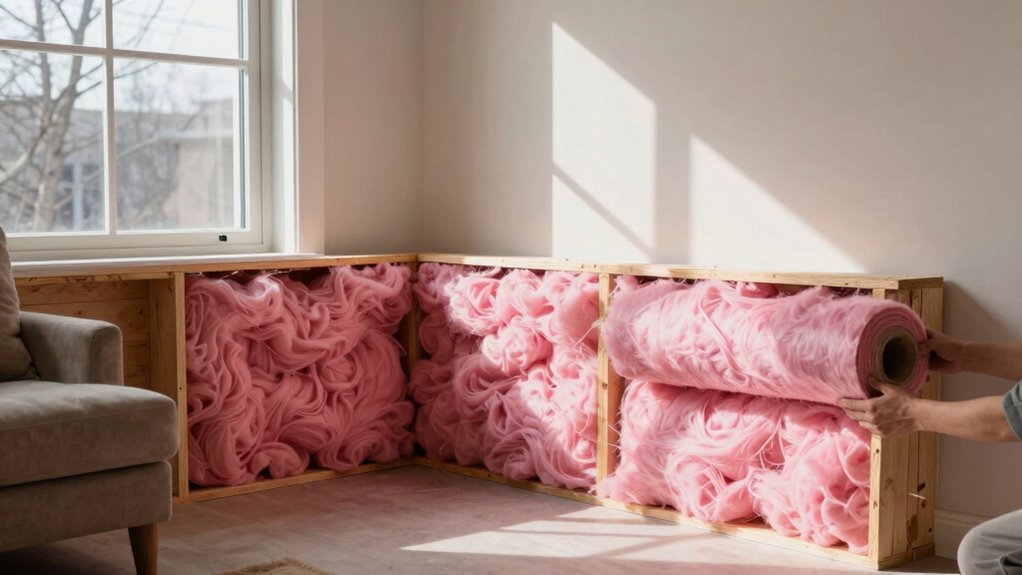
Insulation acts as a barrier that slows down the transfer of heat between the inside and outside of your house. Its high thermal resistance prevents warm air from escaping during winter and keeps cool air inside during summer. This helps you maintain a consistent indoor temperature, making your home comfortable year-round. Good insulation also aids in moisture control, reducing the risk of mold and dampness that can cause discomfort and damage. By managing moisture, insulation preserves its effectiveness and keeps your living space healthier. Proper insulation also contributes to energy efficiency, helping you reduce your environmental impact. Additionally, understanding different communication styles can help you better discuss insulation needs with contractors or neighbors. Proper ventilation and air quality measures work hand in hand with insulation to create a healthier living environment. Using essential oils for air purification, you can further improve indoor air quality and enhance comfort. Overall, insulation keeps your home cozy in winter and cool in summer without overworking your HVAC system. This balance guarantees you stay comfortable regardless of the weather outside, saving energy and lowering utility bills. Incorporating proper installation techniques ensures maximum effectiveness and longevity of your insulation investment.
As an affiliate, we earn on qualifying purchases.
What Are the Different Types of Home Insulation Materials?

There are several types of home insulation materials to contemplate, each with its own advantages and disadvantages. Understanding these options helps you choose the best fit for your needs and budget. Let’s explore the common materials and what makes them stand out. One option to consider is Free Floating insulation, which can be easily adapted to various spaces without the need for extensive installation. Additionally, learning about system monitoring techniques can help you ensure your insulation performs effectively over time. Proper gear care and regular maintenance can also extend the lifespan of your insulation and improve overall home efficiency. Incorporating impact investing principles into your home upgrades can further support sustainable and regenerative practices.
Types of Insulation Materials
Choosing the right insulation material is essential for creating an energy-efficient and comfortable living space. When exploring types of insulation, you’ll find options like fiberglass, foam boards, spray foam, mineral wool, and cellulose. Each insulation material has unique properties, so comparing them helps you decide what fits your needs best. Fiberglass is affordable and widely used, while spray foam offers excellent sealing but can be pricier. Mineral wool is fire-resistant, and cellulose is eco-friendly. Conducting an insulation materials comparison allows you to evaluate factors like R-value, installation ease, and moisture resistance. Understanding these different types of insulation helps you make informed choices, ensuring your home stays warm in winter and cool in summer without wasting energy. Material properties play a crucial role in selecting the most suitable insulation for your specific climate and home design. Additionally, considering thermal performance can help you determine how well each material resists heat transfer, which is vital for energy efficiency. A thorough understanding of local climate considerations can also guide your choice of insulation type for optimal results. Evaluating installation methods is important to ensure proper application and long-term effectiveness of your chosen insulation. It is also beneficial to review the cost and durability of each material to ensure long-lasting performance and value.
Pros and Cons of Materials
Different insulation materials offer distinct advantages and drawbacks, making it important to weigh their pros and cons carefully. For example, fiberglass is affordable and easy to install, but it may have lower material durability over time and can irritate your skin during handling. Spray foam provides excellent air sealing and high durability, yet it has a larger environmental impact due to chemical emissions. Mineral wool is fire-resistant and durable, but it tends to be heavier and more costly. Cellulose is eco-friendly, made from recycled paper, which reduces environmental impact, but it can settle over time, affecting insulation performance. Material durability is an important factor to consider when selecting insulation. Your choice depends on balancing factors like longevity, environmental concerns, and budget to find the best fit for your home. Additionally, understanding insulation performance can help you make more informed decisions to optimize energy efficiency and comfort. For instance, the installation process varies significantly between materials and can influence overall effectiveness and ease of maintenance. It’s also worth noting that some materials may contribute to better sound insulation, which can enhance your home’s comfort level. Considering maintenance requirements can further ensure your insulation remains effective over time.
As an affiliate, we earn on qualifying purchases.
How Can You Tell If Your Home Needs Better Insulation?

Wondering if your home needs better insulation? One sign is feeling drafts or sudden temperature changes, which indicate thermal gaps in your walls or attic. You might notice uneven heating or cooling, especially in certain rooms. Check for condensation or moisture issues on windows or walls, as poor insulation can trap humidity and lead to mold. During colder months, if your energy bills are rising without reason, it’s a sign you’re losing heat through inadequate insulation. Also, if your home feels colder than outside in winter or warmer in summer, it’s time to evaluate your insulation. These signs point to the need for improved insulation to eliminate thermal gaps and prevent moisture problems that can damage your home over time. Additionally, understanding insulation types and installation methods can help you make informed decisions for better home comfort and energy efficiency. Recognizing the importance of proper insulation installation can significantly improve your home’s overall performance and reduce energy costs.
Easy DIY Tips to Improve Attic and Wall Insulation
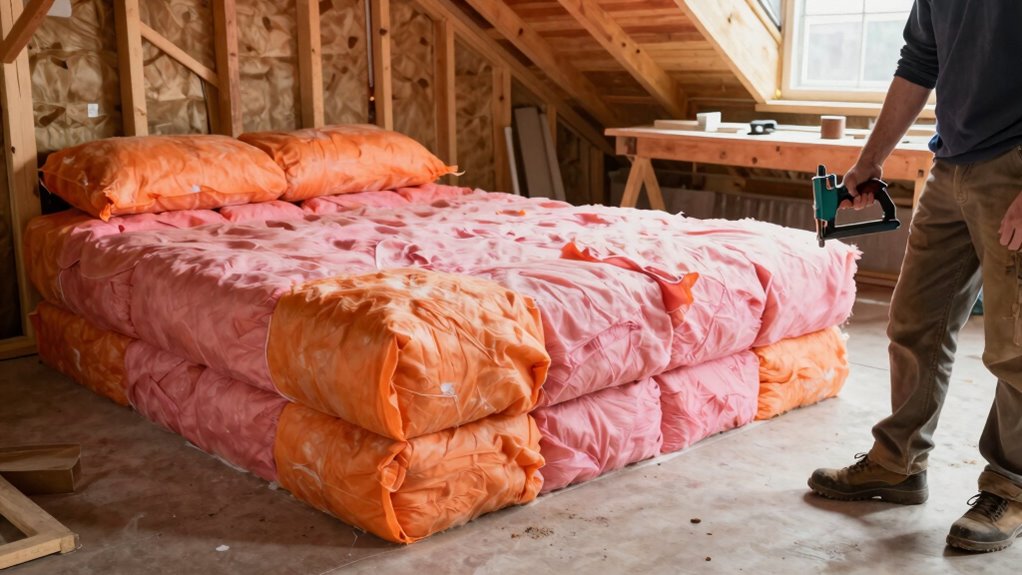
Improving your attic insulation can considerably boost your home’s efficiency, helping you save on energy costs. Installing or adding insulation in your walls is easier than you might think and can make a big difference. With simple DIY tips, you can enhance your home’s comfort without professional help.
Attic Insulation Boosts Efficiency
Attic insulation plays a essential role in enhancing your home’s energy efficiency, especially during extreme weather. Proper insulation keeps warm air in during winter and out during summer, reducing your energy bills. To boost effectiveness, check your attic ventilation; good airflow prevents moisture buildup that can damage insulation. If your existing insulation is old or compressed, consider insulation removal to make room for new, more efficient material. Remove debris and any obstructions to ensure even coverage. Installing fresh insulation, like fiberglass batts or blown-in cellulose, can notably improve thermal performance. Be sure to seal gaps and cracks around vents and access points to prevent air leaks. With these simple steps, you’ll make your attic a more effective barrier against temperature fluctuations, saving you money and increasing comfort.
Wall Insulation Easy Installation
Installing wall insulation yourself can be a straightforward way to boost your home’s energy efficiency without hiring a professional. Start by measuring your wall cavities and choosing the right insulation material, like foam boards or batt insulation. Always follow safety precautions, such as wearing gloves, masks, and goggles, to avoid irritation from dust or fibers. Clear the work area and ensure proper ventilation. Use a utility knife or insulation tools carefully to cut materials to size. For added safety, work with a partner and lift insulation carefully to avoid strain. Here’s a quick overview:
| Step | Tips |
|---|---|
| Measure | Get accurate cavity dimensions |
| Protect | Wear safety gear |
| Install | Fit snugly without gaps |
With patience and care, DIY wall insulation is achievable and rewarding.
How to Choose the Best Insulation for Your Climate and Budget
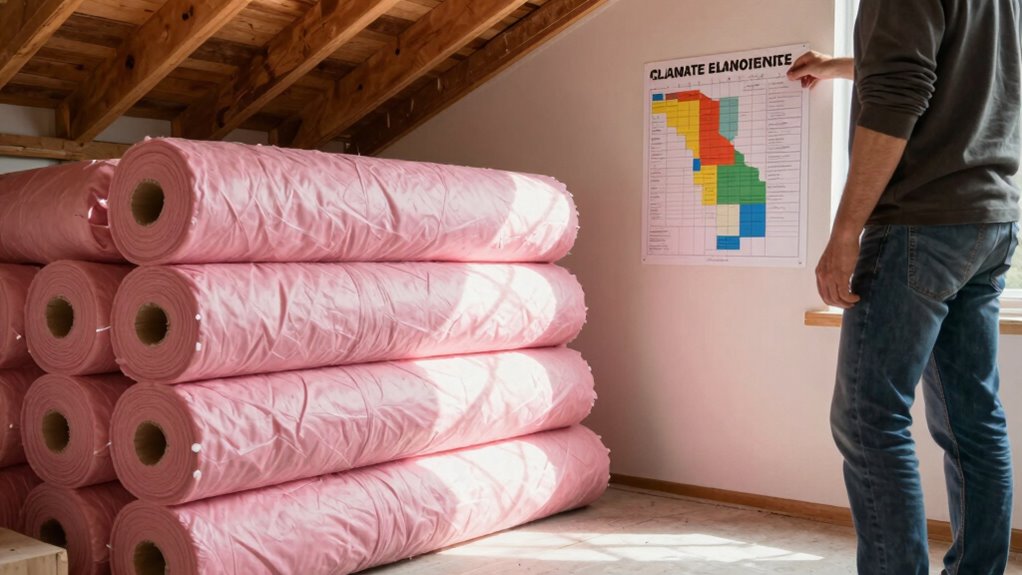
Choosing the right insulation depends on your climate and budget because what works well in one area may not be effective or affordable in another. For warmer climates, climate specific insulation like reflective barriers can help keep heat out, while in colder regions, options like spray foam or fiberglass provide better warmth retention. Consider your budget friendly options—fiberglass batts are often the most affordable, but more expensive solutions like spray foam offer higher efficiency. Think about the insulation’s R-value, which measures its effectiveness, and match it to your climate’s needs. Also, check local building codes for recommendations. By understanding your climate and financial limits, you can select insulation that keeps your home comfortable without overspending.
Common Insulation Mistakes Homeowners Make (and How to Avoid Them)
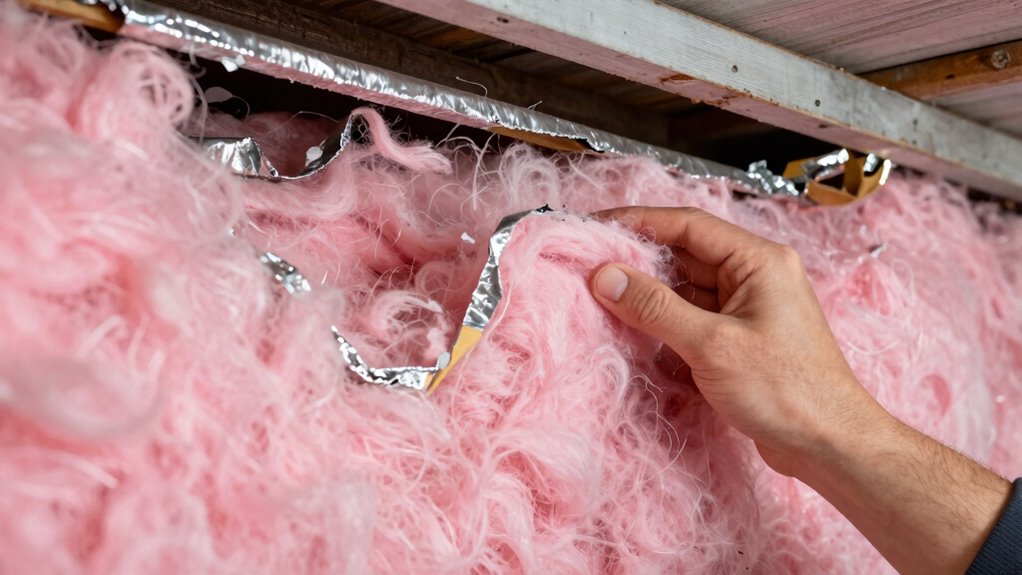
Many homeowners make simple but costly mistakes when insulating their homes, which can reduce energy efficiency and increase heating and cooling costs. One common error is believing insulation myths, like thinking thicker always means better. Additionally, many assume insulation is too expensive, leading to cost misconceptions that delay proper upgrades. To avoid these pitfalls, understand that proper installation matters more than just adding more material. Here’s a quick guide:
| Mistake | How to Avoid |
|---|---|
| Believing thicker insulation is better | Focus on R-value and proper installation |
| Ignoring air leaks | Seal gaps before insulating |
| Underestimating insulation needs | Consult professionals for advice |
| Relying on myths about costs | Budget realistically, focus on efficiency |
| Installing the wrong type | Choose insulation suited for each space |
Benefits of Proper Insulation for Energy Savings and Comfort
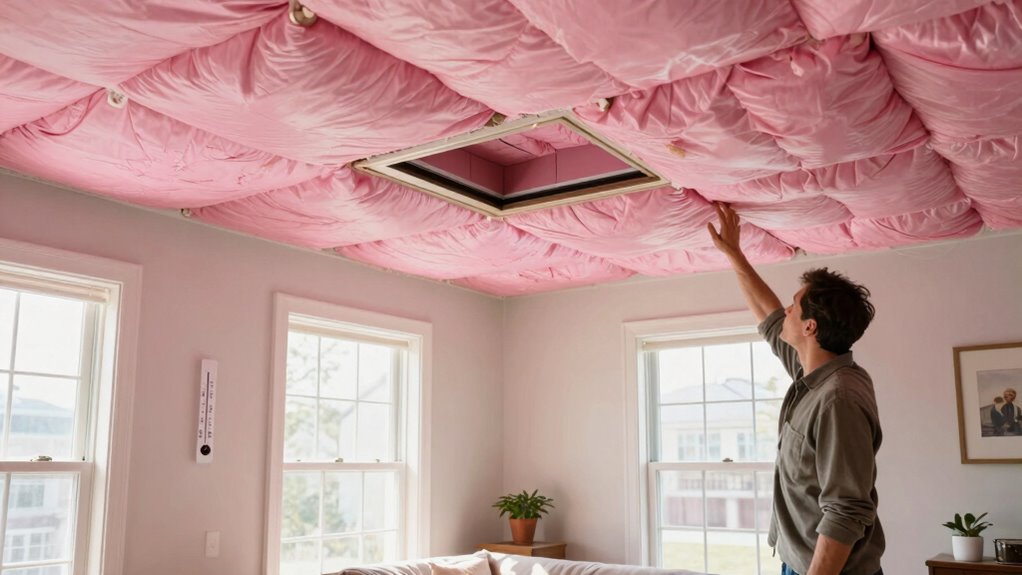
Proper insulation plays a essential role in reducing your energy bills and enhancing indoor comfort. When your home is well-insulated, it maintains a consistent temperature, promoting better thermal comfort and less heat loss during winter or heat gain in summer. This improves your home’s energy efficiency, meaning you use less energy to heat or cool your living space. As a result, you save money on utility bills and reduce your environmental impact. Proper insulation also prevents drafts and cold spots, making your home more comfortable year-round. To enjoy these benefits, consider:
Proper insulation reduces energy bills, enhances comfort, and prevents drafts year-round.
- Maintaining consistent indoor temperatures
- Lowering your energy consumption
- Increasing overall comfort and livability
Simple Insulation Projects for Beginners
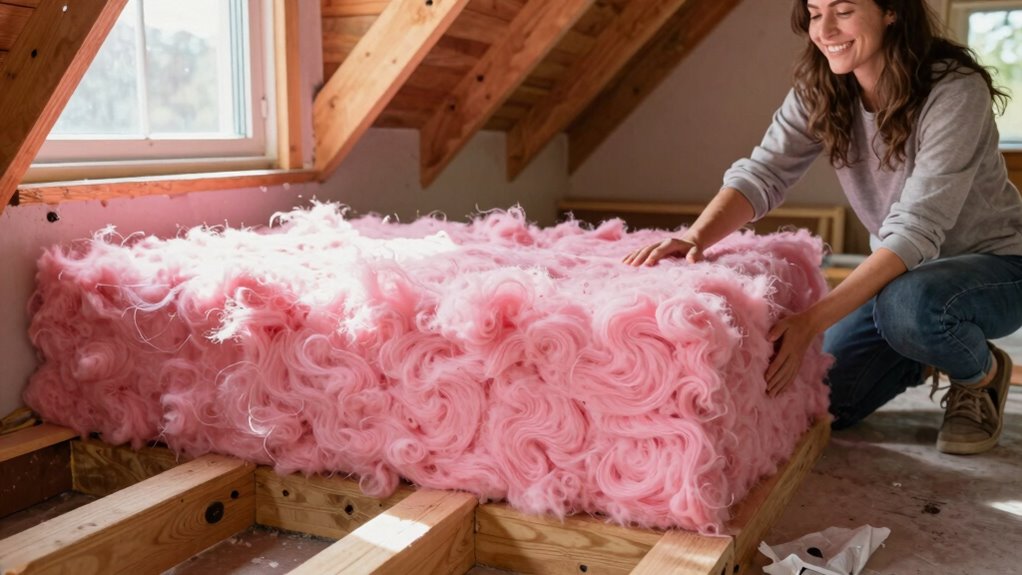
Starting with simple projects can make a big difference in your home’s comfort and efficiency. You can start by sealing drafts around windows and doors to block unwanted air leaks. Installing foam board insulation is also an easy way to improve your walls’ thermal barrier without too much hassle.
Sealing Drafts Effectively
Sealing drafts is one of the simplest and most effective ways to improve your home’s insulation. By focusing on draft sealing, you can prevent unwanted air from sneaking in and out, making your space more comfortable and energy-efficient. Start by identifying common draft spots like windows, doors, and electrical outlets. Use affordable tools like weatherstripping, draft stoppers, or caulk to block these gaps. For example, you can:
- Apply weatherstripping around windows and doors
- Use draft stoppers on door bottoms
- Seal gaps around electrical outlets and switches
These quick fixes are ideal for draft prevention and require minimal effort. Regularly checking and maintaining these seals ensures your home stays cozy, reduces energy costs, and keeps out cold drafts effectively.
Installing Foam Board
Installing foam board is a straightforward way to add insulation to your home, especially in areas like walls, basements, or attic spaces. To begin, measure and cut the foam board to fit your desired space. During foam board installation, make sure each piece fits snugly without gaps, as gaps reduce effectiveness. Use adhesive or mechanical fasteners to secure the foam board firmly in place. When insulating with foam board, pay attention to sealing the edges with spray foam or caulk to prevent air leaks. This simple project can markedly improve your home’s energy efficiency. Foam board insulation is lightweight, easy to work with, and an affordable option for boosting insulation in hard-to-reach areas. Follow these steps to achieve effective insulation without the hassle.
When Should You Call a Professional for Insulation Help?
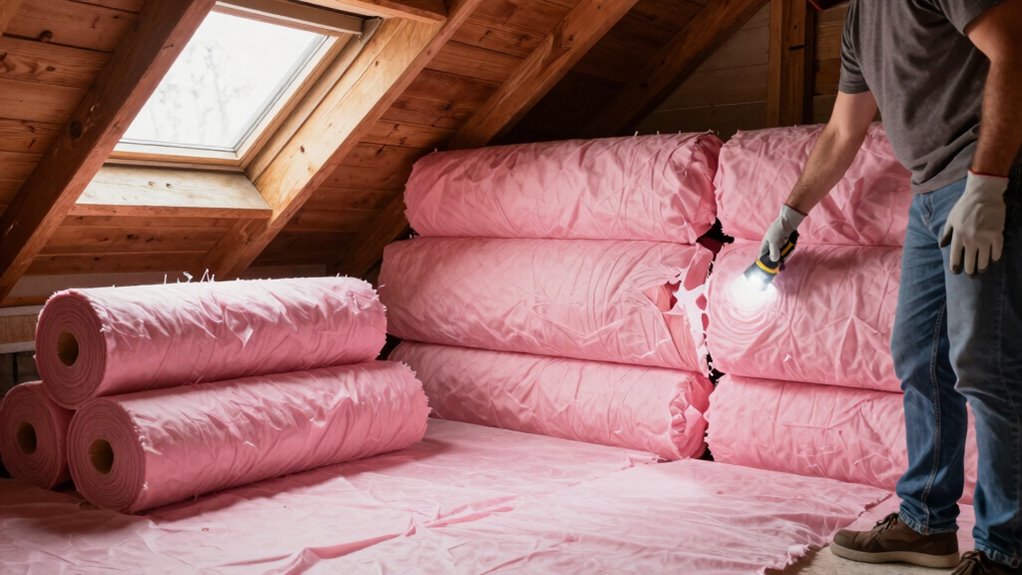
Knowing when to call a professional is crucial to guarantee your insulation project is done safely and effectively. If you notice persistent drafts, uneven temperatures, or signs of mold, it’s time for a professional assessment. DIY efforts might miss hidden issues or lead to improper installation. Additionally, complex insulation troubleshooting, such as dealing with asbestos or outdated materials, requires expert knowledge. Consider hiring a pro if:
- You’re unsure about current insulation quality or safety concerns
- The project involves structural modifications or difficult access areas
- You’ve tried troubleshooting but can’t identify the problem
A professional can evaluate your home’s insulation needs, identify problems you might overlook, and ensure everything is installed correctly. Trusting an expert guarantees better energy efficiency and peace of mind.
Frequently Asked Questions
How Long Does Home Insulation Typically Last Before Needing Replacement?
Home insulation usually lasts between 15 to 25 years, but this depends on the insulation type and environmental conditions. You should consider replacement if you notice increased energy bills, drafts, or uneven temperatures. Regular inspections help track the insulation lifespan and identify when it’s time for a replacement. Proper maintenance guarantees your insulation remains effective, saving you money and keeping your home comfortable for years to come.
Are There Eco-Friendly Insulation Options Available for My Home?
Think of your home’s insulation as a protective shell, and yes, eco-friendly options exist like recycling insulation and biodegradable materials. These choices act like a garden’s compost—nurturing sustainability while keeping your home warm. Recycling insulation repurposes materials, reducing waste, while biodegradable options break down naturally, lessening environmental impact. By choosing these eco-friendly options, you’re helping the planet without sacrificing comfort, making your home a greener, more sustainable sanctuary.
Can Insulation Help Reduce Noise From Outside or Between Rooms?
Yes, insulation can help reduce noise from outside or between rooms. It offers soundproofing benefits by absorbing sound waves and minimizing echo. Using noise reduction techniques like adding insulated panels or using thicker insulation materials enhances this effect. You’ll notice a quieter, more peaceful home environment as insulation blocks out unwanted noise, making your space more comfortable and less disruptive. Proper installation is key to maximizing these soundproofing benefits.
What Are the Safety Concerns When Installing Insulation Myself?
When installing insulation yourself, safety is key. You should always wear personal protective gear like gloves, goggles, and a mask to avoid skin irritation and inhaling dust. Be cautious of electrical hazards; turn off power to avoid shocks or fires. Carefully follow installation instructions, stay aware of your surroundings, and handle materials with care to prevent accidents. If unsure, consider consulting a professional for a safer, more effective job.
How Does Insulation Affect My Home’s Resale Value?
Adding insulation can boost your home’s resale value by making it more energy-efficient, which appeals to buyers in the current home market. Well-insulated homes often sell faster and at higher prices because they promise lower utility bills and increased comfort. If you install quality insulation properly, you demonstrate that your home is well-maintained, attracting buyers who value energy savings and home comfort, ultimately enhancing your resale prospects.
Conclusion
Proper insulation keeps your home cozy in winter and cool in summer, saving you money and stress. But neglecting it can lead to drafts and skyrocketing bills, turning comfort into frustration. Taking simple steps now can transform your space into a haven of peace and warmth. Don’t wait for temperature swings to remind you—your home’s comfort is worth the effort today. Insulate wisely, and enjoy the true comfort you deserve.
Fall Picks
fall essentials
As an affiliate, we earn on qualifying purchases.