
🔍 Read the full analysis: Choosing A High Refresh Gaming Monitor For Fast Games: 10 Picks For 2026 on ThorstenMeyerAI.com

Get the latest gadgets delivered free — and shop member deals
- Fast, free delivery on millions of items
- Access to Prime Big Deal Days deals on October 6–7
- Prime Video, Amazon Music and more included
TL;DR
A newly published 2026 buyer’s guide ranks ten high refresh gaming monitors for fast games, naming the ASUS TUF Gaming VG259QM5A (24.5-inch, 240Hz) as the best overall pick and the CRUA 27-inch 540Hz as the specialist choice for competitive players. The guide stresses that refresh rate must match the frame rates your hardware can actually deliver.
A new 2026 buyer’s guide from ThorstenMeyerAI.com ranks ten high refresh gaming monitors for fast-paced games, naming the ASUS TUF Gaming VG259QM5A — a 24.5-inch Full HD 240Hz display — as its best overall pick. The guide’s central finding: a very high refresh rate only benefits players whose hardware can produce enough frames to use it, making balance rather than peak Hz the smarter buying criterion.
The ranking evaluates ten monitors on native refresh rate, resolution at the stated screen size, panel format, and the demands each display places on a gaming system. The ASUS TUF VG259QM5A takes the top spot as a compact all-rounder whose Full HD resolution keeps frame rates high without the graphics load of larger or sharper panels. The CRUA 27-Inch 540Hz ranks as the guide’s specialist pick for competitive players, though its Full HD resolution limits its appeal for buyers seeking detail or immersion.
Ultrawide buyers are pointed toward the SANSUI 34-Inch UWQHD 240Hz, which pairs a wide aspect ratio with high refresh, and a Kado two-monitor bundle at 165Hz that offers more total screen area at a lower refresh rate. Large Full HD panels — the KTC 31.5-Inch and SANSUI 32-Inch models — deliver 240Hz-class play on roomy screens but rank lower because Full HD pixels spread thin at that size, according to the guide’s analysis; buyers who want more detail at 32 inches may prefer 32-inch 4K 144Hz options.
The Dell and Samsung entries serve different priorities: Dell’s 24-inch Full HD 240Hz keeps setups compact, while Samsung’s 32-inch QHD 1000R Odyssey G55C prioritizes resolution and pronounced curvature over refresh rate. The guide’s author states the comparison was based on listed specifications, without assuming unlisted features or firsthand performance results.
The 10 picks
- 1
 CRUA 45-Inch DQHD 185Hz Ultrawide Curved Gaming MonitorView on Amazon →
 - 2
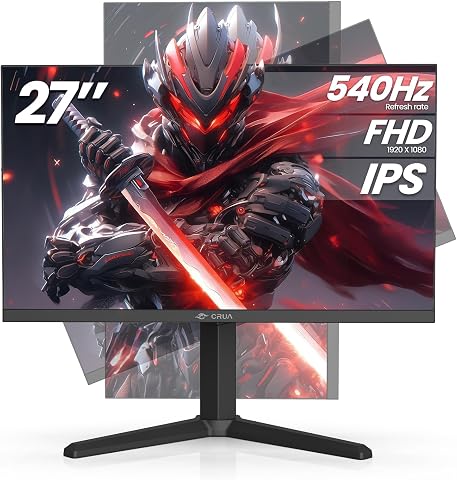 CRUA 27-Inch FHD 540Hz IPS Gaming MonitorView on Amazon →
 - 3
 Kado 2-Pack 34-Inch Curved Ultrawide Monitor with 1500R Curvature, 165Hz, 1ms…View on Amazon →
 - 4
 SANSUI 34-Inch Curved UWQHD 240Hz Gaming MonitorView on Amazon →
 - 5
 KTC 32 Inch 280Hz 240Hz Curved Gaming Monitor, FHD PC Monitor 1080P, H32C5View on Amazon →
 - 6
 Samsung 32" Odyssey G55C Series QHD Curved Gaming MonitorView on Amazon →
 - 7
 SANSUI 32 Inch Curved Gaming Monitor 240Hz FHD 1080PView on Amazon →
 - 8
 ASUS TUF Gaming VG259QM5A 25-Inch 1080p 240Hz G-SYNC Gaming MonitorView on Amazon →
 - 9
 SANSUI 27 Inch Curved Gaming Monitor 240Hz FHD 1080PView on Amazon →
 - 10
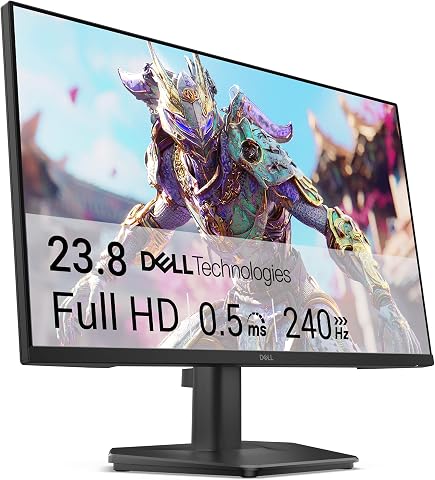 Dell 24 240Hz Gaming Monitor – SE2426HG – 23.8-inch FHD (1920×1080) 240Hz Dis…View on Amazon →
Why Frame Rate Matching Matters More Than Peak Hz
The guide’s main argument is that refresh rate and frame rate must be matched: a monitor’s refresh rate sets how often it can update the image, but the system’s frame rate determines how much new content exists to display. According to the guide, the benefit of stepping from 240Hz to 540Hz depends entirely on whether games and hardware can sustain such high frame rates.
This matters because buyers often overpay for headroom they cannot use. Competitive players with capable PCs may value the extra range of a 540Hz panel, while many others will get more practical benefit from a balanced 240Hz setup. The guide recommends checking frame rates in demanding games rather than lightweight benchmarks before buying.
How the Ten Monitors Were Ranked
The guide’s author, writing for ThorstenMeyerAI.com, explains the methodology: “I ranked these monitors around what changes the buying decision for high-refresh gaming: native refresh rate, resolution at the stated screen size, panel format, and how demanding the display is likely to be for a gaming setup.” The order favors a balance of speed, practical resolution, and focused use over a single headline specification.
That approach places the ASUS TUF VG259QM5A first as a compact 240Hz all-rounder, the CRUA 540Hz model as a specialized speed pick, and the ultrawides by screen area and immersion. The guide also notes format realities that shape the picks: ultrawide game support varies, with some titles filling the wider aspect ratio naturally while others show side bars or stretch the image, and curved panels — from gentle 1500R to pronounced 1000R designs like the Samsung Odyssey G55C — change how a screen fits a desk and seating position.
“A very high Hz figure only helps when a system can produce enough frames to use it.”
— ThorstenMeyerAI.com guide author
What the Guide Does Not Test
The guide is explicitly a specification-based comparison, not a hands-on review. The author states that unlisted features and real-world performance were not assumed or measured. Panel qualities such as color accuracy, response time behavior, HDR performance, and motion clarity are not individually verified in the ranking.
Pricing and availability for the ten models in 2026 are not stated in the source material, and it remains unclear how the monitors compare on warranty, build quality, or firmware features such as adaptive sync implementations.
Buyer Steps Before Purchasing
The guide recommends buyers take several steps before ordering: measure usable desk area including monitor stands, check frame rates in the demanding games they actually play, and decide whether their priority is competitive speed, detail, or immersion. Buyers planning a future graphics card upgrade should keep refresh headroom in mind.
For readers weighing formats, the next decision points are whether their main games support ultrawide aspect ratios and whether a centered, solo seating position suits a pronounced 1000R curve or whether shared viewing favors a flatter panel.
Key Questions
Is a 540Hz monitor worth it over 240Hz?
Only if your games and hardware can sustain very high frame rates, according to the guide. Competitive players with capable PCs may value the headroom; most buyers get more practical benefit from a balanced 240Hz setup.
Why does the guide rank large Full HD monitors lower?
At 31.5 or 32 inches, Full HD spreads pixels across more area, which can make text and game detail look less crisp at close desk distances. QHD adds detail but demands more from the graphics card.
Do all games support ultrawide monitors?
No. The guide notes that some titles fill the wider aspect ratio naturally while others show side bars or stretch the image, so buyers should check the games they actually play.
Were these monitors hands-on tested?
No. The author states the comparison is based on listed specifications and did not assume unlisted features or firsthand performance.
Source: ThorstenMeyerAI.com
Fall Picks
fall essentials
As an affiliate, we earn on qualifying purchases.