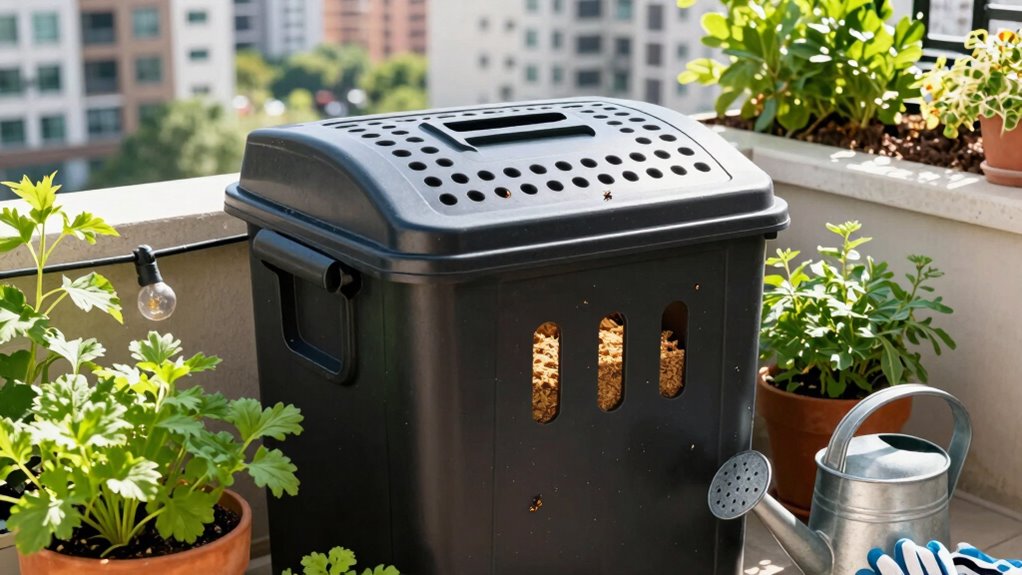

For small spaces, compact composting methods like vermicomposting and tumblers work best. These systems fit on balconies or in kitchens, using kitchen scraps such as fruit peels, coffee grounds, and paper waste. To manage odors and pests, keep the bin covered, balance green and brown materials, and aerate regularly. With the right setup and maintenance, you’ll produce rich compost fast. Keep exploring to discover tips that make tiny-scale composting easier and more effective.
Key Takeaways
- Vermicomposting and tumbling composters are ideal for small spaces due to their compact size and easy management.
- Use kitchen scraps, paper waste, and avoid meat or dairy to prevent odors and pest issues.
- Proper aeration, moisture control, and covering food scraps help maintain odor-free, pest-resistant compost.
- Regular turning and monitoring ensure healthy microbial activity and efficient decomposition in limited space.
- Consistent maintenance yields nutrient-rich compost that enhances small-scale gardening and sustainable waste management.
As an affiliate, we earn on qualifying purchases.
What Are the Best Composting Methods for Small Spaces?
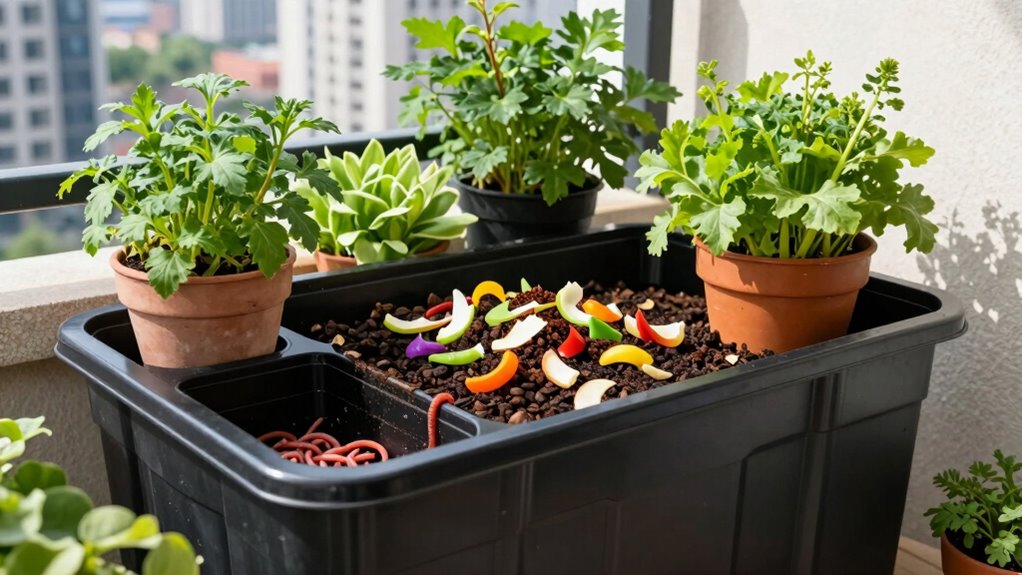
What are the best composting methods for small spaces? You want a system that’s efficient, odor-free, and manageable in a limited area. Vermicomposting is a top choice—it uses composting microorganisms and worms to break down organic waste quickly. This method requires a small bin, making it perfect for balconies or tiny yards. Another option is tumbling composters, which allow you to turn material easily, maintaining the right compost temperature and speeding up decomposition. Both methods rely on healthy composting microorganisms to do their work and keep the process active. Keep in mind, controlling compost temperature is vital; it guarantees efficient breakdown and prevents odors. Proper compost management ensures a balanced environment for microorganisms to thrive and produce quality compost. Additionally, understanding microbial activity can help you optimize the composting process for faster results. Incorporating appropriate aeration techniques can further enhance microbial health and compost quality. Monitoring temperature control is essential to maintain the right conditions and prevent issues like foul odors. Regularly checking moisture levels also supports microbial activity and compost health. With these methods, you can turn kitchen scraps into rich compost without taking up much space.
As an affiliate, we earn on qualifying purchases.
Which Composting System Is Right for Your Tiny Home or Balcony?
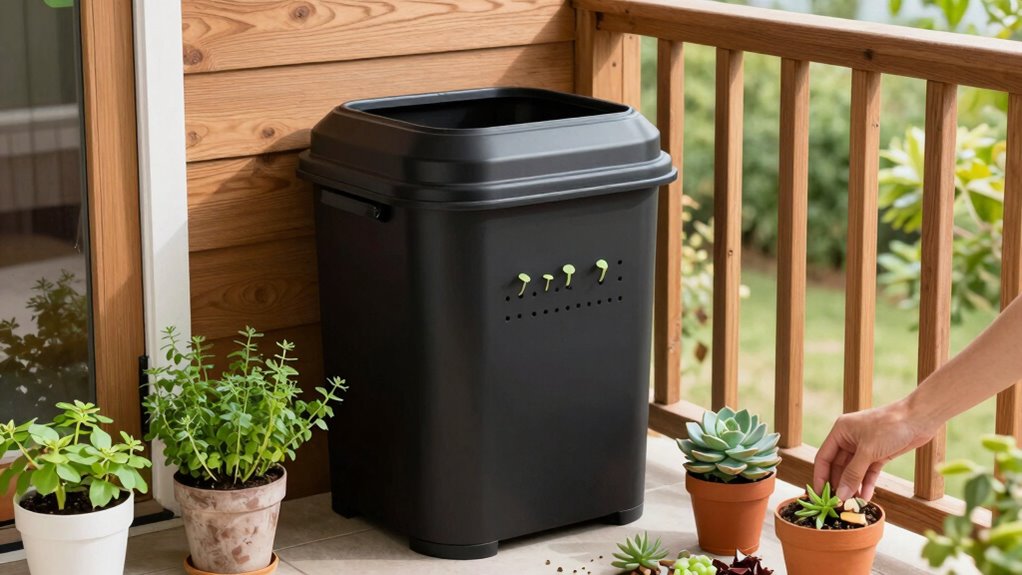
Choosing the right composting system depends on your available space, lifestyle, and personal preferences. If you have limited space and want a low-maintenance option, worm composting is ideal. It requires a small bin, and you can keep it indoors or on a balcony. Worms efficiently break down kitchen scraps and produce nutrient-rich castings, but you’ll need to maintain proper moisture and temperature. Additionally, selecting appropriate composting containers can make the process more efficient and manageable. Proper charger settings and low-voltage cutoff settings for equipment like composting heaters can optimize temperature control and energy use. Alternatively, bokashi fermentation is perfect for tiny homes, as it involves fermenting organic waste in a sealed container with bran inoculated with beneficial microbes. It’s quick, odorless, and doesn’t attract pests. Both methods are space-efficient and suitable for small-scale composting. Your choice depends on whether you prefer active worm management or a fermentation process that requires less frequent attention. Additionally, understanding essential oils for composting can enhance the process by naturally controlling odors and pests. Incorporating microbial inoculants can also boost composting efficiency, especially in small spaces.
As an affiliate, we earn on qualifying purchases.
What Materials Can You Compost in Limited Space?
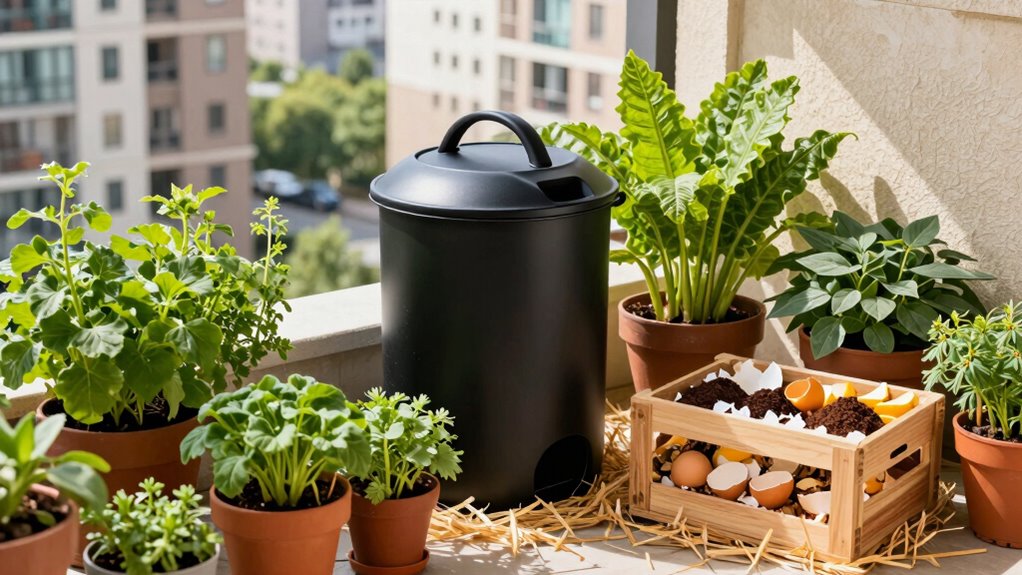
When composting in limited space, selecting the right materials is essential to keep your system efficient and odor-free. You can compost kitchen scraps like fruit and vegetable peels, coffee grounds, and eggshells. Avoid meat, dairy, and oily foods, as they can cause odors and attract pests. Paper waste, such as newspaper, cardboard, and paper towels, decomposes well and adds carbon to your compost. Be cautious with compostable plastics; only include those labeled as compostable, and ensure they break down fully in your system. Small-space composting benefits from a balanced mix of green (wet) and brown (dry) materials. Proper material selection is key to maintaining a healthy, odorless compost that fits your limited space. Incorporating air circulation techniques can further improve compost quality and reduce odors. Additionally, understanding the role of celestial influences in personal traits can inspire new ways to connect with your environment and enhance your composting practices. Embracing a mindful approach to composting methods can help you optimize your process and foster a deeper connection with nature.
As an affiliate, we earn on qualifying purchases.
How to Set Up a Compact Compost Bin in Your Kitchen or Balcony
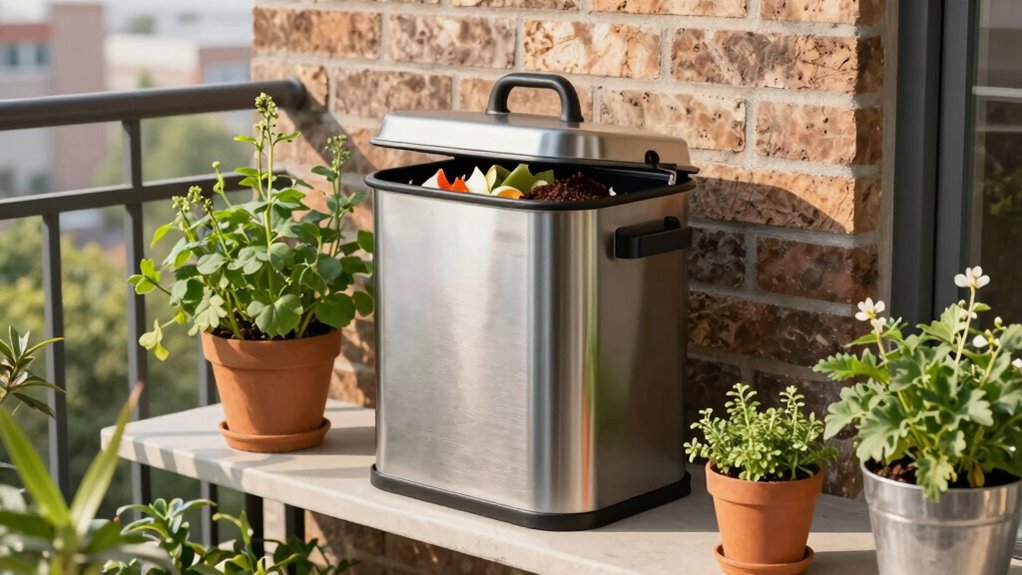
To establish a compact compost bin in your kitchen or balcony, start by selecting a container that fits your space and is easy to manage. Keep odor under control by choosing a bin with proper ventilation and using the right materials. Regular maintenance and troubleshooting will ensure your compost stays healthy and odor-free. Incorporating natural filtration systems can further improve water quality and support sustainable practices in your composting efforts. Using airless paint spraying tips to manage odors and maintain cleanliness can also be beneficial during bin maintenance. Additionally, understanding indoor air quality and proper ventilation techniques can help prevent odors from accumulating in small spaces. Ensuring your compost setup is safe during electric fireplace safety during home renovations can also contribute to a cleaner environment. Furthermore, employing ventilation methods can help optimize airflow and reduce unwanted smells.
Choosing the Right Container
Selecting the right container is essential for successful composting in small spaces. Your container choices should prioritize size and functionality, fitting comfortably in your kitchen or balcony without taking up too much room. Look for options with secure lids to contain odors and pests. Material durability is also vital; choose containers made from sturdy, long-lasting materials like high-quality plastic or metal that won’t crack or corrode over time. Consider containers with ventilation holes to promote airflow, which helps break down organic waste effectively. Proper aeration can significantly enhance composting efficiency by increasing oxygen flow, making the process faster and more effective. Incorporating composting accessories, such as aeration tools or compost turners, can further optimize your composting process in small spaces. Compact bins with tight-fitting lids are ideal for small spaces, ensuring your composting process stays neat and odor-free. Additionally, choosing a container with proper aeration can significantly enhance composting efficiency by increasing oxygen flow. To improve the overall composting experience, selecting a container with proper ventilation is crucial, as it helps prevent foul odors and promotes healthy compost breakdown. When selecting your container, also consider space-saving designs that maximize functionality while minimizing footprint, making composting more manageable in limited areas. Ultimately, selecting a durable, appropriately sized container tailored to your space makes composting both manageable and efficient.
Managing Odor Effectively
Managing odors effectively is essential to keep your small-space compost bin from becoming unpleasant. To achieve good odor control, balance green and brown materials, ensuring enough carbon-rich content like dried leaves or paper to absorb moisture and odors. Use a sealed or lidded bin to contain smells and prevent pests from getting in. Regularly turning the compost speeds decomposition and minimizes odor buildup. Avoid adding meat, dairy, or greasy foods, which can cause strong smells and attract pests. Keep the compost moist but not soggy, as excess moisture worsens odor issues. Placing your bin in a well-ventilated area also helps. Proper management prevents pest problems and ensures your compost remains odor-free, making small-space composting a hassle-free experience. Incorporating home design/architecture details such as proper placement and ventilation can further optimize odor control and overall efficiency.
Maintenance and Troubleshooting
Setting up a compact compost bin in your kitchen or balcony is straightforward, but paying attention to maintenance and troubleshooting guarantees it stays odor-free and functional. Many composting myths lead beginners astray, so focus on proper balance—adding greens and browns in moderation. Avoid common composting mistakes like overfeeding the bin or neglecting aeration, which can cause odors or pests. Regularly check moisture levels; if it’s too wet, add dry materials, and if it’s too dry, sprinkle some water. If you notice persistent odors or pests, review your method, as these issues often stem from improper maintenance. Troubleshooting involves adjusting your inputs and ensuring proper airflow. Staying attentive helps you maintain an efficient, odor-free compost system and prevents simple mistakes from derailing your efforts.
How to Manage Odors and Pests in Small-Scale Composting
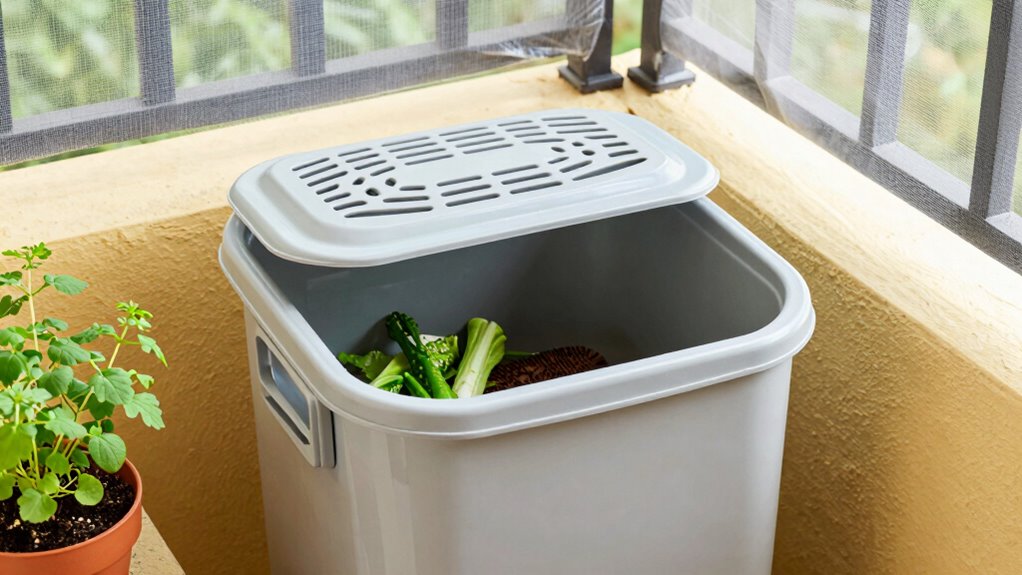
To keep odors and pests at bay in small-scale composting, you need to be proactive about maintaining the right balance of materials. Proper odor control and pest prevention depend on managing moisture, aeration, and material layers. Keep a ratio of greens to browns (nitrogen to carbon) to minimize smells and discourage pests. Cover food scraps with browns like leaves or shredded paper to block pests and absorb odors. Regularly turn your compost to aerate and reduce moisture buildup, which attracts pests. Use the following table as a quick reference:
| Tip | Action | Result |
|---|---|---|
| Balance materials | Add browns to greens | Odor control, pest prevention |
| Cover scraps | Use leaves or paper | Reduce pests and smells |
| Turn compost | Mix regularly | Aeration and moisture control |
| Manage moisture | Keep compost damp, not soaked | Prevent odors and pests |
| Use barriers | Place mesh or lids over compost | Keep pests out |
Tips for Maintaining and Troubleshooting Your Tiny Compost System
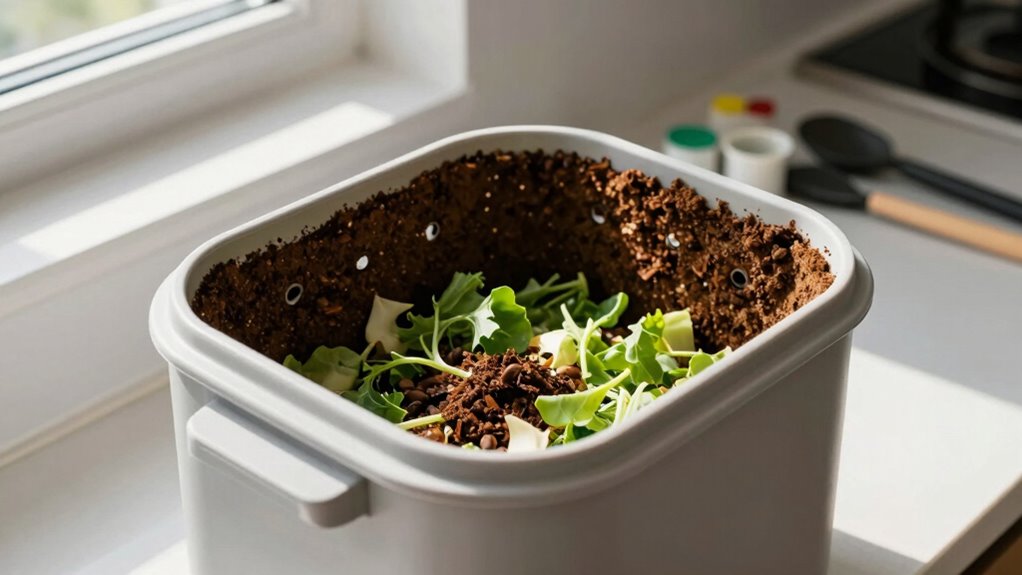
Keeping your tiny compost system in good shape requires regular maintenance and quick troubleshooting. For worm composting, guarantee your worms stay moist and feed them balanced scraps to prevent odors and pests. If the system smells or attracts pests, add more bedding or aerate the compost to boost airflow. Troubleshoot by checking moisture levels; too dry or too wet conditions hinder decomposition. To maintain nutrient-rich compost, regularly harvest finished material and avoid overfeeding. Using compost tea can be a simple way to boost your plants, but it’s important to filter it well to prevent mold. When problems arise, adjusting the balance of green and brown materials and maintaining proper moisture levels usually solve issues quickly. Consistent monitoring keeps your small compost system healthy and productive.
What Can You Expect to Produce From Your Small Compost Bin?
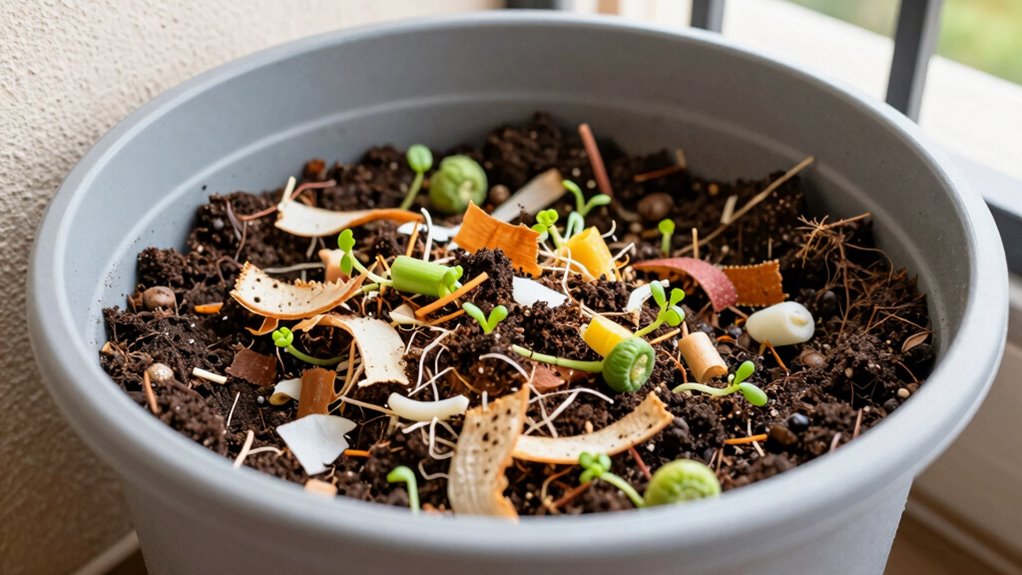
When your small compost bin is well-maintained, you’ll notice it gradually transforming your kitchen scraps and yard waste into nutrient-rich soil amendments. Many composting myths suggest you need large quantities or special conditions, but small bins can produce valuable compost with proper care. What you can expect to produce are dark, crumbly, earthy-smelling materials that enrich your soil. While it may take a few months, the compost benefits include improved plant growth, better soil structure, and reduced waste. Keep in mind that your small bin won’t create compost overnight, but consistent monitoring and balancing green and brown materials will speed up the process. Ultimately, you’ll get a usable, organic soil conditioner that boosts your garden’s health and helps reduce waste.
Urban Composting Laws and How to Follow Them
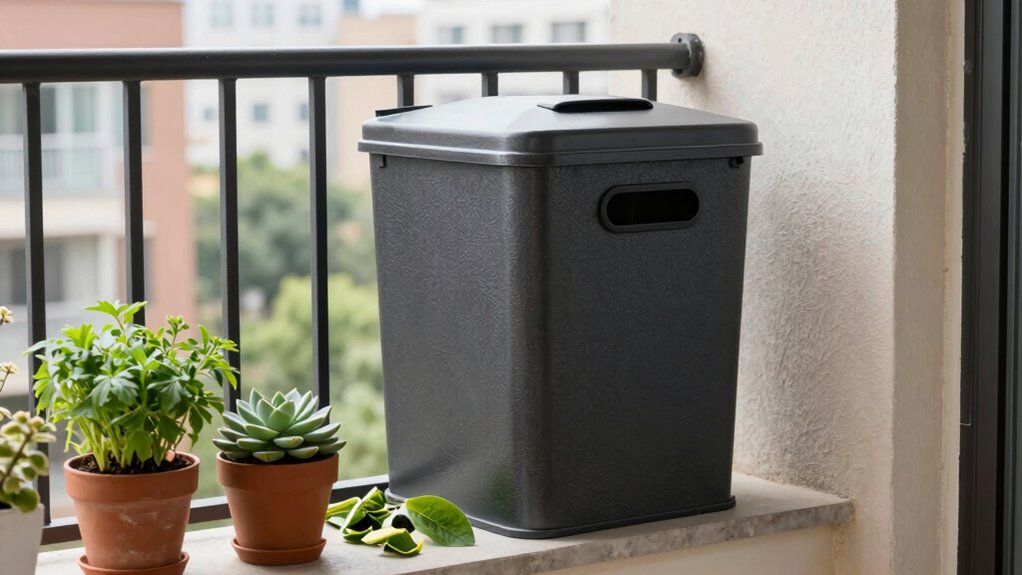
Navigating urban composting laws is essential for ensuring your composting efforts stay legal and trouble-free. Local regulations vary widely, so check your city or neighborhood rules before starting. Some areas restrict composting to prevent pests or odors, while others have specific guidelines for bin placement and size. In certain cases, you might need a composting permit, especially if you’re composting large amounts or using specific methods. To stay compliant, contact your local housing authority or environmental agency for detailed information. Follow any rules about the types of waste allowed and how to maintain your compost bin properly. Staying informed and adhering to local regulations helps you avoid fines and keeps your composting sustainable and beneficial for your small space.
Creative Ways to Use Your Compost for Indoor Plants and Small Gardens
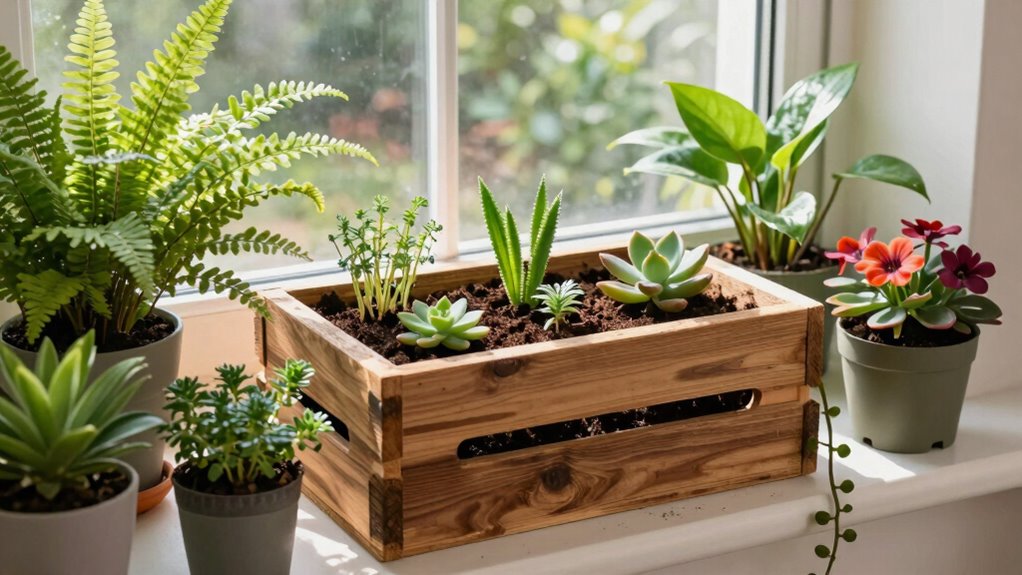
Once you’ve mastered the rules for composting legally in your urban space, you can get creative with how you use that nutrient-rich material. One effective method is making compost tea—steeping finished compost in water creates a liquid fertilizer that energizes your indoor plants and small garden beds. You can also incorporate worm composting, which produces vermicompost that’s rich in nutrients and ideal for container gardening. Use worm castings as a top dressing or mix them into potting soil for a boost of organic matter. These methods maximize your compost’s value without cluttering your limited space. Whether you brew compost tea or keep a worm bin nearby, leveraging these techniques helps your plants thrive while making the most of your small-scale composting efforts.
Frequently Asked Questions
How Long Does It Take for Compost to Be Ready in Small Spaces?
It typically takes 2 to 6 months for compost to reach maturity in small spaces. Your compost’s maturity depends on factors like temperature, moisture, and how often you turn it. To maximize space efficiency, layer greens and browns and keep it moist. Regular aeration speeds up decomposition, helping you produce rich compost faster. With consistent care, you’ll have nutrient-rich soil ready for your plants in just a few months.
Can Composting Be Done Indoors Without Odors or Pests?
Did you know that 30% of household waste is compostable? You can compost indoors without odors or pests by choosing a sealed, odor-controlled bin with proper ventilation. Using carbon-rich materials like dry leaves helps improve indoor air quality and prevents pests. Regularly turning your compost and maintaining moisture levels also keep pests away and odors at bay, making indoor composting clean and efficient.
Are There Specific Plants That Benefit Most From Small-Scale Compost?
You’ll find that herbs like basil, parsley, and mint benefit most from small-scale compost, especially when you do container garden composting. These plants thrive with nutrient-rich compost that improves soil quality in limited spaces. By composting for herbs, you provide a natural fertilizer that boosts growth. Keep your compost bin odor-free and pest-free, ensuring your small space remains pleasant and productive for your herb garden.
What Are Common Mistakes to Avoid in Compact Compost Setups?
Avoid overwatering mistakes and improper layering in your compact compost setup. Overwatering can cause your compost to become soggy and smell, while improper layering disrupts airflow and slows decomposition. Make sure to balance green and brown materials, keeping the pile moist but not soaked. Turn or aerate regularly to prevent compaction, and don’t add too much food waste at once. These steps keep your compost healthy and efficient in small spaces.
How Can I Compost Year-Round in a Small Urban Environment?
Think of your small urban space as a tiny garden hidden in a castle’s corner. To compost year-round, you need indoor composting methods that keep your waste turning even in winter. Regular compost maintenance, like turning your bin and balancing greens and browns, guarantees steady decomposition. Use a sealed container to avoid pests and odors. This way, your compost castle stays active, nourishing your plants no matter the season.
Conclusion
Even in a tiny space, composting transforms waste into worth. While it’s easy to focus on limited room and potential messes, remember that your small system can produce rich soil and support lush plants. The challenge isn’t just managing odors or pests, but turning your compact setup into a thriving eco-haven. With the right methods, your tiny compost becomes a powerful tool—proof that big impact can come from the smallest spaces.