
🔍 Read the full analysis: What Buyers, Wages And AI Reveal About Bangladesh’s Garment Industry on ThorstenMeyerAI.com

Get the latest gadgets delivered free with Prime
- Fast, free delivery on millions of items
- Prime Video, Amazon Music and more included
- Member-only deals all year
TL;DR
Bangladesh’s garment wage board postponed a meeting scheduled for Nov. 16, leaving workers’ 32,000-taka proposal unanswered as protests disrupted factories and roads. The board is due to meet Nov. 23, but employers have not publicly submitted a wage figure; the new minimum is scheduled to take effect Dec. 1. Buyer pricing, factory costs and automation add pressure to an industry employing about four million people.
Bangladesh’s garment wage board postponed a meeting on Nov. 16 at which factory owners were expected to respond to workers’ proposal for a 32,000-taka monthly minimum, amid protests that disrupted factories and major roads around Dhaka. The board is scheduled to meet again on Nov. 23; its chairman says the new wage will take effect Dec. 1, but the amount has not been decided.
The current minimum wage for garment workers is 12,500 taka a month, in force since Dec. 1, 2023. Protesters have called for 30,000 taka, while the workers’ representative on the wage board formally proposed 32,000 taka, or about $257 using the Bangladesh Bank exchange rate cited in the source. That proposal would be about 156% above the current minimum; the source separately describes the protesters’ 30,000-taka demand as a 140% increase.
Factory owners have not presented a formal figure. The Financial Express reported that employers had discussed a level of around 15,000 taka before the postponed meeting. The Bangladesh Garment Manufacturers and Exporters Association and Bangladesh Knitwear Manufacturers and Exporters Association said their side was ready to submit its proposal, but requested a new meeting date after learning that workers’ representative Anwar Hossain had fallen ill and been admitted to hospital.
Protests continued from Nov. 17 to 18 in industrial areas including Gazipur, Savar, Ashulia and Mirpur. News organizations cited varying estimates of factory disruption: a BGMEA vice-president told The Daily Star that production had stopped at nearly 450 factories, while AFP reported about 500 of the country’s roughly 4,500 garment factories. AP, citing local media, reported that around 20,000 workers from one factory blocked the Dhaka-Aricha Highway in Savar on Wednesday. Police used tear gas, stun grenades and batons; AP said it was not immediately clear how many people were injured.
Wages Reach Four Million Jobs
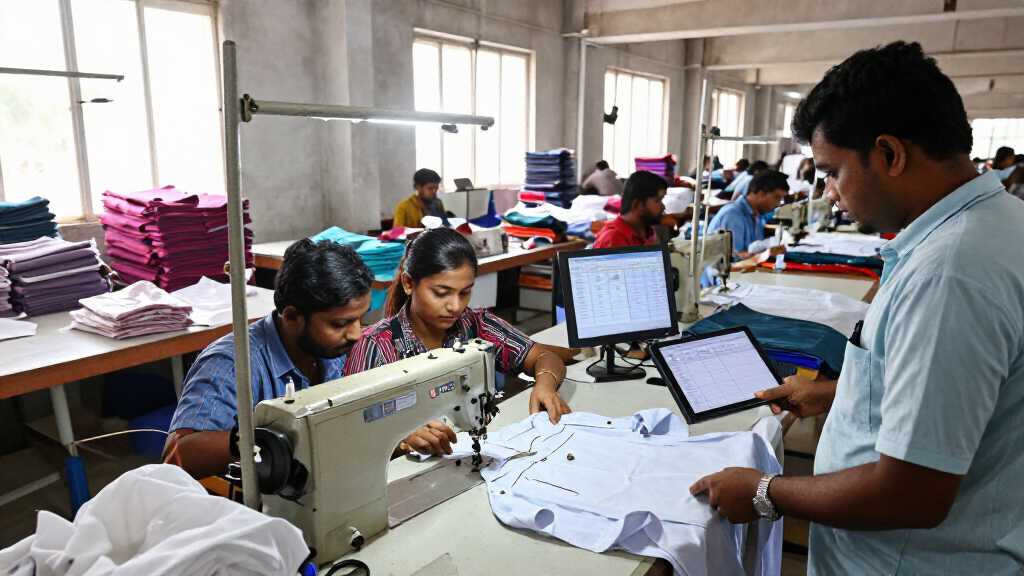
The dispute concerns more than a single pay settlement. Bangladesh’s garment sector employs about four million people and relies on exports, so a wage decision affects workers’ household income as well as factory operating costs and production schedules. The immediate shutdowns and blocked roads show how a stalled negotiation can interrupt manufacturing and transport in key industrial areas.
Factory owners argue that a sharp increase could weaken Bangladesh’s cost position against competitors such as India and Vietnam. They also point to buyer prices and rising energy costs. These are employers’ arguments, not an independently established measure of the industry’s competitiveness. The source says no international buyer had commented on this round of wage talks in the reporting reviewed.
There is also a longer-term employment question. A 2024 study of factories around Dhaka found that automated production lines needed 30.58% fewer workers, with helpers accounting for most of the reduction. That finding is about the factories studied, not necessarily every garment plant in Bangladesh. Still, it suggests wage negotiations are unfolding as some workplaces adopt technology that can reduce demand for certain roles.
Products Worth Considering

Apple AirPods Pro (1st Generation) with MagSafe Charging Case

Bose SoundLink Plus Portable Bluetooth Speaker, Black

Sony WH-1000XM6 Wireless Noise-Cancelling Headphones – Midnight Blue
As an affiliate, we earn on qualifying purchases.
How Pay and Automation Intersect
The current 12,500-taka minimum took effect on Dec. 1, 2023. The source says the present wage board is negotiating a new rate, with the workers’ side proposing 32,000 taka and employers yet to state a formal offer. Before the Nov. 16 meeting was postponed, employers had reportedly discussed around 15,000 taka. Those figures mark a wide gap, but none is the board’s final decision.
Disruption began before the postponed session. According to the source’s account of reporting by The Financial Express, 98 factories closed under a “no work, no pay” provision on Nov. 16 and another 24 suspended operations. On Nov. 17, the Border Guard Bangladesh deployed 42 platoons across industrial zones in Dhaka, Gazipur and Narayanganj, according to its spokesperson as quoted by The Daily Star. Police in Savar said 117 people had been arrested since protests began on Oct. 31.
Changes in the workforce add another dimension. An ILO working paper, calculating from labour force survey data, puts women’s share of apparel jobs at 35.2% in 2024, down from 46.2% in 2016–17. That is a reported change in workforce share; the figures alone do not establish why it happened or how much automation contributed.
“We want to return to our machines.”
— A 28-year-old garment worker, speaking to AFP
The Wage Offer Is Still Unknown
The central unknown is the final wage. The board has not announced a rate, and employers have not publicly submitted a formal figure in the material available as of Nov. 19. The reported 15,000-taka discussion is not an official offer. It is also unclear whether the board’s Nov. 23 meeting will reach agreement or require further talks.
Reported factory-closure counts vary, reflecting different sources and geographic coverage. The source reports arrests and police use of force, but does not establish that every person arrested was involved in violence. A Savar police officer alleged that people from various organizations, including banned groups, had infiltrated the protests; the cited report provided no evidence for that allegation. AP said the number of people injured in Wednesday’s confrontation was not immediately clear. The source reported no deaths in the coverage it reviewed, which does not establish that no injuries or later incidents occurred.
It also remains unclear how buyers will respond to a new wage level, whether factories can pass higher labor costs into order prices, and how automation will affect employment across the wider industry. The available study concerns a sample of factories near Dhaka, while the workforce figures do not identify a single cause for the decline in women’s share.
Nov. 23 Wage Board Meeting
The wage board is scheduled to meet again on Nov. 23. Its chairman has said the revised minimum will take effect on Dec. 1, 2026, whatever amount is agreed, with workers receiving it in their January 2027 pay. The decision and the board’s explanation of how it reached the figure will show whether the gap between the workers’ proposal and employers’ reported discussions narrows.
Further reporting will need to establish whether protests and factory closures continue, whether a formal employers’ proposal is made, and whether the board announces a settlement at its next session. The source provides no confirmed response from international buyers, so their position and any effect on future orders remain open questions.
Key Questions
What wage are Bangladesh garment workers seeking?
The workers’ representative formally proposed 32,000 taka per month to the wage board. Protesters have also demanded 30,000 taka. The current minimum is 12,500 taka.
When will the new minimum wage be decided?
The board is scheduled to meet on Nov. 23, 2026. Its chairman says the new rate will take effect Dec. 1, but a final amount has not been announced.
Have factory owners made a formal wage offer?
Not in the reporting available as of Nov. 19. The Financial Express reported that owners had discussed around 15,000 taka, but the source distinguishes that discussion from a formal offer.
How have the protests affected garment production?
Reports gave differing estimates. A BGMEA vice-president cited by The Daily Star said production had stopped at nearly 450 factories; AFP reported about 500 closures among roughly 4,500 garment factories. Counts may differ by date and area covered.
What does automation have to do with the wage dispute?
A 2024 study of factories around Dhaka found automated lines needed 30.58% fewer workers, mostly helpers. The finding adds employment context but does not establish the effect of automation on every factory or explain the decline in women’s share of apparel jobs.
Source: ThorstenMeyerAI.com