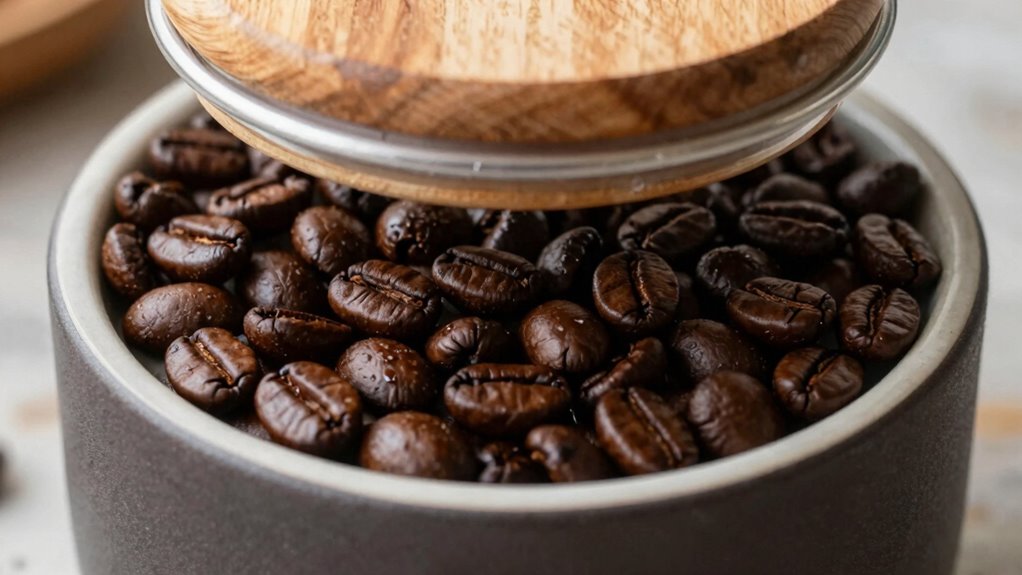

To keep your coffee beans fresh and flavorful longer, store them in airtight, opaque containers away from heat, light, and moisture. Keep the temperature stable around 60-70°F and avoid refrigeration unless properly sealed. Store whole beans separately from ground coffee and grind just before brewing for peak aroma. Regularly check your storage conditions and avoid common mistakes like exposure to air or heat. Follow these tips, and you’ll preserve your coffee’s freshness much longer—learn more below.
Key Takeaways
- Store coffee beans in airtight, opaque containers in a cool, dark place to prevent oxygen and light exposure.
- Keep beans away from heat sources and avoid temperature fluctuations for optimal freshness.
- Grind beans just before brewing to preserve aroma and flavor, and avoid storing pre-ground coffee.
- Use whole beans within a few weeks of roasting and regularly check for signs of staleness.
- Maintain consistent storage conditions and avoid refrigeration or freezing unless properly sealed.

Veken Coffee Canister with Window,Airtight Stainless Steel Pantry Container,Home Kitchen Food Storage Organizers for Ground,Beans,Espresso,Rice,Tea,Sugar,Cereal, Decor,Bar Accessories,Gifts,22OZ,Black
Gifts for Coffee Lovers This Christmas: This elegantly designed jar is a stylish and functional gift for coffee…
As an affiliate, we earn on qualifying purchases.
As an affiliate, we earn on qualifying purchases.
Why Proper Coffee Storage Is Essential for Freshness
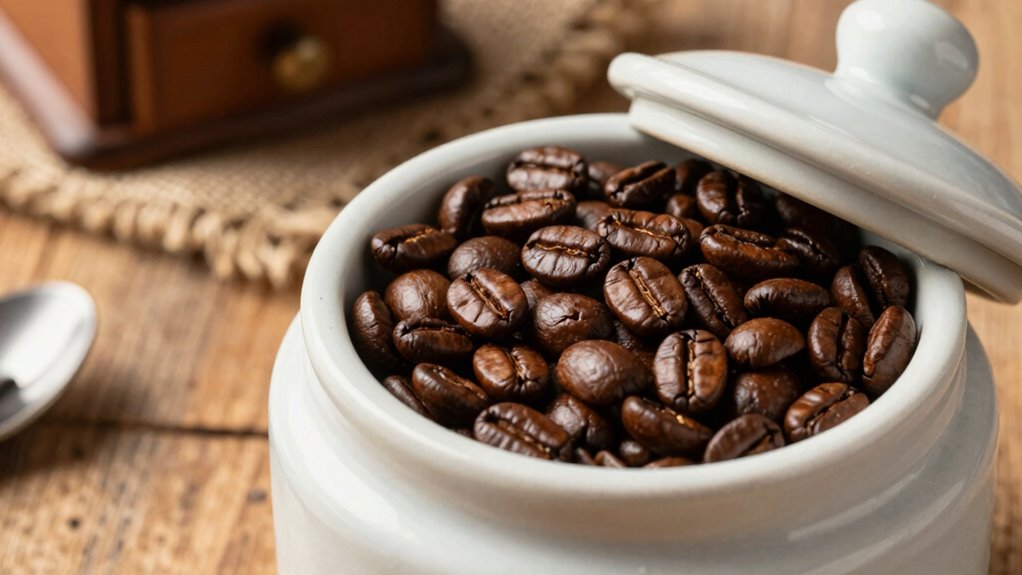
Proper coffee storage is essential because exposure to air, moisture, heat, and light causes beans to lose their flavor and aroma quickly. When coffee beans aren’t stored appropriately, the delicate process of coffee bean roasting is compromised, leading to stale, flat-tasting coffee. Additionally, improper storage can affect caffeine content, making your brew weaker or more bitter than intended. Freshly roasted beans contain the ideal balance of flavors and caffeine, but they degrade rapidly if exposed to environmental factors. By keeping beans in airtight containers away from heat and light, you preserve their freshness longer. Proper storage also helps prevent oxidation that diminishes coffee quality over time. This ensures you enjoy the full flavor profile and caffeine strength that your beans originally had, providing a better coffee experience every time.

Infinity Jars, 1 L (12 oz) Airtight Coffee Canister Ultraviolet Glass Coffee Bean Storage Container Antistatic, Light Blocking Container for Coffee, Herbs, Tea & Spices Durable
𝗨𝗩-𝗕𝗹𝗼𝗰𝗸𝗶𝗻𝗴 𝗨𝗹𝘁𝗿𝗮𝘃𝗶𝗼𝗹𝗲𝘁 𝗚𝗹𝗮𝘀𝘀 𝗣𝗿𝗼𝘁𝗲𝗰𝘁𝗶𝗼𝗻: Infinity Jars’ premium light-proof UV glass prevents flavor degradation, keeping coffee beans, grounds, herbs,…
As an affiliate, we earn on qualifying purchases.
As an affiliate, we earn on qualifying purchases.
How Do Temperature and Humidity Impact Coffee Storage?

Temperature and humidity levels play a crucial role in maintaining coffee’s freshness. Keeping temperature stable prevents rapid aging and flavor loss, so avoid areas with temperature fluctuations. Consistent temperature stability slows down the deterioration process, preserving your coffee’s aroma and taste. Humidity control is equally important; too much moisture can cause mold and staleness, while too little dries out the beans. Aim for a cool, dark spot with moderate humidity—ideally around 50-60%. Avoid places like the kitchen or near windows where heat and moisture vary. Properly managing temperature and humidity ensures your coffee remains flavorful longer, preventing spoilage and maintaining ideal freshness. Additionally, storage containers with proper sealing can further protect your beans from environmental damage. Using environmental factors like temperature and humidity to your advantage can significantly extend the shelf life of your coffee beans. Regularly monitoring these climate conditions helps prevent unintentional exposure to damaging environments, which can compromise flavor. Incorporating climate control solutions can also help maintain optimal conditions for coffee storage. Being aware of ambient conditions allows you to better adapt your storage practices to the environment.

Veken Coffee Canister, 39OZ Large, Airtight Stainless Steel Food Storage Container for 2.2lbs Coffee Beans,Ground, Sugar,Espresso,Rice,Tea,Flour, Cereal,Home Kitchen Pantry Bar Accessories, Gifts,Gray
【Fantastic Christmas Gifts for Coffee Lovers】A perfect gift for coffee enthusiasts, family, and friends. With its elegant design,…
As an affiliate, we earn on qualifying purchases.
As an affiliate, we earn on qualifying purchases.
What Are the Best Containers and Packaging for Coffee?
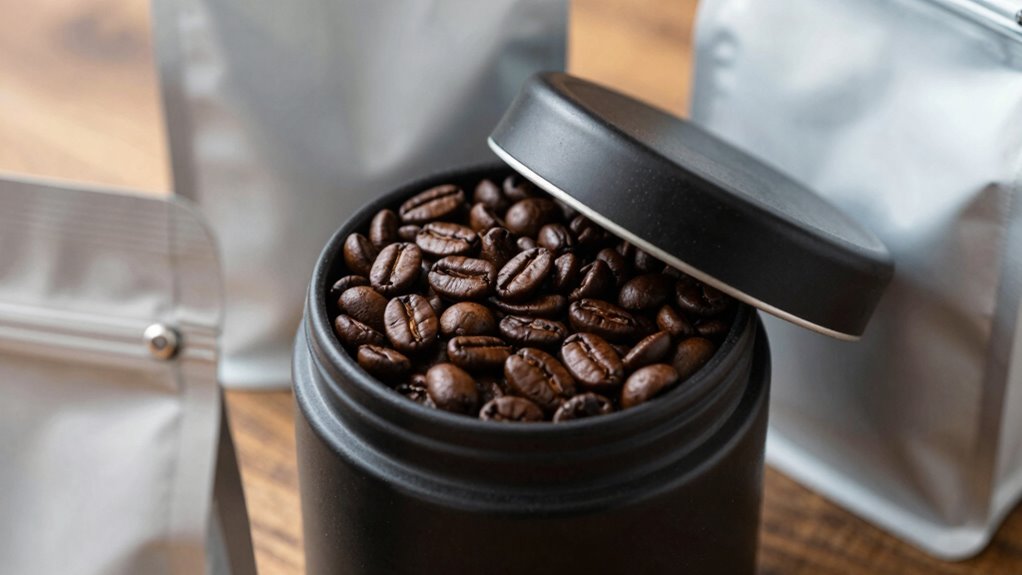
Choosing the right containers and packaging is key to keeping your coffee fresh longer. Proper storage preserves the coffee aroma and maintains bean freshness. Look for containers that:
- Are airtight to prevent oxygen from degrading the flavor.
- Block light, which can cause the coffee to go stale.
- Have a non-reactive interior, like ceramic or opaque plastic, to avoid flavor transfer.
- Consider using specialized coffee storage containers designed to maintain optimal freshness and aroma. These containers often incorporate oxygen-absorbing features to extend shelf life. Additionally, using vacuum-sealed bags can further reduce exposure to air and preserve flavor during longer storage periods. Proper storage conditions such as a cool, dark place can significantly influence freshness and flavor retention.
Avoid clear or flimsy bags, as they let in light and air. Resealable bags with one-way valves are great for preserving aroma during initial storage, but for long-term, transfer to an airtight container. This way, your coffee stays flavorful and fresh longer, especially if stored in a cool, dark place to minimize temperature fluctuations and light exposure.
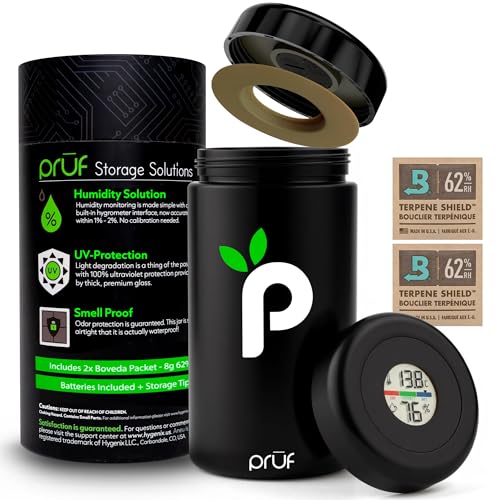
Prūf Controlled Environment Airtight Storage Jar with Hygrometer – UV-Protected Glass Container for Coffee Beans, Tea, Spices & Aromatic Goods – Locks in Freshness – Includes Humidity Packs – 500ml
PRESERVE WHAT MATTERS Freshness is fragile. Light, oxygen, and fluctuating humidity quietly degrade coffee, spices, teas, and other…
As an affiliate, we earn on qualifying purchases.
As an affiliate, we earn on qualifying purchases.
How to Store Whole Beans and Ground Coffee Properly
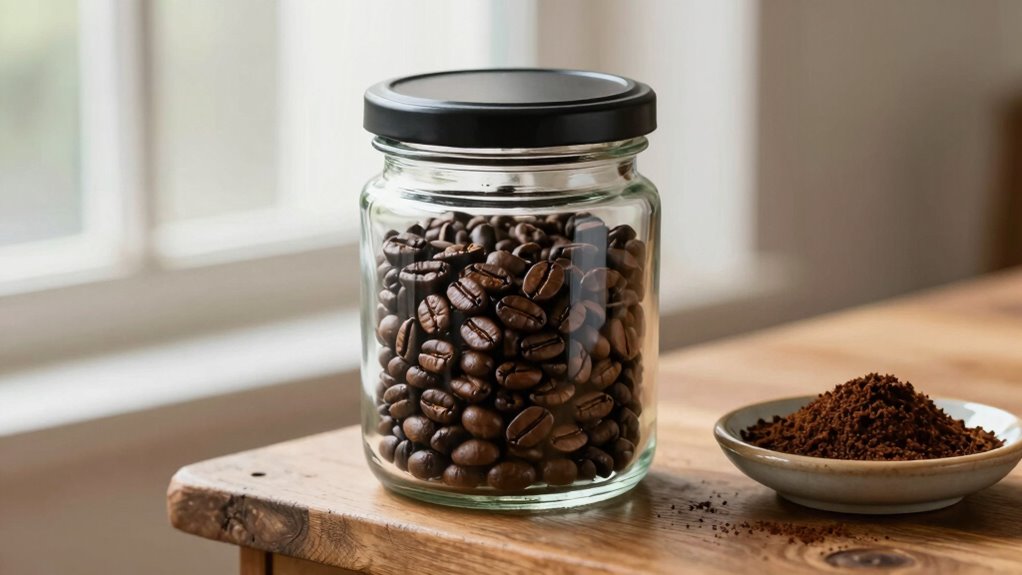
To keep your coffee fresh, store whole beans and ground coffee in airtight containers. Place them in a cool, dark spot away from light exposure to preserve flavor. Avoid storing coffee in warm or humid areas to maintain its quality. Using proper storage techniques can significantly extend the shelf life and flavor integrity of your coffee.
Use Airtight Containers
Using airtight containers is essential for preserving the freshness and flavor of your coffee, whether you’re storing whole beans or ground coffee. Proper containers lock in the coffee aroma and prevent exposure to air that causes staling. To maximize freshness, keep these tips in mind:
- Choose containers with a tight seal to prevent air from entering.
- Store whole beans separately from ground coffee to maintain their bean grind integrity.
- Always fill containers to minimize air space, which helps preserve flavor longer.
- Consider storing coffee in a free floating environment to avoid temperature fluctuations that can affect quality. Additionally, keeping your coffee in a cool, dark place away from heat and light sources further maintains its freshness and flavor. Regularly inspecting your storage conditions helps ensure optimal coffee preservation.
Store in Cool Place
Ever wondered why coffee tastes flat after a few weeks? The key is storing your beans in a cool place. Heat accelerates the staling process, causing loss of flavor and aroma. Keep your whole beans or ground coffee away from heat sources like ovens or direct sunlight. When you store coffee in a cool environment, it preserves freshness longer, ensuring better brewing techniques and richer flavors. If you buy beans with specific coffee certifications, such as Organic or Fair Trade, proper storage helps maintain their quality and integrity. Use an airtight container and place it in a pantry or cupboard that stays consistently cool. This simple step prevents premature aging, keeping your coffee vibrant and flavorful for as long as possible. Additionally, understanding the effects of temperature fluctuations on coffee storage can help you better maintain its quality over time. Being mindful of storage conditions can significantly extend the shelf life of your coffee, especially when considering quality preservation techniques.
Avoid Light Exposure
Storing coffee away from light is just as important as keeping it in a cool place. Exposure to light, especially UV rays, causes coffee’s oils to break down, leading to flavor loss. To protect your beans and ground coffee, consider these tips:
- Use opaque or dark packaging materials that block UV damage, preventing light from reaching the coffee.
- Keep your coffee in a sealed, airtight container to minimize light exposure and preserve freshness.
- Store your coffee in a dark cupboard or pantry, away from windows and direct sunlight.
- Proper storage can also help maintain the coffee’s freshness over time, ensuring a better flavor experience with each brew.
- Additionally, choosing appropriate storage containers made of materials like ceramic or stainless steel can further protect coffee from light and environmental factors.
- Incorporating proper storage practices can significantly extend the shelf life and preserve the aromatic qualities of your coffee beans.
- Using light-protective packaging can further enhance the preservation of flavor and aroma by reducing exposure to damaging rays.
- Being mindful of the storage environment will help ensure your coffee retains its rich, fresh flavor longer.
Do’s and Don’ts for Keeping Your Coffee Fresh
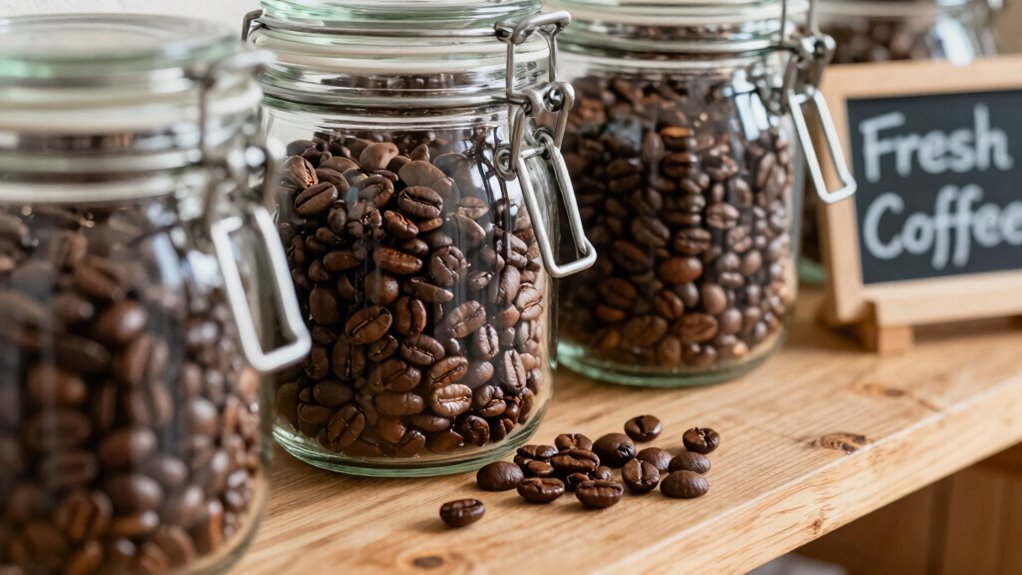
To keep your coffee beans fresh, maintaining proper storage is essential. Avoid exposure to air, heat, and moisture, which accelerate the loss of flavor and degrade the coffee bean roasting quality. Keep beans in an airtight container, ideally opaque, to protect them from light and oxygen. Don’t store them in the fridge or freezer, as temperature fluctuations can cause condensation, harming caffeine stability and leading to stale beans. Instead, store your coffee in a cool, dark place, away from appliances that emit heat. Proper storage conditions can significantly extend freshness and preserve the beans’ aroma. Always buy in small amounts to prevent long-term storage. Don’t grind your beans until you’re ready to brew, as pre-ground coffee loses freshness faster. Understanding hereditary factors can help you choose beans with optimal freshness and flavor longevity. By following these do’s and don’ts, you preserve both flavor and caffeine potency longer.
Can You Store Coffee in the Freezer or Refrigerator? Pros and Cons
Storing your coffee in the freezer can help keep it fresh longer, but it’s not without risks. The refrigerator may introduce moisture that can spoil your beans, and repeated freezing and thawing can cause flavor loss. Understanding these pros and cons will help you decide the best storage method for your coffee.
Freezer Keeps Beans Fresh
Freezing coffee beans might seem like a good way to preserve their freshness, but it’s important to weigh the pros and cons before deciding. Freezing can slow down the natural aging process and help maintain coffee flavor preservation for longer periods. However, it can also impact the quality if not done correctly.
Here are some key points to consider:
- Properly stored, frozen coffee beans retain their original roast and flavor profile longer.
- Avoid frequent thawing and refreezing, which can cause moisture and compromise coffee bean roasting quality.
- Use airtight, vacuum-sealed containers to prevent flavor contamination and preserve the integrity of your beans.
While freezing can extend shelf life, it requires careful handling to prevent flavor loss and ensure the best possible coffee bean roasting results.
Refrigerator Risks Moisture
Although refrigerating coffee might seem like a convenient option, moisture is a significant risk that can compromise the beans’ quality. When you store coffee in the fridge, moisture contamination becomes a serious concern. Every time you open the fridge, humidity can seep in and cause condensation on the beans, which promotes mold growth and deteriorates flavor. Coffee beans are porous, so they easily absorb moisture, leading to a stale taste and potential spoilage. Additionally, the fluctuating temperatures in a refrigerator can further damage the beans. If you choose to refrigerate, ensure the beans are in an airtight container and kept away from moisture sources. Otherwise, the risks of mold growth and flavor degradation outweigh the convenience.
Flavor Loss Concerns
Have you ever wondered if keeping coffee in the fridge or freezer affects its flavor? The concern is flavor degradation and how well you can preserve aroma. Here’s what you should consider:
- Freezing can slow down flavor loss, helping aroma preservation over time, but uneven temperature changes might cause moisture, risking flavor degradation.
- Refrigerators expose coffee to humidity and odors, which can taint the flavor and diminish aroma.
- Properly stored, in airtight containers, freezing may extend freshness; improperly stored, it accelerates flavor loss due to moisture and aroma escape.
Ultimately, storing coffee in the freezer requires careful attention to avoid flavor degradation. When done right, it can preserve aroma longer, but mishandling leads to flavor loss.
How to Recognize When Coffee Beans Are No Longer Fresh
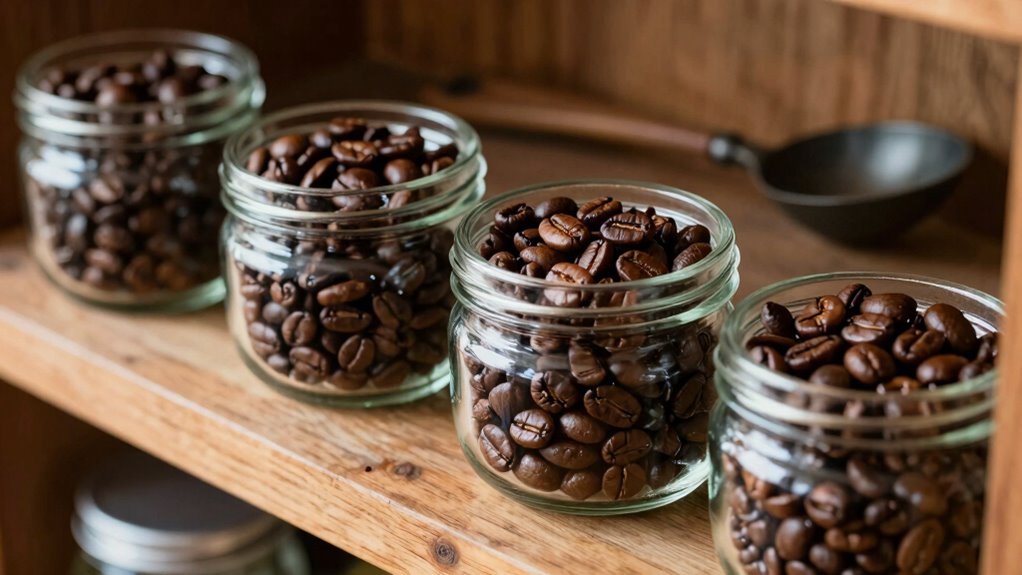
You can tell coffee beans are no longer fresh when their aroma fades or becomes dull. Fresh beans typically have a strong, vibrant coffee aroma that signals quality and flavor. If you notice the scent weakening or disappearing altogether, it’s a sign the beans are past their prime. Checking the roasting date on the packaging helps determine freshness; ideally, you want to use beans within a few weeks of that date. As beans age, they lose their aromatic oils, resulting in a flatter, less appealing smell. Additionally, stale beans may feel dull or hard when touched, and their flavor will be muted when brewed. Recognizing these signs guarantees you enjoy peak taste by using fresh coffee beans.
Tips to Extend Coffee Shelf Life With Proper Packaging
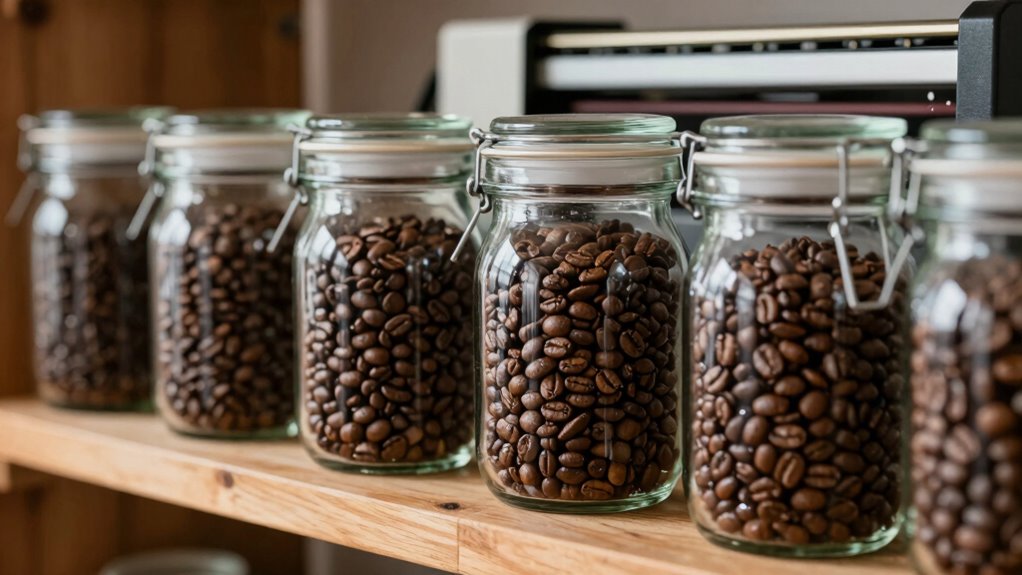
Using airtight containers helps prevent oxygen from spoiling your coffee beans, keeping them fresh longer. Storing your beans in a dark, cool place also slows down the aging process. Proper packaging is key to extending your coffee’s shelf life and maintaining its flavor.
Airtight Containers Prevent Oxidation
To keep coffee fresh longer, storing beans in airtight containers is essential because it prevents exposure to oxygen, which accelerates staling. Oxygen exposure affects both coffee bean roasting and caffeine stability, diminishing flavor and potency. To maximize freshness, consider these tips:
- Use containers with a tight seal to block oxygen from reaching your beans.
- Avoid transparent containers that let light in, which can degrade flavor.
- Store in a cool, dark place to slow oxidation and preserve the beans’ aromatic qualities.
Dark, Cool Storage Areas
Storing coffee beans in a dark, cool place considerably slows down the aging process and helps preserve their fresh aroma. Cooler temperatures reduce coffee bean oxidation, which happens faster at higher storage temperatures, degrading flavor. Keep your beans away from direct sunlight and heat sources to prevent premature staling. Ideally, store them in a consistent environment with temperatures between 60-70°F. Use opaque containers to block light and maintain ideal freshness. Here’s a quick comparison:
| Storage Condition | Effect on Coffee Beans |
|---|---|
| Dark, cool, stable | Slows oxidation, retains flavor |
| Warm or exposed to light | Accelerates oxidation, stale flavor |
| Fluctuating temps | Causes condensation, spoilage |
Common Mistakes That Make Coffee Go Stale
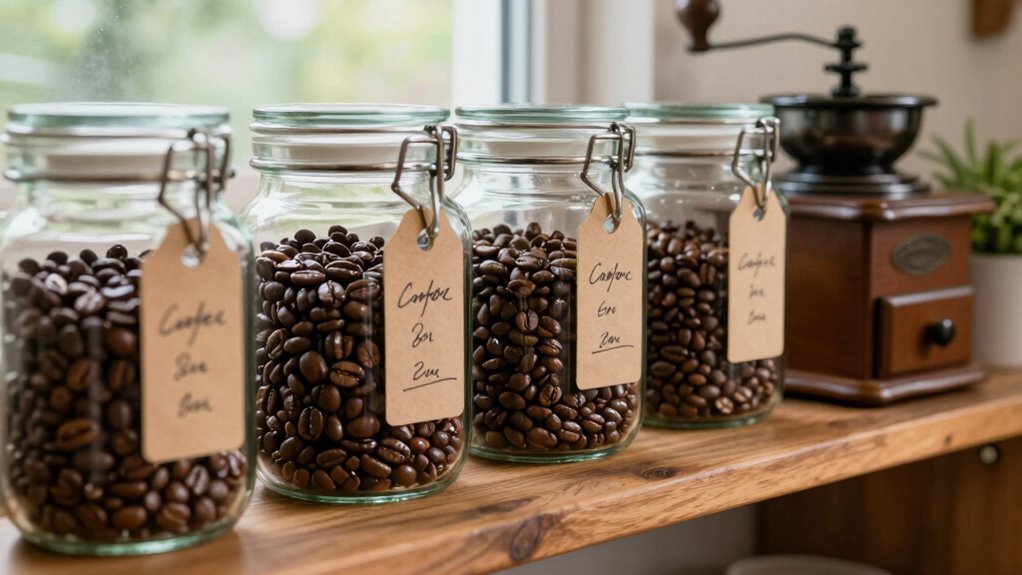
One common mistake that accelerates coffee going stale is exposing it to air. When you leave coffee in open containers or buy pre-ground beans, oxidation occurs faster, losing flavor. To prevent this:
Exposing coffee to air speeds up staling and flavor loss.
- Neglecting coffee grinder maintenance can cause uneven grind size, leading to over-extraction and stale flavors.
- Using improper brewing temperature control can cause under- or over-extraction, dulling the coffee’s freshness.
- Storing coffee in clear or warm containers exposes it to light and heat, speeding up staling.
Avoid these errors by always storing beans in an airtight, opaque container, maintaining your coffee grinder properly, and brewing at the besttemperature. These steps help preserve the beans’ flavor longer and keep your coffee tasting fresh.
Daily Tips for Maintaining Maximum Coffee Flavor
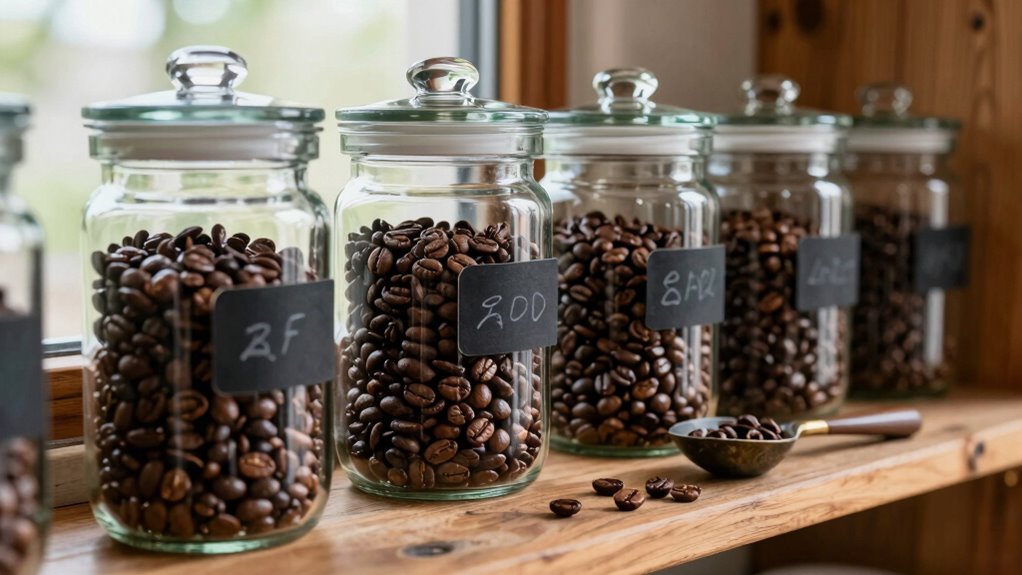
Maintaining maximum coffee flavor requires consistent daily habits that preserve freshness. To do this, focus on proper storage and mindful brewing techniques. Always grind beans right before brewing to lock in flavor. Experiment with different coffee roasting levels to find what best suits your taste. Keep your coffee in an airtight container away from heat and light. Use the right grind size for your brewing method for ideal extraction. Here’s a quick guide:
| Tip | Why It Matters | Example |
|---|---|---|
| Store in airtight container | Stops flavor from escaping | Use a vacuum-sealed jar |
| Keep away from heat/light | Prevents stale, flavor loss | Store in a cool, dark place |
| Use fresh beans | Ensures vibrant flavor | Buy weekly, not monthly |
| Match grind to brew method | Maximizes flavor extraction | Espresso grind for espresso |
Follow these habits daily for consistently fresh, flavorful coffee.
Frequently Asked Questions
How Can I Tell if My Coffee Beans Are Stale?
You can tell your coffee beans are stale if they lose their aroma and develop an oily appearance. When beans are fresh, they smell vibrant and rich; as they age, the aroma fades. Also, check for an oily surface, which indicates oils have come to the surface and the beans are past their prime. If these signs appear, it’s time to replace your beans for the best flavor.
Is It Better to Store Coffee in the Fridge or Freezer?
Storing your coffee in the fridge or freezer is like parking a classic car: it risks moisture and flavor loss. It’s better to keep your beans in an airtight coffee container at a consistent, cool storage temperature—ideally, in a dark pantry. The fridge exposes beans to humidity, while the freezer can cause condensation. For ideal freshness, avoid freezing, and always store beans away from light and heat.
Can Exposure to Light Ruin Coffee Flavor?
Yes, exposure to light can ruin your coffee flavor. Light causes oxidation, which degrades the beans’ freshness and aroma. To prevent this, use opaque coffee packaging or store your beans in airtight storage containers away from direct light. Keep them in a cool, dark place, like a pantry, rather than on a countertop or in a transparent jar. Proper storage preserves your coffee’s rich flavor and aroma longer.
How Long Can I Keep Coffee Before It Loses Freshness?
You can usually keep coffee beans fresh for about 2 to 4 weeks after roasting if stored properly. To maximize freshness, store them in an airtight container away from light, heat, and moisture. Remember, brewing temperature impacts flavor; using water that’s too hot can mask subtle notes. For the best taste, grind just before brewing and consume within this timeframe to enjoy peak aroma and flavor.
What Are the Signs of Mold or Spoilage in Stored Coffee?
Think of your stored coffee as a treasure chest; mold detection and spoilage indicators are the lurking pirates. Look for fuzzy white, green, or black spots—these are clear signs of mold. Also, notice if the beans develop a sour, musty smell or feel slimy. If you spot any of these spoilage indicators, it’s time to toss the beans, as consuming moldy coffee can harm your health.
Conclusion
By following these simple storage tips, you can keep your coffee beans fresh and flavorful longer. Don’t you want each cup to taste as vibrant as the first? Proper storage isn’t just about convenience; it’s about savoring every sip. Keep your beans in the right container, away from heat and light, and you’ll enjoy richer, bolder coffee every morning. After all, isn’t good coffee worth a little extra care?