

A latte has more milk and a softer flavor, with smooth microfoam ideal for latte art. A cappuccino balances equal parts espresso, steamed milk, and thick froth, giving it a bold taste and textured layers. A flat white features a higher espresso-to-milk ratio, offering a stronger, silky microfoam. Understanding these differences helps you choose the right drink for your taste and occasion—continue exploring to get the full picture.

Get the latest gadgets delivered free with Prime
- Fast, free delivery on millions of items
- Prime Video, Amazon Music and more included
- Member-only deals all year
Key Takeaways
- Milk Ratio & Texture: Lattes have more smooth microfoam, cappuccinos feature thick froth, and flat whites contain fine, integrated microfoam.
- Flavor Strength: Lattes are milder with more milk, cappuccinos are balanced with equal parts espresso, and flat whites are stronger with higher espresso content.
- Serving Size & Presentation: Lattes are larger with latte art, cappuccinos are smaller with layered foam, and flat whites have a sleek, minimalist look.
- Frothing Technique: Lattes use gentle steaming, cappuccinos require aggressive frothing, and flat whites demand precise control for microfoam.
- Ideal Occasions: Lattes suit relaxed mornings and social settings, cappuccinos are bold and quick, flat whites provide a smooth, robust experience.
As an affiliate, we earn on qualifying purchases.
What’s the Difference: Latte, Cappuccino, and Flat White

While latte, cappuccino, and flat white all contain espresso and milk, they differ in milk texture and proportions. These differences also influence brew strength and caffeine content. A latte uses more milk than espresso, resulting in a milder flavor and lower caffeine concentration per sip. Cappuccinos have equal parts espresso, steamed milk, and froth, creating a balanced yet stronger brew strength and slightly higher caffeine content. Flat whites feature a higher espresso-to-milk ratio than lattes, making them stronger and more robust in flavor. The milk’s microfoam in a flat white is thinner, enhancing the espresso’s intensity. Your choice depends on how bold you want your coffee—more milk softens the flavor, while less milk intensifies the brew strength and caffeine punch. Texture of milk also plays a role in the overall mouthfeel and presentation of each coffee style. Additionally, the milk texture impacts how the flavors are perceived with each sip, influencing overall enjoyment. A good understanding of contrast ratio can also help in appreciating the visual appeal of each coffee’s foam and milk layer, enhancing the drinking experience. Recognizing the visual contrast between foam and milk layers can further elevate your appreciation of each coffee’s artistry.
As an affiliate, we earn on qualifying purchases.
How Do Milk Frothing Techniques Vary for Each Drink
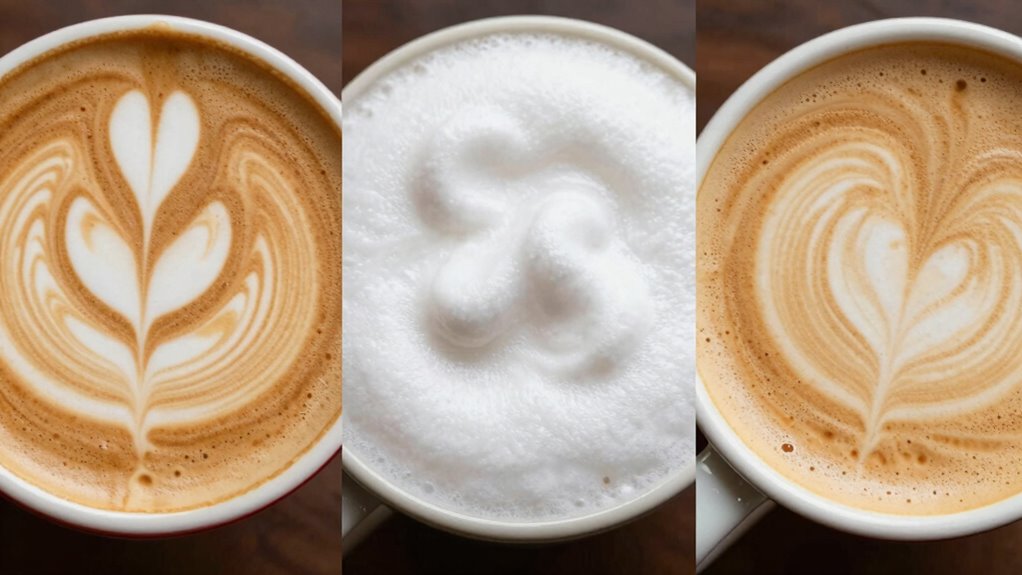
Your milk frothing technique changes depending on the drink you’re making. For lattes, you aim for smooth, velvety microfoam, while cappuccinos require a thicker, more airy froth. Flat whites call for a lighter froth with a creamier texture, highlighting the milk’s silkiness. Additionally, understanding the milk texture needed for each beverage helps achieve the perfect balance and presentation. Mastering the frothing process ensures you create the ideal milk consistency tailored to each coffee style. Proper temperature control during frothing also plays a crucial role in reaching the desired milk quality for each drink. Achieving the right milk foam density is essential for crafting visually appealing and well-balanced beverages. To consistently achieve these textures, paying attention to frothing technique and practicing the correct motion can make a significant difference.
Frothing Techniques Differences
Frothing techniques differ markedly for each coffee drink because the desired milk texture and foam consistency vary. For a latte, you aim for silky, microfoam that blends smoothly with the espresso, often created with a gentle steam wand technique. Cappuccinos require a thicker, frothier foam that holds its shape, achieved by more aggressive frothing. Flat whites feature a fine microfoam similar to a latte but with less volume, requiring precise control over the steam wand. Factors like coffee bean origin influence the caffeine content and how the milk interacts during frothing. You might notice that:
- The frothing style impacts foam stability and texture
- Different techniques suit specific drink styles
- The origin of beans subtly influences milk behavior during frothing
- Proper equipment and safety tips are essential for achieving the perfect froth and ensuring safe operation of tools like steam wands and frothing pitchers. Additionally, understanding milk composition can help you tailor frothing methods to enhance the final drink’s quality. Using the right equipment ensures consistent results and reduces safety risks during frothing.
Mastering these methods helps guarantee each drink’s foam aligns perfectly with its unique profile.
Milk Texture Variations
Each coffee drink requires a specific milk texture to achieve its signature look and mouthfeel. For lattes, you aim for a smooth, velvety milk with microfoam that blends seamlessly into the espresso, creating a glossy crema texture. Cappuccinos need a thicker milk foam with firm, airy bubbles that sit atop the espresso, offering a frothy, textured mouthfeel. Flat whites feature a thin, glossy microfoam that integrates fully with the espresso, preserving a smooth crema texture without a thick foam layer. Here’s a quick comparison:
| Drink | Milk Foam Characteristics |
|---|---|
| Latte | Thin, velvety, smooth microfoam |
| Cappuccino | Thick, airy, frothy foam |
| Flat White | Glossy, thin microfoam |
| Crema Texture | Smooth, integrated in latte/flat white; airy in cappuccino |
| Milk Texture | Microfoam for latte/flat white; froth for cappuccino |
As an affiliate, we earn on qualifying purchases.
What Are the Typical Espresso-to-Milk Ratios in These Coffees

Understanding the typical espresso-to-milk ratios helps you distinguish these drinks. You’ll see how the milk volume and style vary, affecting flavor and texture. Let’s explore how each coffee balances espresso and milk to create its unique profile.
Espresso to Milk Ratio
The espresso-to-milk ratio varies markedly among latte, cappuccino, and flat white, shaping their distinct textures and flavors. This ratio influences not only taste but also the potential for milk art and caffeine content. Typically, a latte has a lower espresso-to-milk ratio, making it creamier and smoother. A cappuccino features a balanced ratio, creating a frothy top and rich flavor. The flat white has a higher espresso-to-milk ratio, resulting in a stronger coffee taste. Understanding these ratios helps you choose your drink based on flavor strength and texture.
- The latte emphasizes milk, ideal for milk art.
- Cappuccino balances foam and espresso, offering a bold experience.
- The flat white highlights espresso, delivering a more intense caffeine kick.
Typical Milk Volume
Have you ever wondered how much milk typically accompanies the espresso in your favorite coffee? The milk volume varies depending on the drink and cup size. For a latte, you usually get the most milk, with about 8-12 ounces in a standard 12-oz cup, creating a creamy, milk-forward experience. A cappuccino typically has less milk, around 4-6 ounces, with a strong espresso flavor balanced by a thick layer of foam. The flat white falls somewhere in between, with roughly 5-8 ounces of milk in a 6-8 oz cup, offering a smooth and velvety texture. These typical milk volumes shape each drink’s unique balance, giving you a different coffee experience with every sip.
Variations by Style
While the typical milk volumes give a sense of each drink’s overall profile, the espresso-to-milk ratio really defines its character. This ratio influences not only flavor profiles but also how milk art appears on top. In a latte, you usually find a higher milk-to-espresso ratio, resulting in a creamy texture and smooth flavor. A cappuccino, with its balanced espresso and frothy milk, offers a bolder coffee taste with a thick layer of foam ideal for intricate milk art. The flat white uses a slightly higher espresso content, giving it a robust flavor while maintaining a velvety microfoam. Understanding these ratios helps you appreciate the visual appeal and taste differences, from the delicate latte art to the more intense coffee experience.
As an affiliate, we earn on qualifying purchases.
How Do Texture and Presentation Differ Among These Drinks

Texture and presentation vary considerably among latte, cappuccino, and flat white, shaping your overall drinking experience. The latte typically features a smooth, velvety microfoam with a delicate artful presentation on top, often showcased in tall glass mugs or wide cups. Cappuccinos have a more frothy, airy texture with a thick layer of foam, usually served in smaller cups that emphasize their bold contrast between espresso, milk, and foam. Flat whites boast a silky, fine microfoam with a sleek, unified appearance, often presented in minimalist ceramic cups. Artistic presentation plays a key role in each drink, with latte art common in lattes, while serving vessel styles highlight the distinct textures and visual appeal of each beverage. Additionally, the visual appeal of these drinks often influences the overall enjoyment, with baristas using various techniques to enhance the presentation. Proper milk steaming techniques are essential to achieve the ideal textures and finishes for each coffee type. Achieving consistent foam quality is crucial for the perfect presentation and texture, requiring specific steaming practices.
Which Coffee Is Best for Your Taste and Occasion

Choosing the right coffee depends on your taste preferences and the occasion. If you want a quick caffeine boost, a darker roast from South American beans offers robust flavor and higher caffeine content. For a relaxing morning or social setting, a latte with smooth milk balances acidity from Asian or African beans. Consider the occasion: a quick pick-me-up might call for a cappuccino with its bold taste and frothy top, while a flat white suits those seeking a milder, creamier experience. Your choice also depends on your caffeine tolerance and flavor profile. Additionally, understanding the brewing method can elevate your coffee experience by highlighting different flavor profiles. Being aware of the coffee origin can help you select beans that match your preferred flavor intensity and aroma. Moreover, exploring personal taste preferences can guide you toward the ideal coffee type for each moment. Recognizing regional flavor profiles can deepen your appreciation for the unique characteristics of coffee from different areas.
Tips for Customizing and Making These Coffees at Home

To craft the perfect latte, cappuccino, or flat white at home, start by selecting fresh, quality beans and grinding them just before brewing to maximize flavor. Pay attention to bean origins, as different regions offer unique flavor profiles that can influence your drink’s taste. For example, beans from Latin America tend to be bright and fruity, while African beans are often floral and vibrant. Additionally, consider coffee roasting levels; lighter roasts preserve the beans’ natural flavors, perfect for highlighting origin notes, while darker roasts provide a bold, smoky taste. Experiment with these variables to find your preferred flavor profile. Using fresh beans and understanding their origins, along with choosing the right roast, helps you customize your drinks precisely to your liking. Roast levels also significantly impact the final flavor and texture of your coffee. Exploring different bean origins can further elevate your home coffee experience by allowing you to tailor your brew to your personal taste preferences. Being aware of single-origin beans can help you fine-tune your brewing process for even better results. Moreover, paying attention to grind size ensures optimal extraction and flavor balance in your brew. Incorporating brew ratios can also help you achieve consistent strength and flavor in your drinks, making your home barista skills more precise.
Common Mistakes to Avoid When Ordering or Preparing These Drinks

One common mistake when ordering or preparing these drinks is not specifying your preferred strength or amount of milk, which can lead to a brew that’s either too weak or overly milky. To avoid this, pay attention to coffee bean selection—darker beans produce bolder flavors, while lighter roasts are more delicate. Also, make cup size adjustments based on your taste; larger cups can dilute the intensity if you don’t modify the coffee-to-milk ratio. Be clear with baristas about your preferences, and when making drinks at home, measure your ingredients carefully. Additionally, understanding hosting discount codes can help you save on quality coffee equipment and accessories online.
Frequently Asked Questions
Can These Drinks Be Made With Decaffeinated Espresso?
Yes, you can definitely make these drinks with decaffeinated espresso. Many cafes offer decaffeinated options, allowing you to enjoy your favorite beverage without caffeine. You can also try flavor substitutions, like vanilla or caramel, to enhance the taste. Whether it’s a latte, cappuccino, or flat white, using decaffeinated espresso guarantees you get the same rich flavor and satisfying experience without the caffeine kick.
How Does the Caffeine Content Differ Among Them?
You’ll notice that the caffeine strength varies slightly among these drinks due to their espresso concentration and milk content. A latte typically has more milk and less espresso, so its caffeine content is moderate. A cappuccino has a stronger espresso concentration with equal parts milk and foam, making it slightly more potent. The flat white, with its smooth, velvety espresso and microfoam, offers a caffeine strength similar to a latte but with a richer flavor.
Are There Regional Variations in How These Drinks Are Prepared?
Regional customs influence how you prepare lattes, cappuccinos, and flat whites. In Italy, you’ll find a focus on rich espresso with minimal foam, while Australia and New Zealand favor the flat white’s velvety microfoam. In the US, preparation techniques often include more milk or foam, creating larger, creamier drinks. These regional variations shape your experience, reflecting local tastes and traditions in each coffee style.
Which Drink Is More Suitable for Lactose Intolerant Individuals?
Imagine sipping a warm, frothy cup without worries—if you’re lactose intolerant, a flat white or latte made with dairy alternatives or lactose-free options is your best bet. These drinks offer the creamy experience you crave, but with plant-based milks like almond, soy, or oat. They’re perfect for enjoying a rich, satisfying coffee while avoiding dairy discomfort, letting you indulge without the lactose worries.
How Do Seasonal Flavors Influence These Classic Coffee Choices?
Seasonal flavor trends greatly influence your classic coffee choices by adding holiday-inspired beverages that elevate your experience. You might find a latte with cinnamon and nutmeg, a cappuccino infused with peppermint, or a flat white topped with seasonal syrups. These holiday-inspired beverages make your coffee more festive and personalized, encouraging you to enjoy your favorite drink with a seasonal twist that captures the spirit of the holidays.
Conclusion
Now that you know the differences between a latte, cappuccino, and flat white, you’re ready to pick your perfect brew. Think of each as a unique puzzle piece fitting into your mood or moment. Whether you crave a frothy crown or a velvety sip, mastering these drinks makes your coffee experience truly your own. So, go ahead—brew with confidence and let your taste buds lead the way!
Fall Picks
fall essentials
As an affiliate, we earn on qualifying purchases.