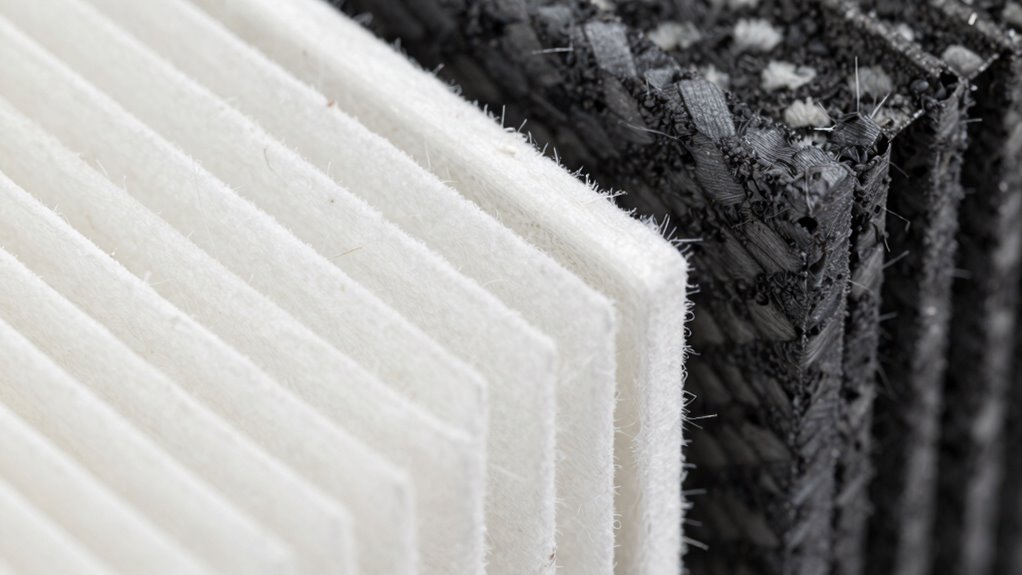

HEPA filters are designed to trap tiny airborne particles like dust, pollen, and allergens, with “True HEPA” meeting strict standards by capturing at least 99.97% of particles as small as 0.3 microns. Activated carbon filters, on the other hand, absorb odors and gases through a porous surface that traps molecules. Understanding how these work and their differences helps you choose the right filtration for cleaner indoor air—if you want to find out more, keep exploring.
Key Takeaways
- True HEPA filters meet strict standards, capturing 99.97% of particles as small as 0.3 microns; standard HEPA may not.
- Activated carbon filters remove odors and gases through adsorption; saturation requires replacement or regeneration.
- HEPA filters primarily trap particles, while carbon filters target gases and odors; both are essential for comprehensive air purification.
- The term “True HEPA” indicates certified high-efficiency filters, avoiding misleading marketing claims.
- Regular maintenance and correct filter usage are crucial for optimal performance and air quality.

LEVOIT Air Purifier for Home Allergens Pet Hair in Bedroom, Covers Up to 1073 ft² by 56W High Torque Motor, AHAM VERIFIDE, 3-in-1 Filter with HEPA Sleep Mode, Remove Dust Smoke Odor, Core300-P, White
WHY CHOOSE AHAM VERIFIDE AIR PURIFIERS: AHAM (Association of Home Appliance Manufacturers) is an ANSI-accredited organization that sets…
As an affiliate, we earn on qualifying purchases.
As an affiliate, we earn on qualifying purchases.
What Are HEPA Filters and How Do They Work?
HEPA filters are designed to capture tiny airborne particles, providing cleaner air in your environment. They achieve this through advanced air filtration that targets particles as small as 0.3 microns, including dust, pollen, pet dander, and even some bacteria. The filter’s dense fibers trap these particles efficiently, ensuring they don’t circulate back into your living space. This process involves a combination of mechanisms like interception, impaction, and diffusion, which work together to maximize particle removal. As air passes through the filter, harmful particles are captured, improving indoor air quality. HEPA filters are especially effective in environments where air purity is essential. They’re trusted for reducing allergens, airborne pollutants, and other microscopic contaminants, making your space healthier and more comfortable. Additionally, the effectiveness of HEPA filters can vary depending on the filter quality, so choosing the right type is crucial for optimal performance. Proper maintenance and regular replacement are also vital to ensure continued efficiency and optimal filtration performance. Regularly inspecting and maintaining your HEPA filter can help prevent airflow restrictions and maintain its high filtration efficiency. Ensuring proper installation and understanding the filter lifespan can also extend its effectiveness over time.

Breathe Naturally Universal Cut To Fit Activated Carbon Air Filter – Replacement Charcoal Air Filters – Carbon Filter Sheet for Air Purifier, Vent Filters & More – Made in USA (Pack of 2, 16×48)
ACTIVATED CARBON AIR FILTER: Breathe Naturally's activated carbon air filter uses advanced activated carbon to capture and neutralize…
As an affiliate, we earn on qualifying purchases.
As an affiliate, we earn on qualifying purchases.
How Does Activated Carbon Help Remove Odors and Gases?
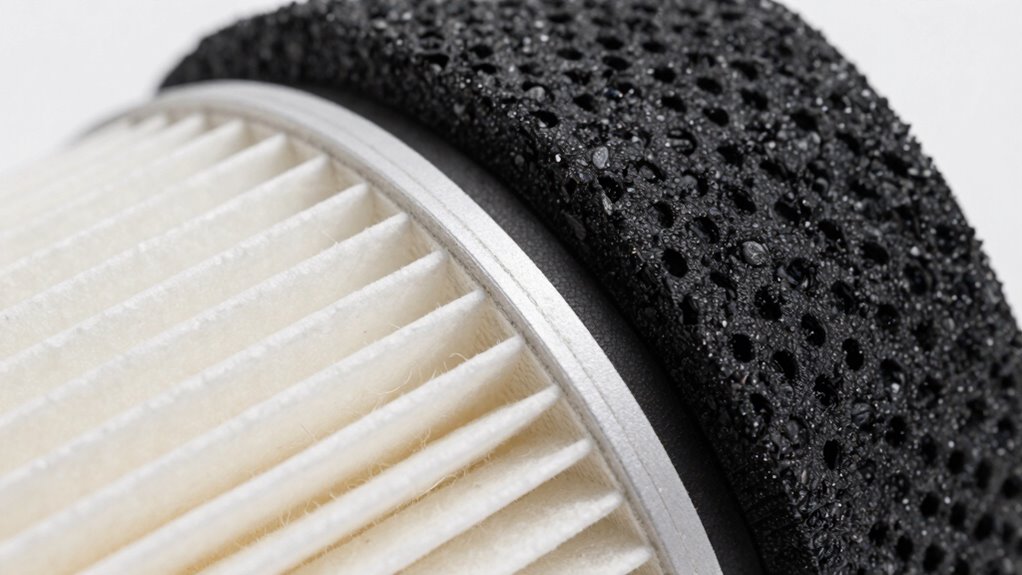
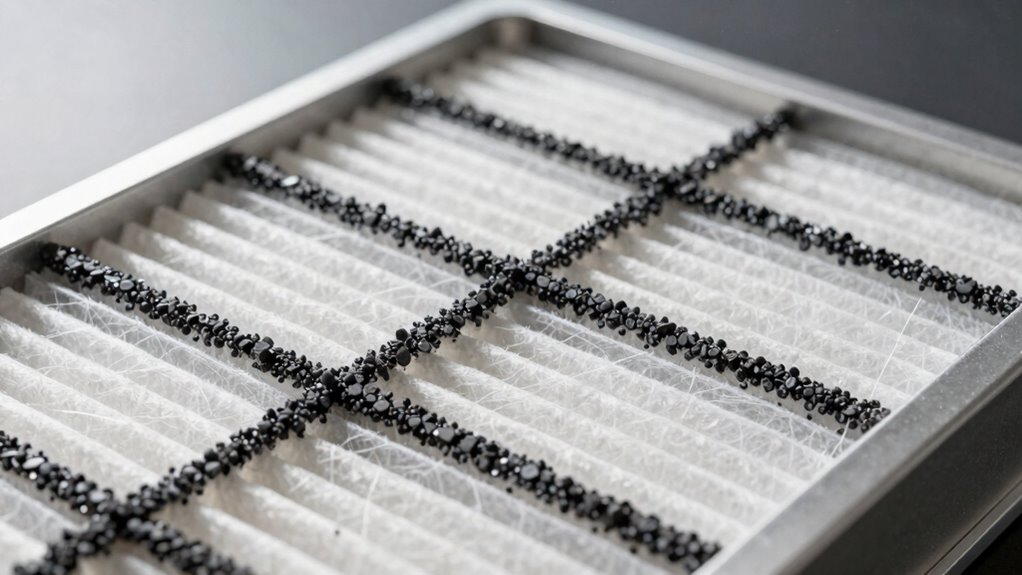
While HEPA filters excel at trapping microscopic particles, they don’t effectively remove odors or volatile gases from the air. That’s where activated carbon comes in. It improves air quality by adsorbing gases and odors, preventing them from spreading. Here’s how activated carbon helps:
- Adsorption: Gases bond to the carbon’s surface, trapping odor-causing molecules.
- Porous Structure: Its large surface area captures a wide range of odors and gases.
- Versatility: Effective against smoke, VOCs, pet smells, and chemical fumes.
- Longevity: Regular replacement maintains odor removal efficiency.
- Enhanced Performance: The porous structure of activated carbon maximizes the surface area available for adsorption, making it highly effective at capturing a variety of gases and odors.
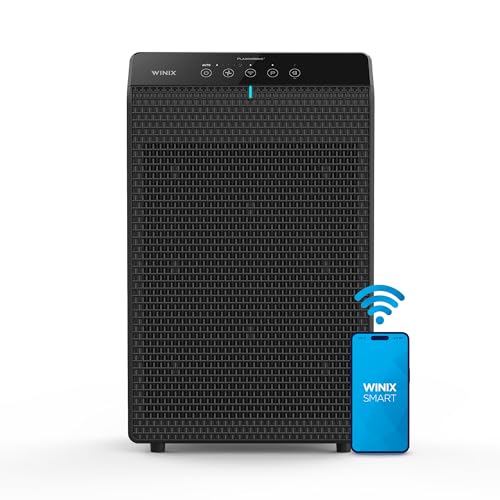
WINIX 5520 Air Purifier for Home Large Room Up to 1882 Ft² in 1 Hr With Air Quality Monitor, True HEPA, High Deodorization Carbon Filter and Auto Mode, Captures Pet Allergies, Smoke, Dust.
𝐀𝐇𝐀𝐌 𝐕𝐞𝐫𝐢𝐟𝐢𝐝𝐞 𝐚𝐭 𝟑92 𝐬𝐪 𝐟𝐭.: Also cleans rooms up to 1,882 sq ft in 1 hour (941…
As an affiliate, we earn on qualifying purchases.
As an affiliate, we earn on qualifying purchases.
What’s the Difference Between Standard HEPA and True HEPA Filters?
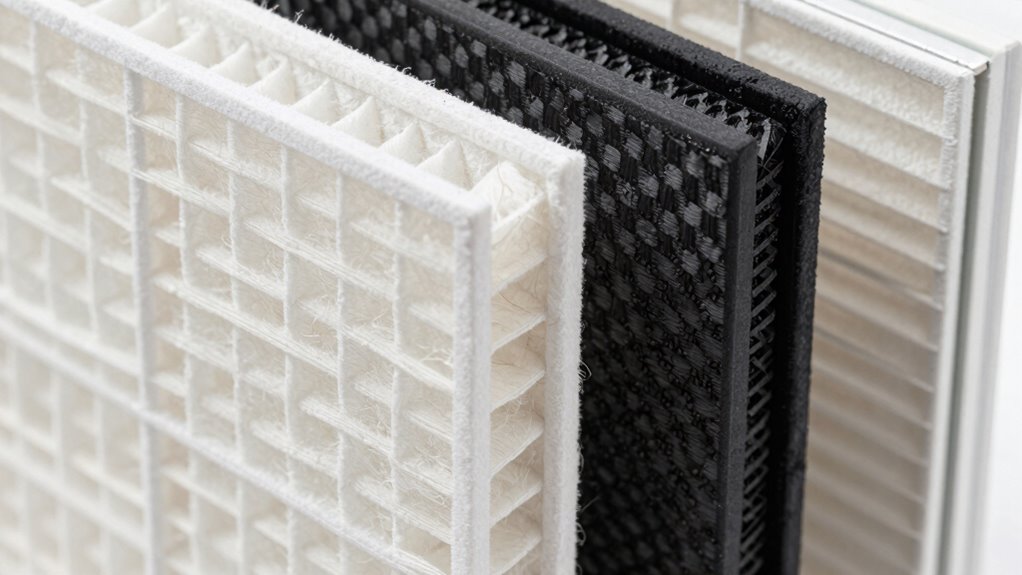
Understanding the difference between standard HEPA and True HEPA filters is essential when choosing an air purifier. True HEPA filters meet strict standards, capturing at least 99.97% of particles as small as 0.3 microns, which markedly improves air quality. Standard HEPA filters, on the other hand, may not meet these rigorous criteria and often perform less effectively. The quality of filtration directly impacts your air quality, especially if you’re sensitive to allergens or pollutants. Additionally, True HEPA filters generally have a longer filter lifespan because they are built to higher standards, meaning you won’t need to replace them as often. Choosing a True HEPA filter ensures consistent performance, better air quality, and potentially lower maintenance costs over time.

LEVOIT Air Purifiers for Bedroom Home Dorm, AHAM Verified, 3-in-1 Filter Cleaner With Aroma Pad, Filters Smoke, Allergens, Pet Dander, Odor, Dust, Office, Desktop, Core Mini-P, White
𝗥𝗘𝗠𝗢𝗩𝗘 𝗣𝗢𝗟𝗟𝗨𝗧𝗔𝗡𝗧𝗦 𝗘𝗩𝗘𝗥𝗬𝗪𝗛𝗘𝗥𝗘: Our Pre-Filter and Main Filter capture allergens as lint, hair, pet dander, pet hair, fine…
As an affiliate, we earn on qualifying purchases.
As an affiliate, we earn on qualifying purchases.
Which Air Purifier Filters Are Best for Allergens and Particles?
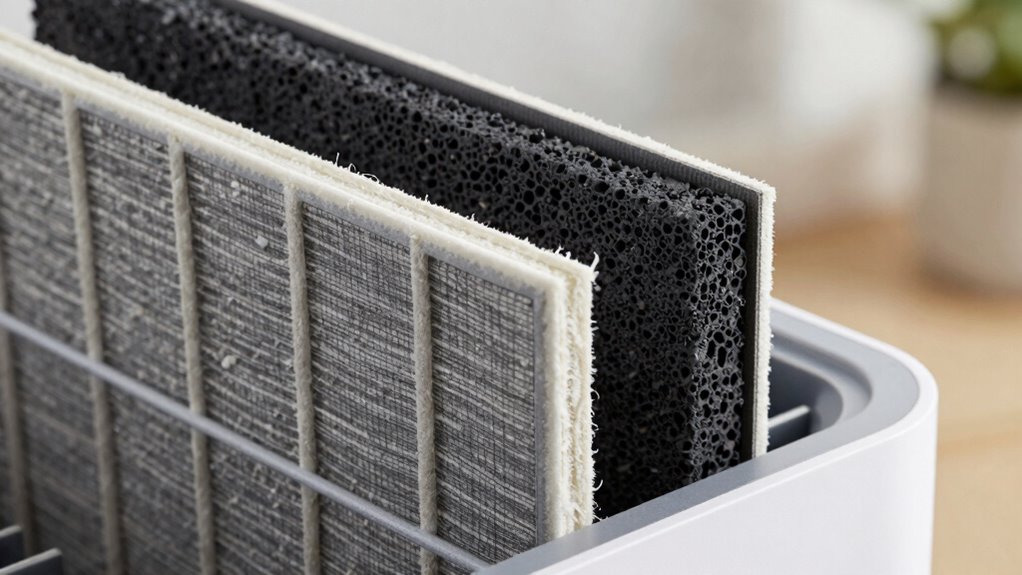
When choosing filters for allergens and particles, you’ll want to take into account their effectiveness and particle size removal capabilities. Some filters target larger dust and pollen, while others can trap microscopic particles like bacteria and viruses. Keep in mind that maintenance and replacement needs also impact long-term performance. For example, urban pursuits in Harrisburg often require high-performance filters to manage air quality in busy environments. Additionally, understanding the differences between filter types such as True HEPA and other filtration systems can help you select the most suitable option for your specific needs. Research shows that sound vibrations are believed to enhance cellular regeneration and overall health, which highlights the importance of considering comprehensive air quality management. Moreover, selecting filters with appropriate particle size removal capabilities ensures better protection against airborne contaminants. Incorporating knowledge about filter maintenance can further optimize your air purifier’s effectiveness over time.
Filter Types and Effectiveness
Choosing the right air purifier filter is essential if you want to effectively remove allergens and particles from your indoor air. Different filters offer varying levels of air quality improvement and filter lifespan. To help you decide, consider these options:
- HEPA filters – Capture 99.97% of particles as small as 0.3 microns, ideal for allergens. HEPA standards ensure consistent performance across different brands. Understanding filter efficiency helps in selecting the best option for your needs. Proper maintenance of filter lifespan can maximize the effectiveness of your air purifier. Additionally, selecting a filter with proper filtration design can ensure optimal removal of airborne particulates.
- Activated carbon filters – Reduce odors and VOCs, enhancing overall air quality.
- Pre-filters – Trap larger particles, prolonging the lifespan of main filters.
- True HEPA filters – Meet strict standards for particle removal, ensuring superior air quality.
Choosing the right combination ensures your air remains clean and filters last longer, saving you money and maintaining effective performance. Incorporating air purification technology can further optimize indoor air quality.
Particle Size Removal Capabilities
To effectively remove allergens and tiny particles from your indoor air, selecting a filter capable of capturing small particles is essential. Particle filtration depends heavily on filter efficiency, which indicates how well a filter can trap particles of various sizes. HEPA filters excel because they can capture at least 99.97% of particles as small as 0.3 microns, including pollen, pet dander, and dust mites. True HEPA filters meet this standard, ensuring high particle filtration for allergens. Lower-quality filters may only trap larger particles, allowing smaller allergens to pass through. For ideal air quality, choose a filter designed for high particle filtration and proven filter efficiency. This ensures you effectively reduce the presence of tiny, airborne allergens and improve your indoor air quality.
Maintenance and Replacement Needs
Regular maintenance and timely filter replacements are essential to guaranteeing your air purifier continues to effectively remove allergens and tiny particles. Over time, filters reach their filter lifespan and become less effective, so knowing when to replace them is crucial. Typically, replacement frequency depends on usage and filter type, but here are key points:
- HEPA filters generally need replacement every 12 to 18 months.
- Activated carbon filters often last 3 to 6 months.
- True HEPA filters may last longer but should still be checked annually.
- Regularly inspect filters for dirt buildup or odors, indicating it’s time for a change.
- Monitoring filter performance can also help identify when filter degradation occurs, ensuring optimal air quality.
- Proper maintenance, including following manufacturer recommendations, maximizes filter lifespan and air purifier efficiency.
Sticking to recommended replacement schedules guarantees optimal air quality and prolongs your device’s lifespan. Proper maintenance ensures your purifier keeps removing allergens and particles effectively.
How Effective Is Activated Carbon at Absorbing Odors and Gases?
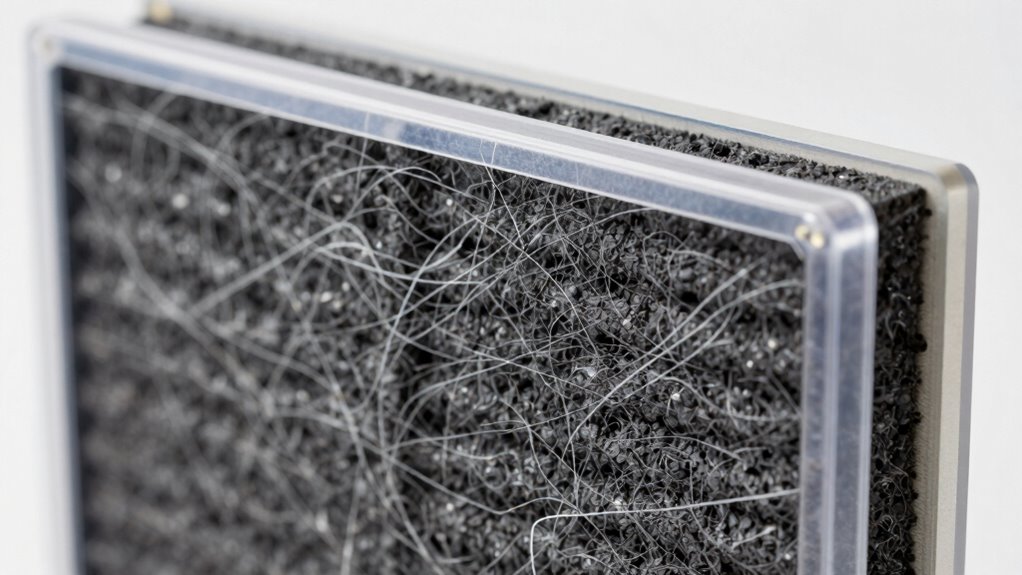
Activated carbon works through a process called adsorption, where gases and odors stick to its surface. It’s highly effective at capturing a wide range of gases, but its capacity can become saturated over time. Luckily, you can regenerate the carbon by exposing it to heat, allowing it to be reused and maintain its odor-absorbing power. To maximize its effectiveness, understanding the adsorption process can help you better maintain and use activated carbon. Additionally, the surface area of the carbon plays a crucial role in how much odor and gas it can absorb before needing regeneration. The porosity of the activated carbon also influences how efficiently it can trap odors and gases. Moreover, the surface chemistry of activated carbon impacts its ability to target specific pollutants. Regular monitoring of the adsorption capacity ensures optimal performance and longevity of the activated carbon.
Adsorption Mechanism Explained
Have you ever wondered how activated carbon effectively absorbs odors and gases? The answer lies in the adsorption process, where molecules are attracted and held on the surface of the carbon. This molecular attraction pulls in odor-causing gases, trapping them permanently. Here’s how it works:
- Large surface area provides more space for molecules to adhere.
- Pores trap gases through tiny openings.
- The adsorption process is driven by molecular attraction, making it highly effective.
- Activated carbon’s porous structure allows it to attract and hold various gases and odors simultaneously.
- The effectiveness of activated carbon depends on its porous structure, which can be enhanced through activation processes. Additionally, the surface chemistry of activated carbon influences how well it attracts specific molecules. The adsorption capacity can be optimized by modifying these properties to target particular pollutants.
This combination of surface area and molecular attraction makes activated carbon a powerful tool for neutralizing smells and gases, without releasing them back into the environment.
Effectiveness Against Gases
Ever wonder how well activated carbon can actually remove stubborn odors and hazardous gases? Its effectiveness lies in chemical filtration, where VOC removal is key. Activated carbon traps gases and odors through adsorption, making it excellent for chemical filtration. However, its ability depends on the gas type, concentration, and contact time. For example, some gases like formaldehyde are easier to adsorb than others like sulfur compounds. Here’s a quick comparison:
| Gas Type | Removal Efficiency | Notes |
|---|---|---|
| VOCs | High | Effective for many common VOCs |
| Hazardous Gases | Variable | Depends on specific gas |
| Odors | Very High | Excellent for smell control |
Activated carbon excels at VOC removal and odor control but isn’t a one-size-fits-all solution for every gas.
Regeneration and Reuse
When it comes to regenerating activated carbon, the process involves removing the adsorbed gases and odors so the material can be reused effectively. Proper filter regeneration restores the carbon’s adsorption capacity, making reusable filters more economical and sustainable. To achieve this, you can:
- Heat the filter to release trapped gases through thermal regeneration.
- Use vacuum desorption to draw out adsorbed molecules.
- Expose the filter to certain chemicals that break down the adsorbed compounds.
- Employ microwave regeneration for quick, in-situ cleaning.
While regeneration extends the lifespan of activated carbon, its effectiveness diminishes over time. Reusable filters, when properly regenerated, maintain their odor and gas absorption capabilities, reducing waste and saving money.
Myths About HEPA and Carbon Filters: What You Should Know
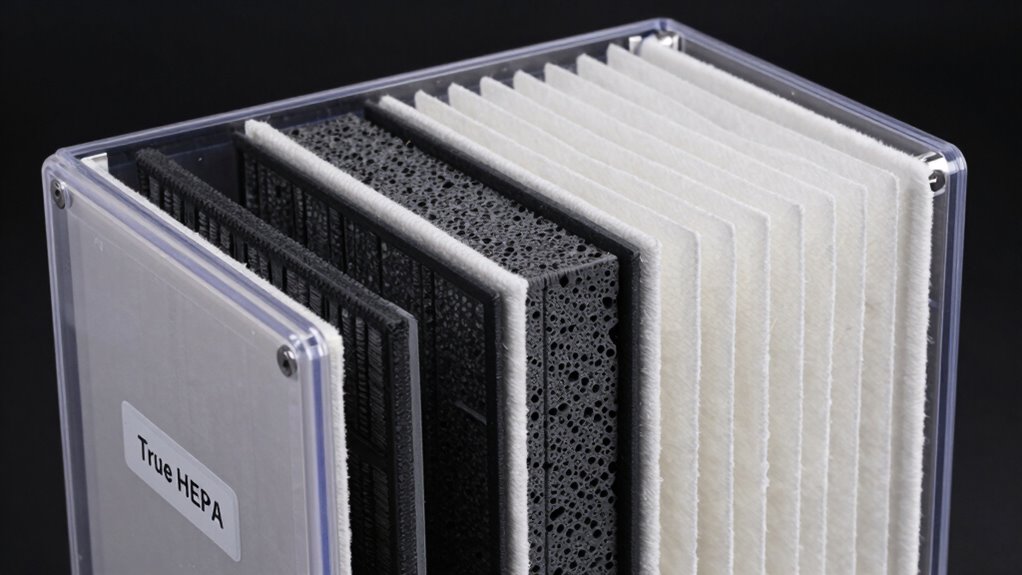
Many common beliefs about HEPA and carbon filters are actually misconceptions that can lead you to choose the wrong air purifier or overlook its true capabilities. One myth is that HEPA filters last forever; in reality, their filter lifespan depends on usage and air quality, and they need regular replacement to maintain effectiveness. Another misconception is that a higher air exchange rate automatically means cleaner air, but if the filter isn’t effective or is clogged, air exchange won’t improve air quality. Similarly, some think carbon filters remove all odors and chemicals forever, but they become saturated over time and require replacement. Understanding these facts helps you select the right filter and maintain it properly, ensuring ideal performance and cleaner indoor air.
How to Choose the Right Air Filter for Your Space and Needs
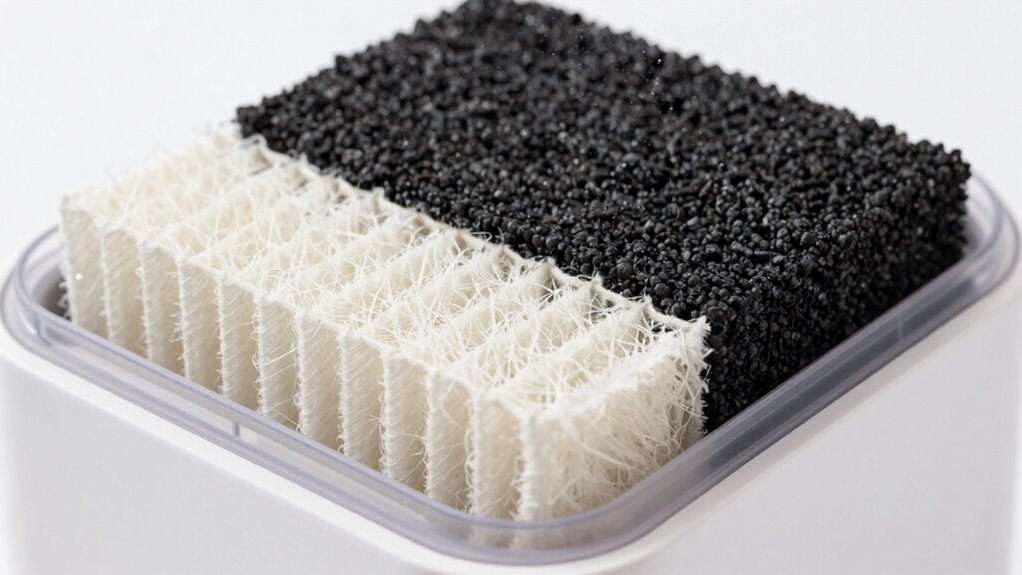
Choosing the right air filter depends on understanding your specific indoor environment and air quality needs. To make an informed choice, consider these factors:
- The size of your space — larger rooms need higher-capacity filters.
- Your air quality concerns — allergens, odors, or pollutants.
- Filter lifespan — some filters last longer, saving you money and maintenance.
- Noise levels — quieter filters suit bedrooms or offices.
Do You Need Both HEPA and Carbon Filters in Your Air Purifier?

Do you really need both HEPA and carbon filters in your air purifier? If your goal is top-notch air quality, combining these filters can be beneficial. HEPA filters trap airborne particles like dust, pollen, and pet dander, which improves respiratory health. Carbon filters, on the other hand, absorb odors, gases, and VOCs, making your indoor air fresher. Using both ensures all-encompassing filtration for a cleaner environment. However, keep in mind that having both filters means you’ll need to stay on top of filter maintenance, replacing them as recommended to keep performance high. If your space has significant odors or pollutant sources, dual filtering is worth considering. For basic allergen removal, a HEPA filter alone might suffice, but for more complex air quality concerns, combining filters offers better results.
A Simple Guide to Buying the Best Air Purifier for Your Home
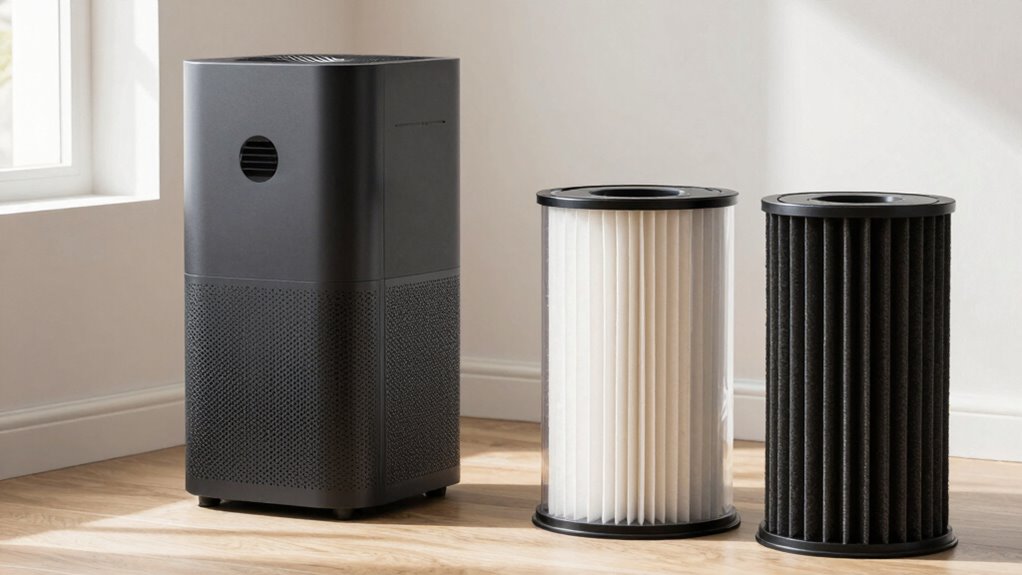
Finding the right air purifier for your home involves understanding your specific needs and the features that matter most. To improve air quality effectively, consider these key factors:
- Room Size: Match the purifier’s capacity to your space for maximum performance.
- Filter Type and Lifespan: Choose filters with longer lifespan options to save on replacements.
- Air Quality Concerns: Identify whether you need removal of allergens, odors, or pollutants.
- Noise Levels: Ensure the purifier operates quietly, especially for bedrooms or offices.
Understanding these elements helps you select an air purifier that maintains good air quality and offers reliable filter lifespan, reducing maintenance and guaranteeing cleaner air day and night.
Frequently Asked Questions
How Often Should I Replace HEPA and Carbon Filters?
You should replace your HEPA filter every 12 to 18 months and your carbon filter every 3 to 6 months, depending on usage. Keep an eye on replacement indicators if your device has them, or watch for decreased airflow or odors, which signal it’s time for a change. Regular replacements maintain ideal filter lifespan and air quality, ensuring your environment stays fresh and healthy.
Can HEPA and Carbon Filters Remove Viruses From the Air?
Think of your filters as gatekeepers at a club; they can block many unwanted guests, including some viruses. HEPA filters are highly efficient at capturing particles as small as 0.3 microns, which includes many airborne viruses. While they considerably reduce virus presence, they don’t guarantee complete removal. Proper filter maintenance and good airflow improve virus removal, but no filter can eliminate all airborne viruses entirely.
Are There Any Health Risks With Activated Carbon Dust?
There are some health risks with activated carbon dust if you inhale it. Inhalation risks arise because fine dust particles can irritate your lungs or cause respiratory issues over time. To minimize these risks, handle activated carbon carefully, avoid stirring up dust, and use proper protective gear like masks. Always follow safety guidelines to prevent inhaling excessive amounts of activated carbon dust, keeping your air quality safe.
Do All Air Purifiers Have Interchangeable Filters?
Not all air purifiers have interchangeable filters because filter compatibility varies by model and brand. You need to check your purifier’s specifications to confirm the replacement filter fits properly. Consider maintenance requirements as some filters need frequent changing or cleaning, which can affect your choice. Always use the filters recommended by the manufacturer to maintain efficiency and avoid damage, ensuring your air purifier works effectively over time.
How Do I Know if My Filter Is Truly Effective?
Did you know that over 90% of indoor air pollution comes from small particles that can bypass low-quality filters? To know if your filter is truly effective, check its maintenance schedule and look for air quality indicators like reduced dust or allergen levels. A well-maintained filter with proper replacement ensures your air purifier performs at its best, giving you cleaner, healthier air every day.
Conclusion
Choosing the right air filter isn’t just about brands or marketing hype—it’s about understanding what each filter does for your space. Whether you need HEPA for allergens or carbon for odors, picking the right combo can make your home healthier and more comfortable. Sometimes, the best choice is simply trusting what you’ve learned here. After all, the air you breathe should be as clear and fresh as a coincidence that finally aligns with your needs.