
TL;DR

Get the latest gadgets delivered free — and shop member deals
- Fast, free delivery on millions of items
- Access to Prime Big Deal Days deals on October 6–7
- Prime Video, Amazon Music and more included
European electric truck operators are skeptical about a proposed battery-swapping network by China’s CATL and UK’s Octopus. Industry concerns focus on system compatibility and operational challenges, risking the plan’s success.
European electric truck operators and industry analysts are expressing skepticism toward a joint plan by China’s CATL and the UK’s Octopus to develop a battery-swapping network across Europe. Despite the companies’ announcement, concerns about system compatibility and industry resistance threaten the project’s viability, according to sources.
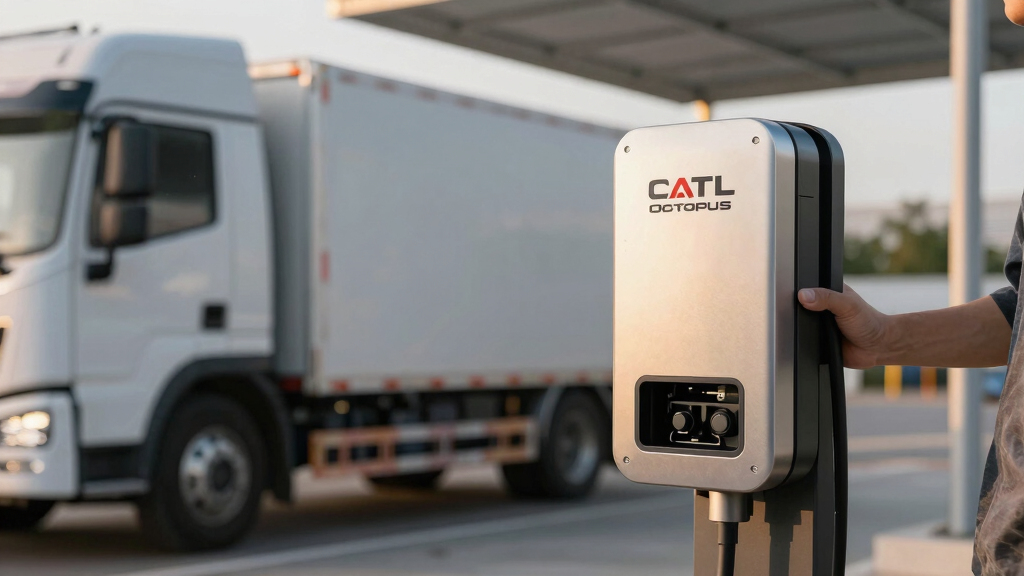
The plan was announced on July 1, 2026, by Octopus, Britain’s largest household energy provider, in partnership with CATL, China’s leading battery manufacturer. The initiative aims to establish a network of battery-swapping stations for electric trucks across Europe, intended to reduce downtime and improve operational efficiency for fleet operators.
However, industry insiders and analysts have raised doubts about the project’s feasibility. Critics cite the technical challenge of making a universal swapping system compatible with diverse truck models and battery sizes. Additionally, some industry players are wary of the potential disruption to existing charging infrastructure and operational practices.
While the companies involved have emphasized the potential for faster turnaround times and increased range, there is no clear consensus on whether the industry will adopt the technology at scale. The European trucking sector, which has invested heavily in traditional charging infrastructure, appears hesitant to shift toward a new, unproven model.
Industry Resistance and Compatibility Challenges Threaten Adoption
This skepticism underscores significant hurdles for the adoption of battery-swapping technology in Europe’s e-truck sector. If the project fails to gain acceptance, it could slow innovation efforts and delay the transition to electric freight transportation. The resistance from established industry players highlights the importance of interoperability and infrastructure compatibility in new EV technologies, which could influence future policies and investments.
electric truck battery swapping station
As an affiliate, we earn on qualifying purchases.
As an affiliate, we earn on qualifying purchases.
European E-Truck Market and Battery Technology Developments
The European e-truck market has been growing steadily, with investments in charging infrastructure and fleet electrification. However, most operators rely on stationary charging stations, and the industry has shown limited interest in battery-swapping solutions so far. China’s CATL has been a pioneer in battery-swapping technology, notably in China, but its application in Europe faces regulatory, technical, and market barriers. The announcement by Octopus and CATL marks a significant attempt to introduce this model outside China, but industry skepticism indicates substantial hurdles remain.
Previous efforts to implement battery-swapping in Europe have encountered technical and logistical challenges, with some projects abandoned due to lack of industry buy-in and infrastructure issues. The current initiative is the most ambitious to date but faces a cautious reception from fleet operators and industry stakeholders.
“Many operators are hesitant to adopt swapping stations without clear standards and proven reliability. The existing charging infrastructure works fine for now.”
— a representative from a European logistics firm
As an affiliate, we earn on qualifying purchases.
Unclear Industry Adoption and Technical Standardization
It remains uncertain whether industry players will embrace the battery-swapping model at scale, given the technical and operational concerns. The level of regulatory support and standardization efforts needed for widespread adoption are still developing, and it is not yet clear if the project will proceed beyond initial pilot phases.
electric truck charging infrastructure
As an affiliate, we earn on qualifying purchases.
As an affiliate, we earn on qualifying purchases.
Next Steps and Potential Pilot Programs
Further discussions with European fleet operators and regulators are expected in the coming months. The companies involved may initiate pilot programs to demonstrate technical feasibility and build industry confidence. Monitoring these developments will be key to understanding whether the project can overcome current skepticism and move toward broader implementation.
As an affiliate, we earn on qualifying purchases.
Key Questions
What is the main goal of the CATL-Octopus battery-swapping plan?
The plan aims to create a network of battery-swapping stations for electric trucks across Europe, reducing downtime and increasing operational efficiency.
Why is the European trucking industry skeptical?
Industry skepticism is driven by concerns over technical compatibility with diverse truck models, disruption to existing infrastructure, and uncertainty about industry adoption.
Has battery-swapping been successful elsewhere?
Battery-swapping has seen success in China, but its application in Europe faces different technical, regulatory, and market challenges, limiting its current adoption.
What are the main technical hurdles?
The primary challenge is developing a universal swapping system compatible with various truck models and battery sizes, which is complex given Europe’s diverse fleet.
What is the timeline for this project?
Details remain uncertain, but initial pilot programs could be announced within the next year, with broader adoption dependent on industry response.
Source: Nikkei Asia
Halloween Picks
halloween
As an affiliate, we earn on qualifying purchases.