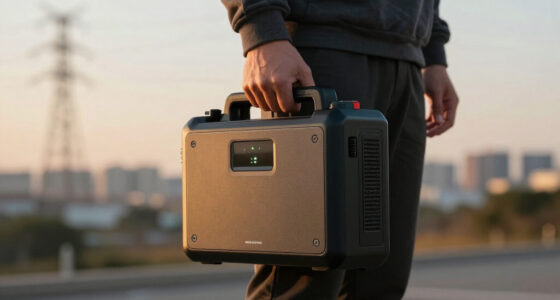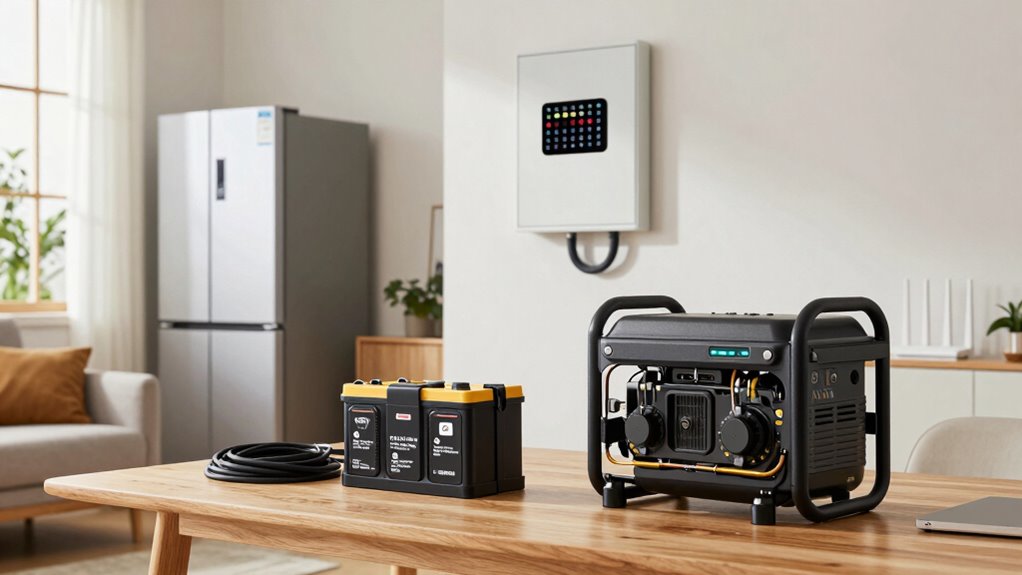

To determine what you need to run during an outage, start by listing essential appliances like your refrigerator, medical devices, communication tools, and smart home systems. Prioritize these critical devices and guarantee your backup system can support them. Consider your budget and choose from options like portable generators, batteries, or solar setups. Optimizing your power plan and maintenance helps keep your home safe and functional during outages. Keep exploring to find out how to make your backup power more reliable and efficient.

Get the latest gadgets delivered free — and shop member deals
- Fast, free delivery on millions of items
- Access to Prime Big Deal Days deals on October 6–7
- Prime Video, Amazon Music and more included
Key Takeaways
- Identify and prioritize essential appliances like refrigeration, medical devices, and communication tools for backup power.
- Conduct load analysis to determine the total energy requirements and size the backup system accordingly.
- Choose a reliable power source, such as portable generator or battery system, based on budget and performance needs.
- Incorporate renewable options like solar panels and energy storage to extend backup duration and increase resilience.
- Regularly maintain and test your backup system to ensure readiness during outages.
portable generator for home backup
As an affiliate, we earn on qualifying purchases.
As an affiliate, we earn on qualifying purchases.
How Do I Identify My Household Essentials for Backup Power
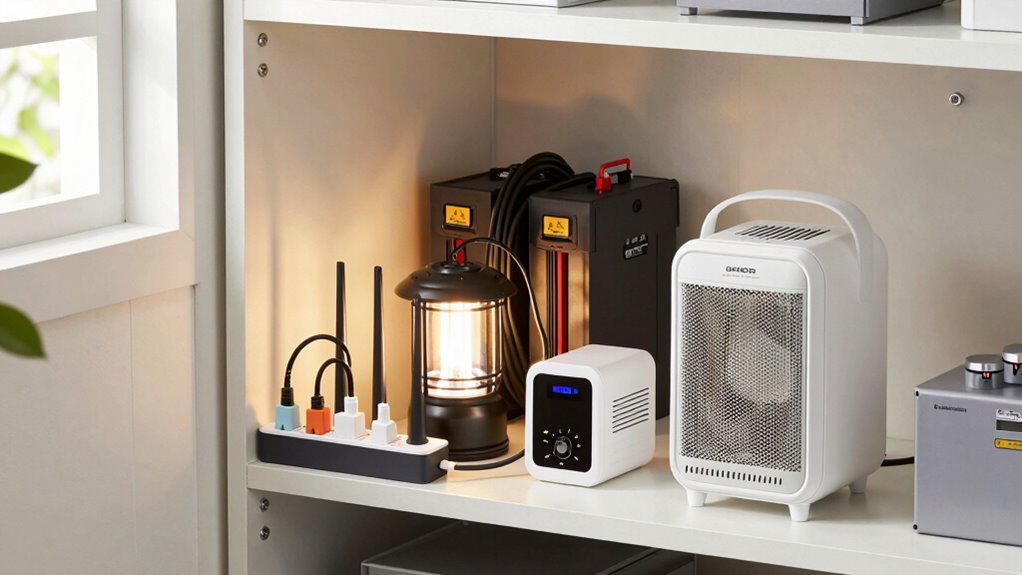
To determine which household essentials need backup power, start by making a list of the devices and appliances you rely on daily. Consider how smart technology integrates into your home, such as connected security systems or smart thermostats, and whether they’re crucial during outages. Think about renewable energy options like solar-powered devices or battery storage systems that can supplement or replace traditional backup solutions. Prioritize essentials like refrigeration, medical devices, or communication tools that keep you safe and connected. Identifying these items helps you decide what needs continuous power and what can wait. Additionally, understanding power management strategies can help optimize your backup system’s efficiency and reliability. For example, selecting electric power sources such as portable generators or battery storage can significantly enhance your home’s resilience during outages. Incorporating energy monitoring tools can further ensure your backup system is operating efficiently and conserving resources. Being aware of device vulnerabilities can help you implement appropriate security measures, especially for connected devices, to prevent hacking risks during outages. This process ensures your backup power setup is efficient, tailored to your needs, and capable of supporting your smart home and renewable energy investments effectively.
As an affiliate, we earn on qualifying purchases.
What Are the Most Critical Appliances to Keep Running During an Outage?
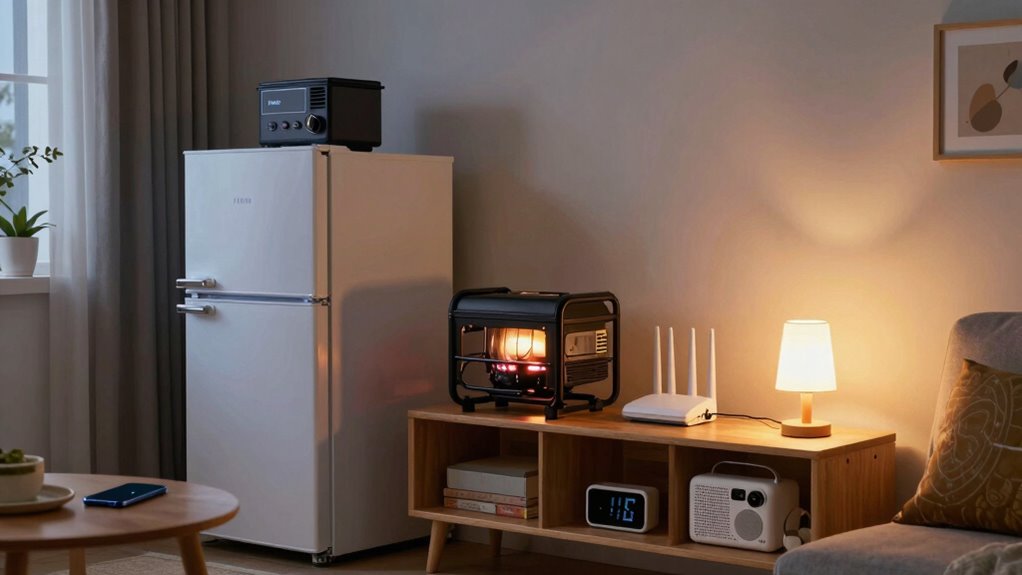
Have you ever wondered which appliances are truly necessary during a power outage? Prioritizing critical devices ensures your home stays comfortable and safe. Your refrigerator and freezer are top priorities to prevent food spoilage. If you rely on renewable energy systems, like solar panels, keep essential loads connected to maximize efficiency. Smart technology can help manage power use, automatically shutting down non-essentials and conserving energy for vital appliances. A sump pump or backup sump pump system prevents flooding, especially during storms. Medical devices, such as oxygen concentrators or CPAP machines, are non-negotiable if needed. Additionally, understanding your home’s energy needs can help optimize backup power planning and prevent unnecessary outages. Recognizing power consumption patterns allows for better planning and more efficient use of backup resources. Properly assessing home electrical loads ensures your backup system is adequate and reliable. Conducting a load analysis can further improve your backup power strategy and ensure critical functions remain operational during outages. Being aware of emergency power protocols can also enhance your preparedness and response during extended outages.
As an affiliate, we earn on qualifying purchases.
How Should I Prioritize My Home’s Power Needs?
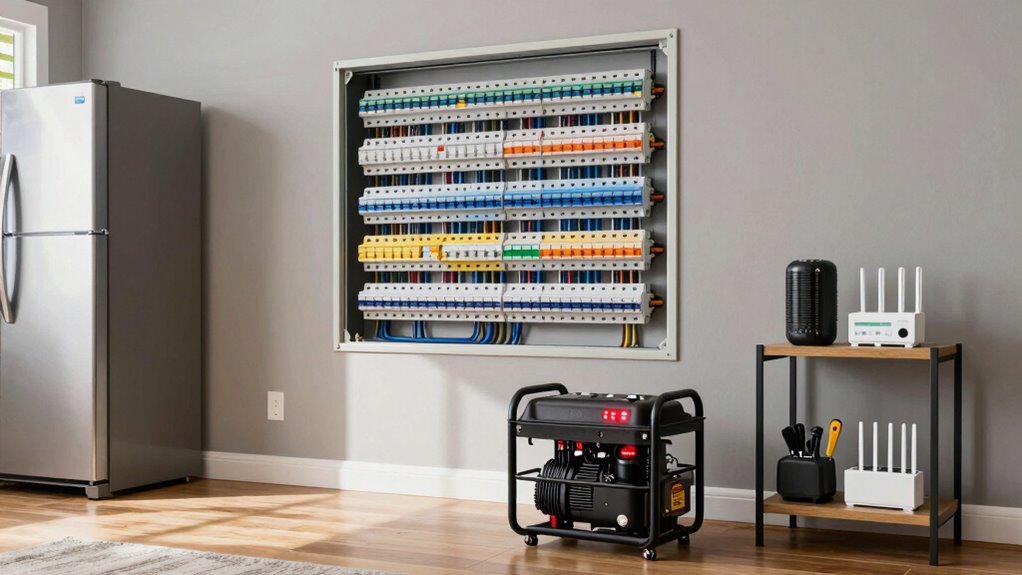
When managing your home’s power needs during an outage, establishing a clear priority order to maximize limited resources is vital. Focus on essential loads first, like refrigeration, lighting, and communication devices, then consider energy efficiency to stretch your backup power. Solar integration can help supplement power and reduce reliance on backups. To organize your priorities, use this table:
| Priority Level | Critical Appliances | Energy Efficiency Tips |
|---|---|---|
| 1 | Refrigerator, lights, communication | Use energy-efficient LED bulbs |
| 2 | Heating/cooling systems | Seal leaks to improve efficiency |
| 3 | Small appliances, entertainment | Limit usage to conserve power |
| 4 | Less critical electronics | Turn off when not in use |
This approach guarantees you meet essential needs first while optimizing energy use. Additionally, understanding power consumption can help you better plan which devices to prioritize during outages. Proper planning also involves considering the capacity of your backup system to ensure it can handle your critical loads effectively. Being aware of a home’s energy efficiency can further aid in reducing overall power demands during emergencies.
home surge protector for critical devices
As an affiliate, we earn on qualifying purchases.
As an affiliate, we earn on qualifying purchases.
What Backup Power Options Are Available for Different Budgets?
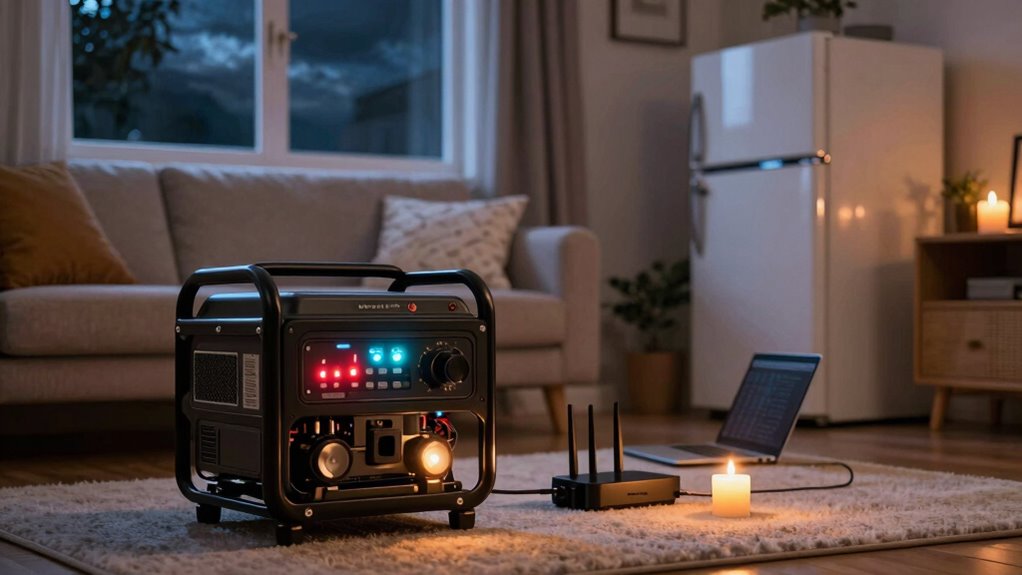
No matter your budget, there are backup power options to keep your home running. Budget-friendly generators can provide basic support, while mid-range solutions offer more reliability and features. For those wanting top-tier backup power, premium systems deliver maximum performance and peace of mind. Considering transfer-switch fundamentals can also help ensure a safe and seamless power transfer during outages, as properly sizing and installing transfer switches is crucial for safety and compliance with regulatory/environmental considerations. Understanding power capacity requirements is essential to selecting the right system that meets your home’s specific needs. Additionally, evaluating battery inverter generator specifications can help determine the most suitable option for your energy needs and long-term reliability.
Budget-Friendly Generators
Finding an affordable backup power solution doesn’t mean you have to sacrifice reliability. Budget-friendly generators, such as small portable units or inverter models, can provide dependable power without breaking the bank. These options often have shorter run times, so fuel efficiency becomes essential to maximize their effectiveness during outages. Look for models with good battery longevity if they include battery components or hybrid features, ensuring they last through multiple outages without frequent replacements. While they may not power your entire home, they can keep essential devices like lights, phones, and small appliances running smoothly. Understanding fuel efficiency and proper maintenance can significantly extend the lifespan of your generator. Incorporating energy-saving protocols and smart device management can help optimize energy use during power outages, enhancing overall home comfort. Additionally, selecting a generator with efficient fuel consumption can further improve its reliability and cost-effectiveness over time. Regularly monitoring generator performance helps ensure it remains ready when needed, especially during critical outages.
Mid-Range Power Solutions
Mid-range backup power solutions strike a balance between affordability and performance, making them suitable for homeowners who need more reliable power without the high cost of whole-house generators. These options often include portable generators combined with energy storage systems, providing a flexible way to manage power during outages. Energy storage allows you to store excess power for use when needed, enhancing reliability. With proper power distribution, you can prioritize essential circuits, ensuring critical devices stay operational. Mid-range systems are ideal if you want increased dependability without a hefty investment, offering enough capacity to support your essential appliances. They are a practical choice for maintaining basic home functions during outages, giving you peace of mind without breaking the bank.
Premium Backup Systems
Premium backup systems offer the highest level of reliability and performance, catering to homeowners who prioritize uninterrupted power and are willing to invest accordingly. These systems often incorporate renewable sources, like solar panels or wind turbines, to reduce dependence on grid power and enhance sustainability. Smart integration allows you to seamlessly coordinate multiple energy sources, batteries, and backup generators, optimizing efficiency and responsiveness during outages. With advanced monitoring and control features, you can manage your system remotely and ensure your home remains powered with minimal fuss. While premium systems come at a higher upfront cost, they provide unparalleled dependability, energy efficiency, and customization. Power quality and monitoring are critical components that ensure your backup system functions optimally during outages. If uninterrupted power is a top priority, investing in a premium backup system ensures you’re covered, no matter the situation.
How Long Can Backup Power Systems Keep My Home Running?
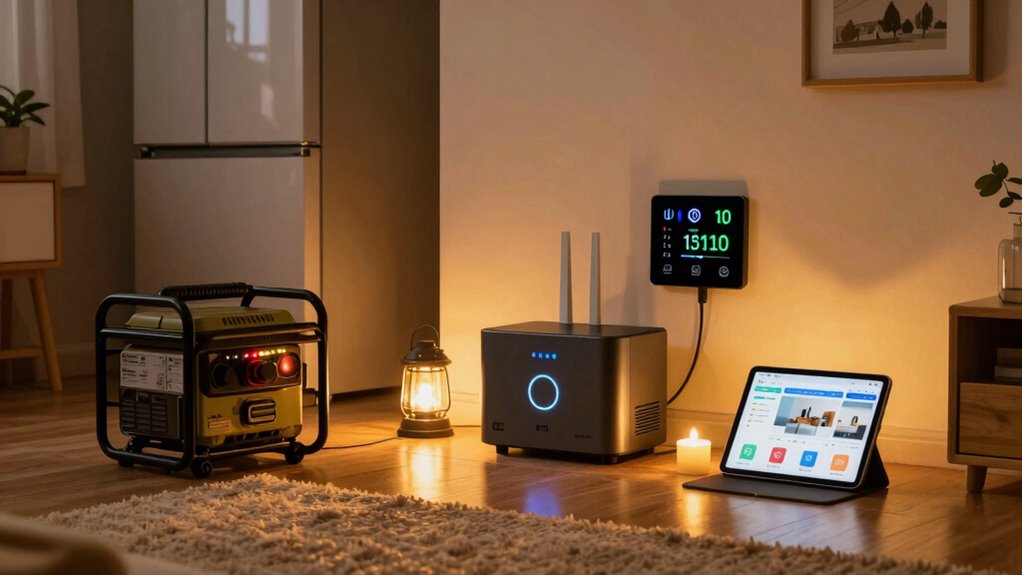
The duration your backup power system can keep your home running depends on several factors, including the type of system you choose and the amount of stored energy it has. If you have a generator with enough fuel, you might run it for days, but fuel availability can limit this. Solar integration can extend backup time by replenishing energy during daylight, helping maintain grid independence. Battery systems, on the other hand, depend on their capacity; larger batteries can power your essentials longer. Keep in mind, the system’s design also influences runtime—more robust setups provide longer backup periods. Proper power storage standards and system maintenance ensure reliable performance during outages. Additionally, selecting the right engine upgrade can improve the efficiency and performance of your backup systems. Understanding your energy needs and system capabilities helps you estimate how long your home can stay powered during outages, and consulting with professionals about system sizing ensures optimal backup duration.
How Do I Set Up and Maintain My Backup Power System?
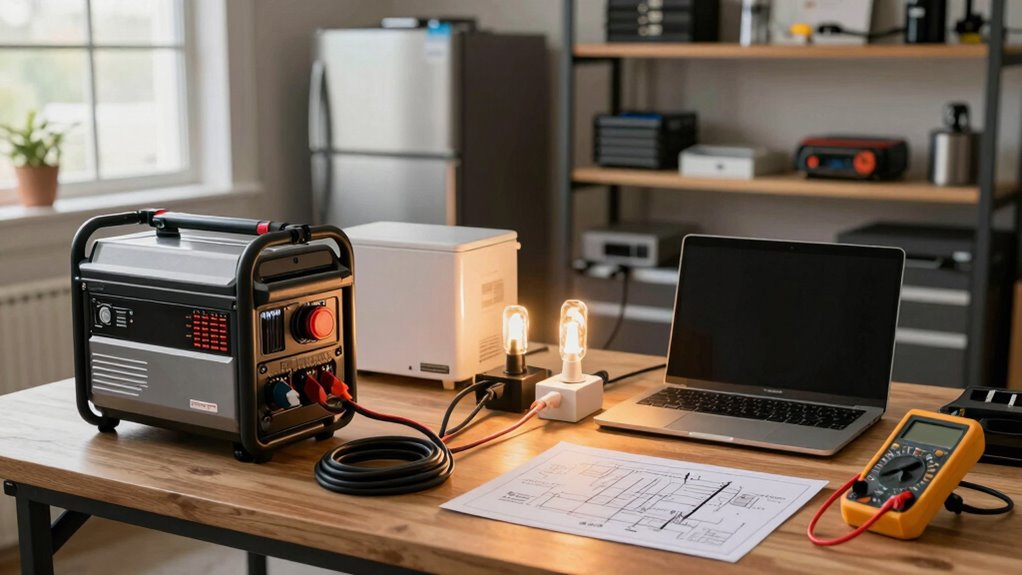
Setting up and maintaining your backup power system starts with careful planning and proper installation. Choose an appropriate power source, whether a generator or alternative energy options like solar panels or wind turbines, based on your home’s needs. Proper installation guarantees safety and efficiency, so follow manufacturer instructions or hire a professional if needed. Once installed, establish a maintenance routine that includes regular inspections, testing, and servicing of batteries, inverters, and fuel systems. Keep backup systems clean, stocked with necessary supplies, and ensure connections are secure. Regular maintenance not only prolongs system lifespan but also guarantees reliable performance during outages. Staying proactive with upkeep helps ensure your backup power system is ready to serve when you need it most.
Avoid These Common Mistakes When Planning Home Backup Power
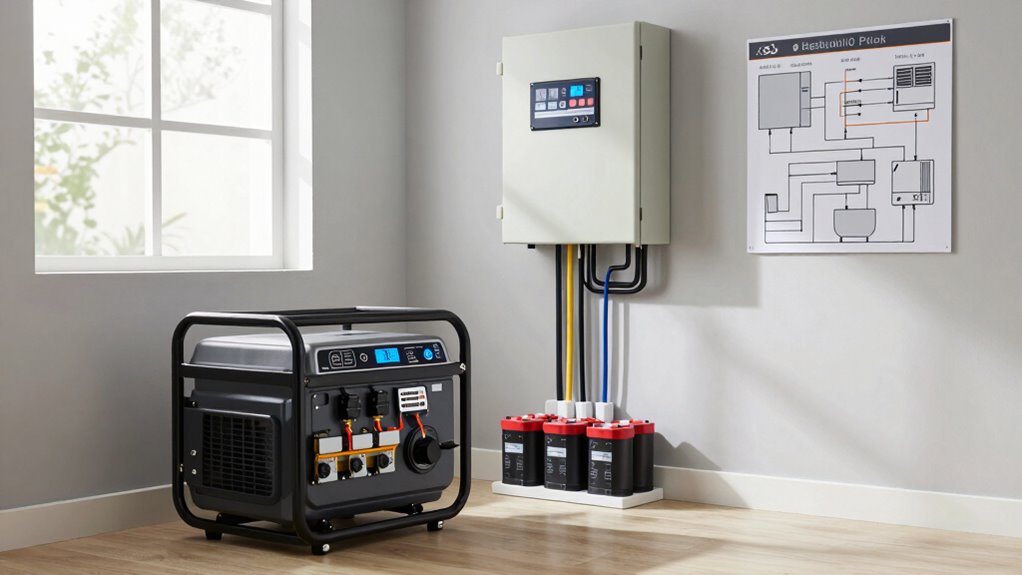
Many homeowners make the mistake of overlooking their actual power needs, which can lead to insufficient backup. Underestimating the system size often results in a setup that can’t handle your home’s demands during an outage. To avoid these pitfalls, carefully assess your power requirements and plan for a system that provides reliable coverage.
Overlooking Power Needs
Failing to accurately assess your power needs can lead to significant issues during an outage. Many homeowners overlook how much power they actually consume or neglect to contemplate solar integration’s impact on overall requirements. Ignoring these factors might cause your backup system to fall short when you need it most. Be sure to evaluate all essential appliances and electronics that must stay operational, including those with high power consumption. Solar integration can influence your backup power needs, as it may supplement or reduce generator use, but only if properly planned. Underestimating your power needs results in a system that can’t handle your household’s demands, leaving you vulnerable during emergencies. Take the time now to analyze your actual consumption habits and how solar fits into your backup power strategy.
Underestimating System Size
Underestimating the size of your backup power system is a common mistake that can leave your home vulnerable during outages. If your system capacity isn’t large enough, essential appliances and devices won’t run when you need them most. To avoid this, perform an accurate power calculation by listing all critical loads and their wattage. Don’t assume your needs are minimal; consider future growth or added appliances. Underestimating leads to a system that can’t support your actual power demands, resulting in frequent outages or system overloads. Always size your backup system slightly above your calculated needs to ensure reliability. Proper planning and precise power calculation are key to choosing the right system capacity, giving you confidence your home will stay powered during emergencies.
How Can I Make My Home More Resilient to Power Outages?
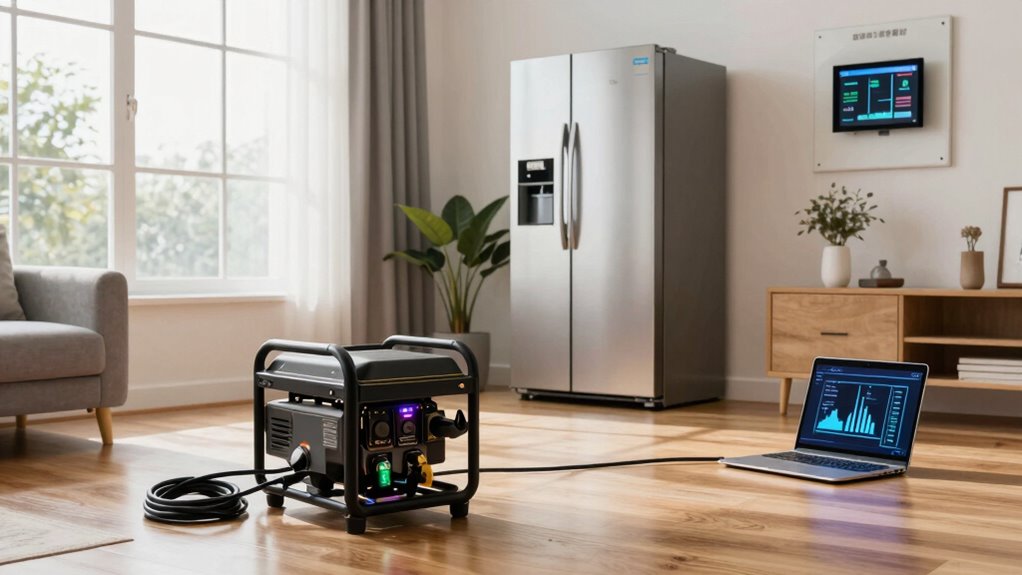
Are you prepared to keep your home powered during unexpected outages? Making your home more resilient starts with integrating solar power, which can provide a reliable energy source even when grid power fails. Pairing solar integration with a smart home system enhances your ability to monitor and control power usage remotely, ensuring essential devices stay operational. Consider installing a home battery backup to store excess solar energy, giving you extra security during prolonged outages. Upgrading your electrical system with surge protectors and automatic transfer switches also boosts resilience. By combining these strategies, you create a robust setup that minimizes disruptions, keeps critical appliances running, and increases your overall home resilience against power outages.
Frequently Asked Questions
How Do I Calculate My Total Backup Power Capacity Needs?
To calculate your total backup power capacity needs, start with a load calculation of your essential devices by checking their power consumption. List everything you want to run during an outage and add up their wattages. Consider peak power usage and add a safety margin, typically 20-25%. This total gives you the capacity your backup system must provide to keep your critical appliances operational during an outage.
What Safety Precautions Should I Consider With Backup Generators?
Ever thought about what could go wrong if safety isn’t a priority? Always follow generator safety protocols, keep it outdoors in a well-ventilated area, and never run it indoors—carbon monoxide is deadly. Be cautious of electrical hazards by using proper extension cords and avoiding overloads. Regularly inspect your generator for damage, and turn it off before refueling. Staying vigilant helps prevent accidents and keeps you and your loved ones safe.
Can I Run My Entire House on Backup Power?
You can’t typically run your entire house on backup power without a whole-house generator, which requires professional installation. Instead, focus on essential circuits like your fridge, lights, and medical devices. Regular generator maintenance guarantees it works efficiently when needed, and keeping an eye on your battery lifespan if using battery backup systems helps prevent unexpected failures. Prioritize safety and consult a professional for a tailored backup plan.
How Often Should I Test My Backup Power System?
Did you know that generator maintenance experts recommend testing your backup power system at least once a month? You should conduct regular testing to guarantee everything’s working smoothly when you need it most. Testing frequency helps catch issues early, preventing surprises during outages. Make sure to follow your generator’s maintenance schedule, including oil changes and inspections, and always perform a full system test monthly to keep your backup power ready.
What Permits or Regulations Apply to Home Backup Power Installations?
You need to check local zoning restrictions and environmental regulations before installing backup power. Permits may be required for certain systems, especially if they involve gas or fuel storage, or if they impact your property’s appearance. Contact your city or county offices to find out specific rules, and verify your installation complies with all safety and environmental standards. Doing this upfront helps avoid fines or future legal issues.
Conclusion
Preparing for power outages isn’t just about plugging in—it’s about planning, prioritizing, and protecting what’s precious. By understanding your household essentials, choosing the right backup options, and maintaining your system, you’ll ensure your home stays safe and steady. Don’t forget to dodge dangerous mistakes and develop a resilient routine. With thoughtful planning and proactive practices, you can confidently conquer outages and keep your home’s heart beating strong, no matter the circumstances.
Fall Picks
fall essentials
As an affiliate, we earn on qualifying purchases.