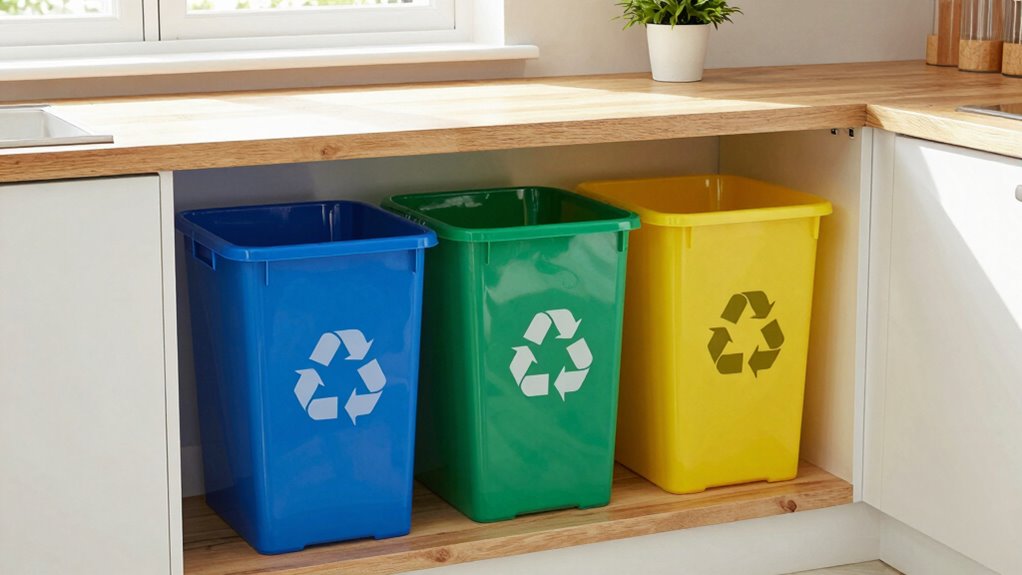

To set up a simple home recycling station, choose a visible, accessible spot like near your kitchen, and select separate durable bins for plastics, paper, glass, and compost. Label each bin clearly with icons and colors to make sorting easy and keep everything organized with additional storage solutions. Regularly empty and maintain the station, and educate everyone in your household on proper recycling habits. Keep exploring these tips to improve your recycling system even further.

Get the latest gadgets delivered free — and shop member deals
- Fast, free delivery on millions of items
- Access to Prime Big Deal Days deals on October 6–7
- Prime Video, Amazon Music and more included
Key Takeaways
- Choose a visible, accessible space near the kitchen or laundry room for convenience.
- Select durable, labeled containers for plastics, paper, glass, metals, and compost.
- Use color-coding and clear signage to simplify sorting and reinforce proper recycling.
- Regularly empty bins and educate household members on recycling procedures.
- Organize the station with storage solutions like shelves and removable liners for tidiness.
recycling bins for home with labels
As an affiliate, we earn on qualifying purchases.
As an affiliate, we earn on qualifying purchases.
Evaluate Your Space to Find the Best Spot for Your Recycling Station
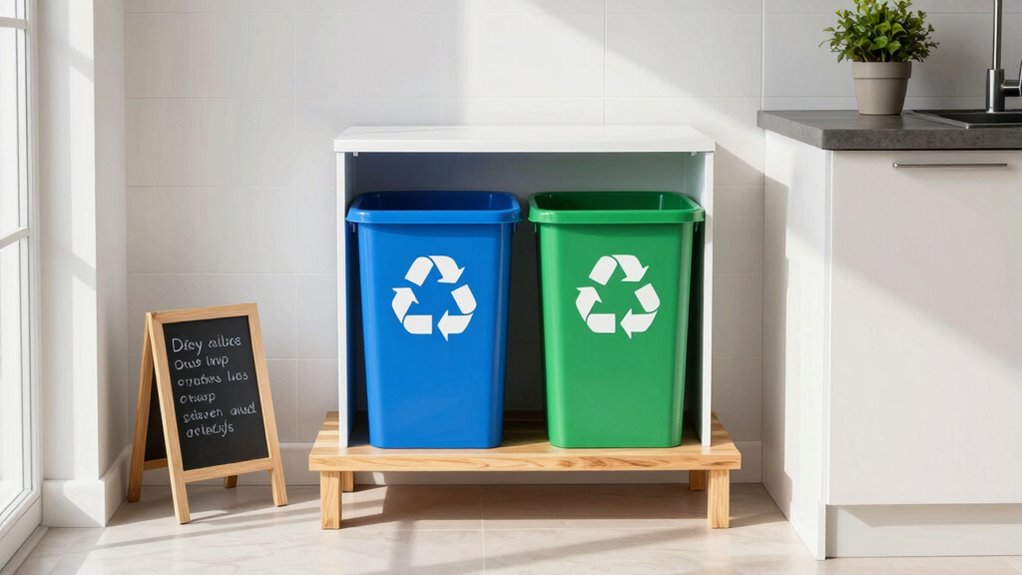
Before setting up your recycling station, it’s important to evaluate your space to find the most convenient location. Consider how space lighting affects visibility—bright, well-lit areas make sorting easier and reduce accidents. Look for a spot near your kitchen or laundry area, where waste naturally accumulates. Don’t forget to think about decorative elements; choose a location that blends seamlessly with your home’s style, so the station doesn’t look out of place. You want it accessible but not intrusive. Avoid high-traffic zones that may cause clutter or inconvenience. Assess the available surface area to ensure enough room for containers and movement. Proper cabling solutions can help organize cords or any electronic components nearby, enhancing safety and tidiness. Additionally, selecting a designated area encourages consistent recycling habits and helps maintain overall home organization. Choosing a space with good lighting conditions can further improve visibility and make sorting easier. A well-chosen spot will make recycling simple, efficient, and even visually appealing, encouraging consistent use. Incorporating sustainable practices into your setup can also promote environmental awareness and responsible waste management. To further optimize your setup, consider storage options that make it easier to manage recyclables and keep the area tidy.
color-coded recycling containers
As an affiliate, we earn on qualifying purchases.
As an affiliate, we earn on qualifying purchases.
Decide What Containers You Need for Your Home Recycling Station
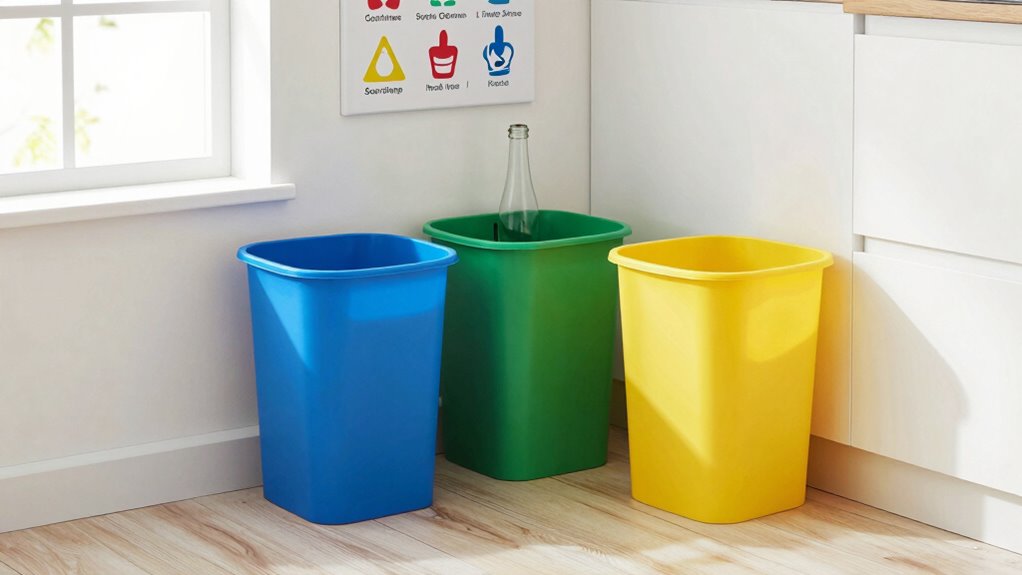
Choosing the right containers is essential for an efficient home recycling station. You’ll need to decide on types of containers that suit your space and recycling needs. Consider using separate bins for plastics, paper, glass, and metals to keep sorting simple. Container materials matter too—opt for durable, easy-to-clean options like plastic or metal. Plastic bins are lightweight and affordable, while metal containers add a sturdy, long-lasting touch. Make sure each container has enough capacity to handle your household’s waste, and consider stackable or labeled bins to maximize space. Additionally, understanding recycling standards can help you select containers that meet local guidelines and ensure proper waste disposal. Incorporating sustainable design principles can further enhance the efficiency and eco-friendliness of your recycling station. For example, choosing containers with clear visibility of contents can make it easier to monitor waste levels and maintain organization. Being aware of environmentally friendly materials can help you select containers that are more sustainable and reduce your ecological footprint. You can also consider ergonomic features to make handling and emptying bins more convenient. By selecting appropriate types of containers and container materials, you’ll streamline your recycling process and make it easier to maintain a tidy, functional station.
compact recycling station storage solutions
As an affiliate, we earn on qualifying purchases.
As an affiliate, we earn on qualifying purchases.
Label Your Bins Clearly to Make Sorting Easy
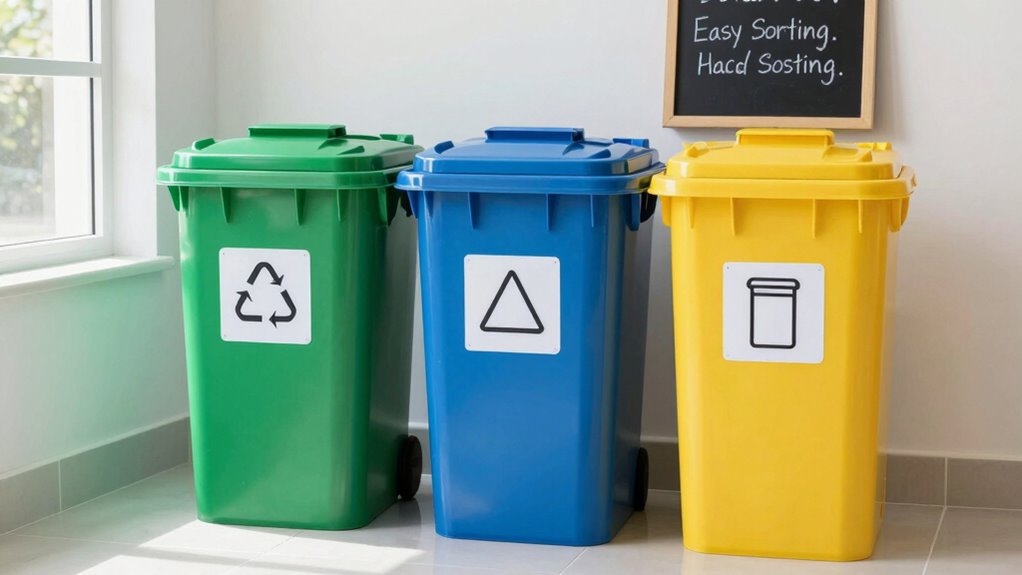
Clear labels on your bins make sorting straightforward and efficient. Use color-coded bins to help you quickly identify recyclable materials. For example, assign blue for plastics, green for paper, and yellow for metals. Bright, legible labels ensure everyone in your household knows exactly where to put each item, reducing confusion and contamination. Stick to simple wording like “Recyclable Plastics,” “Paper & Cardboard,” or “Metals & Cans.” Use waterproof markers or printed labels to keep signs clear over time. Consistent labeling helps streamline your recycling process and keeps your station organized. Remember, the clearer the labels, the easier it is to maintain proper sorting habits. Proper labeling is a simple step that makes recycling at home more effective and less messy. Additionally, understanding the symbolism of clocks and time can encourage mindful sorting habits, reminding everyone to prioritize sustainability in daily routines. Paying attention to recycling guidelines and symbols can further improve your sorting accuracy and environmental impact. Clear labels combined with recycling best practices can greatly enhance your home recycling system. Incorporating educational materials near your bins can also help household members learn more about recycling.
As an affiliate, we earn on qualifying purchases.
Place Your Recycling Station in a Convenient, Accessible Location
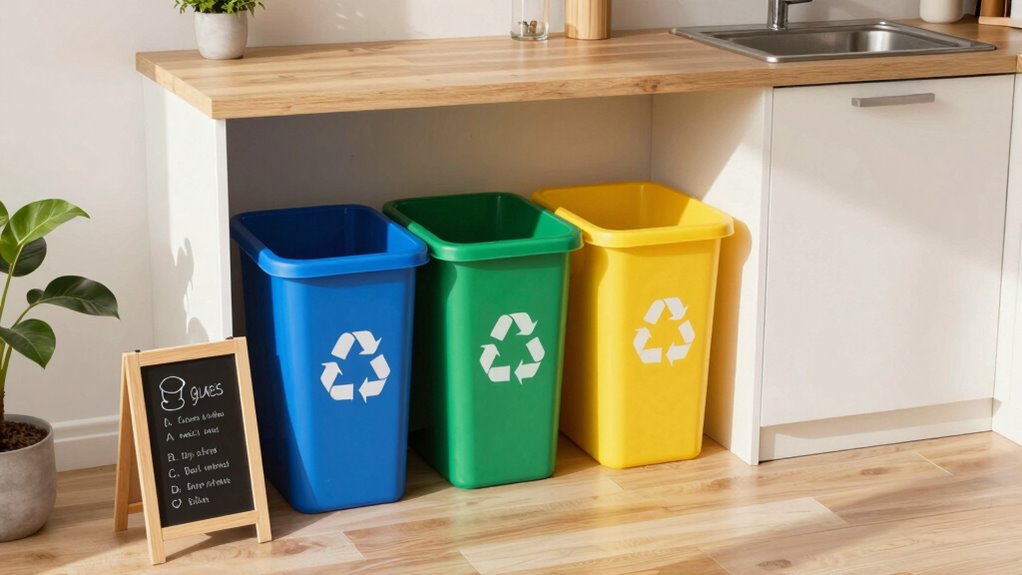
Once your bins are labeled clearly, the next step is to find the best spot for your recycling station. Choosing a convenient, accessible location encourages consistent recycling and helps debunk common recycling myths. Place your station near high-traffic areas like the kitchen or laundry room to make sorting effortless. Keep it visible and within arm’s reach to prevent neglect. Consider these eco-friendly tips:
- Avoid placing bins in unlit or hard-to-reach areas.
- Keep your recycling station away from heat sources or direct sunlight.
- Use clear signage to reinforce correct sorting and dispel recycling myths.
- Ensure there’s enough space for multiple bins and easy access for emptying.
- Position your station where it can serve as a visual reminder of your environmental commitment.
- Incorporate proper organization techniques to streamline your recycling process and prevent contamination.
- To further improve your setup, regularly evaluate and optimize recycling efficiency based on your household’s habits and waste patterns. This setup promotes responsible habits and maximizes convenience. Additionally, designing your station with efficiency in mind can help prevent contamination of recyclables and improve overall recycling efficiency. Implementing regular maintenance routines ensures your station remains clean, organized, and effective over time. Regularly educating household members about recycling best practices can also foster ongoing commitment.
Set Up a Simple System for Collecting and Emptying Your Bins
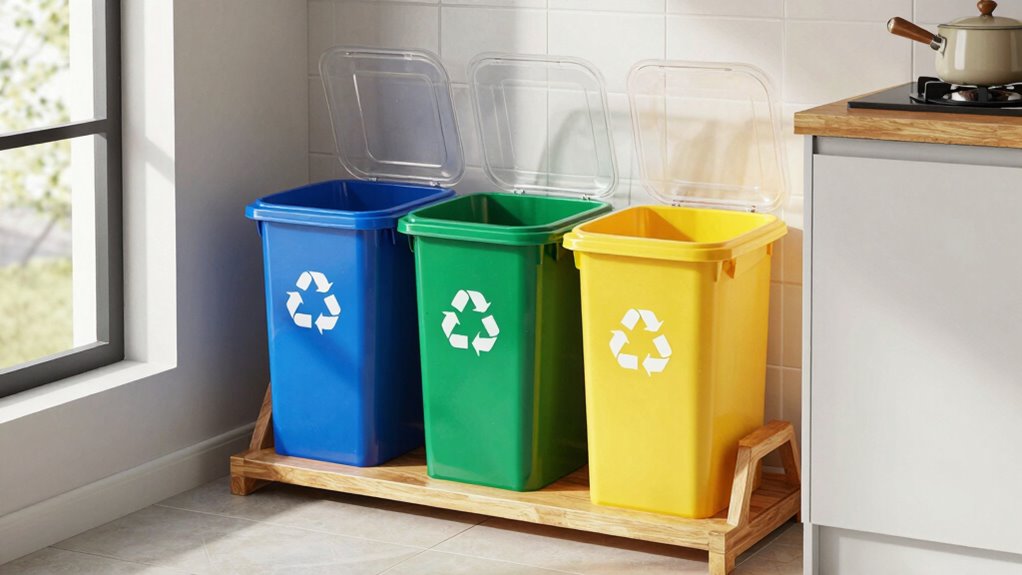
To keep your recycling station efficient, you should designate separate bins for different materials. Clear labels help everyone know where to dispose of items properly, and setting a regular schedule guarantees bins don’t overflow. By establishing this simple system, you’ll make recycling easier and more consistent. Incorporating support networks for sustainable practices can also encourage ongoing participation and commitment. Additionally, involving community groups can enhance collective efforts and motivate continuous engagement. Creating clear visual cues and educating household members about recycling benefits can further improve compliance and environmental impact. Building awareness about proper disposal techniques can help prevent contamination of recyclable materials and ensure the effectiveness of your recycling efforts. Recognizing the importance of environmental education can foster a greater understanding and dedication to recycling at home.
Designate Separate Bins
Setting up separate bins for different materials makes your recycling system straightforward and efficient. Choose appropriate recycling bin types based on the materials you intend to collect. Use durable container materials like plastic or metal to guarantee longevity. Place bins in convenient locations, such as the kitchen or garage, to encourage regular use. Consider the size of each bin to match your household’s waste volume. Keep the bins easily accessible for quick disposal, and ensure they’re sturdy enough to prevent spills. Properly designated bins streamline your recycling process and reduce contamination. Material segregation helps prevent cross-contamination and makes recycling more effective. – Select bins with secure lids to contain odors and pests – Opt for color-coded containers for quick identification – Use bins with clear, removable liners for easy cleaning – Choose stackable or compact designs to save space – Consider bins with foot pedals for hands-free operation; additionally, organized storage can help you maintain a clutter-free recycling area and improve overall efficiency.
Establish Clear Labels
Clear labels are essential for ensuring everyone in your household knows exactly which bin to use for each material. Clear, colorful labels help prevent common recycling myths, like thinking plastics are all the same or that food waste can go anywhere. Label each bin with specific categories such as “Plastic,” “Paper,” “Glass,” and “Compost.” When it comes to composting basics, include a compost bin label for food scraps and yard waste. Use simple words and icons to make labels easy to understand. Proper labeling reduces confusion, encourages consistent sorting, and keeps your recycling station organized. It also helps everyone learn the correct way to recycle and compost, making your home more eco-friendly and reducing contamination in your bins.
Schedule Regular Collection
Have you established a simple system for collecting and emptying your recycling bins? Regular collection keeps your recycling station efficient and helps dispel recycling myths that often discourage proper habits. To stay consistent, set a fixed schedule, whether weekly or biweekly, and stick to it. This encourages eco friendly habits and prevents overflow or contamination. Consider these tips:
- Use reminders or calendar alerts for pick-up days
- Coordinate with local recycling services for pickup schedules
- Educate household members on the importance of timely collection
- Keep bins in an accessible, designated spot to streamline process
- Review and adjust your schedule based on waste volume and seasonal changes
A well-planned routine ensures your recycling efforts are effective, sustainable, and free from misconceptions.
Add Storage Solutions to Keep Your Recycling Station Tidy
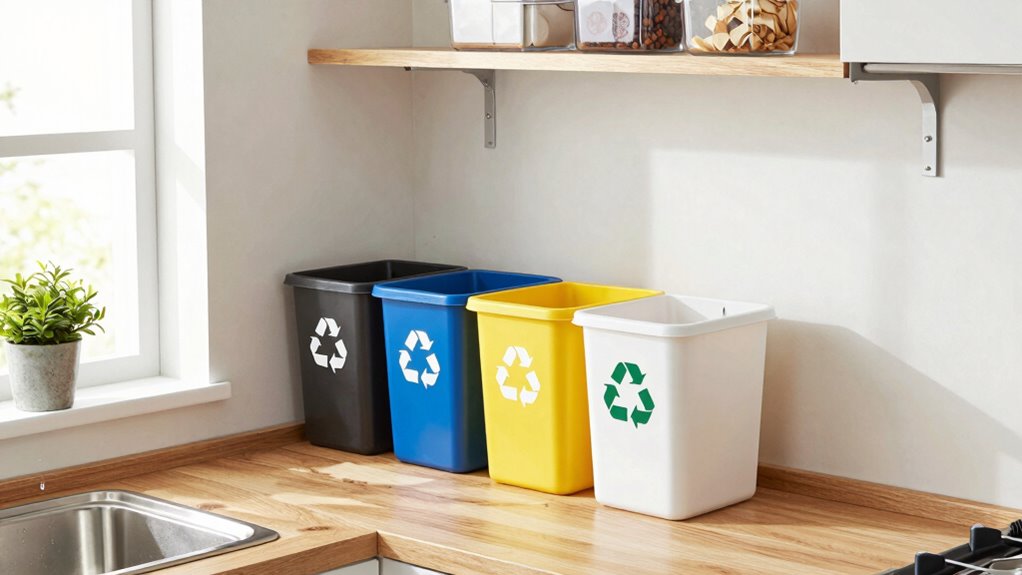
To keep your recycling station organized and easy to use, adding effective storage solutions is vital. Using storage containers and organizational bins helps separate recyclables and prevents clutter. Choose containers that fit your space and are easy to access. Label each bin clearly to avoid confusion and encourage proper recycling habits. Consider stacking bins or using wall-mounted shelves to maximize space. Here’s a simple setup:
| Storage Solution | Purpose |
|---|---|
| Large organizational bins | Hold bulk recyclables |
| Small containers | Collect small or loose items |
| Wall-mounted shelves | Keep bins off the floor |
| Labeling system | Ensure proper sorting |
With these solutions, your recycling station stays tidy, efficient, and user-friendly.
Teach Everyone in the House How to Recycle Properly
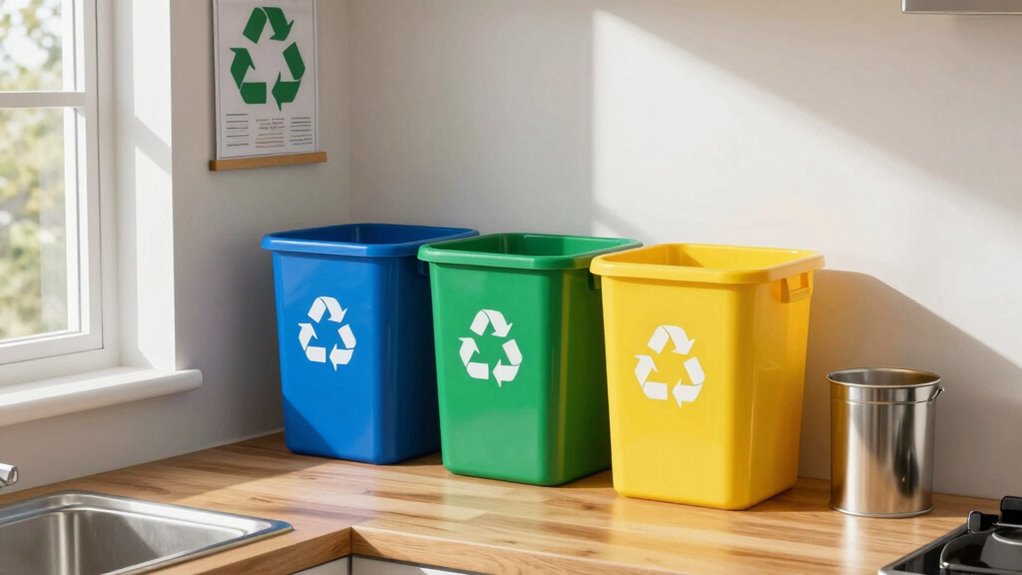
Make sure everyone in your household knows the clear recycling guidelines so items go in the right bins. Use regular reminders to reinforce proper habits and prevent confusion. When everyone is on the same page, recycling becomes easier and more effective for your home.
Clear Recycling Guidelines
Establishing clear recycling guidelines guarantees everyone in your household knows exactly how to sort and dispose of waste properly. To avoid recycling myths, provide simple instructions on what can and can’t be recycled, emphasizing rinsing containers and removing labels. Share composting tips for organic waste, such as avoiding meat and dairy to prevent odors. Make sure everyone understands the importance of separating recyclables from trash. Use visual labels or color-coded bins to reinforce guidelines. Regularly review these instructions to keep everyone on the same page. Clear rules reduce contamination, saving time and effort. Educating your household about proper recycling practices fosters a sustainable mindset and ensures your home’s recycling station operates efficiently. Simple, consistent guidelines make recycling second nature for everyone.
Regular Household Reminders
Keeping everyone in your household reminded about proper recycling habits is essential to maintaining an efficient and contamination-free station. Regular household reminders help prevent recycling myths from taking hold and ensure everyone follows the correct procedures. Use clear signs and periodic discussions to reinforce recycling tips, like rinsing containers and avoiding contamination. Also, remind everyone about composting tips, such as composting food scraps properly and avoiding plastics. To keep things organized, consider this table:
| Recycling Tips | Composting Tips |
|---|---|
| Rinse containers thoroughly | Keep food scraps separate |
| Avoid recycling plastics not accepted | Cover compost to prevent pests |
| Check for recycling myths before sharing info | Balance greens and browns |
Consistent reminders keep your station running smoothly and reduce confusion.
Maintain and Adjust Your Recycling Station Over Time
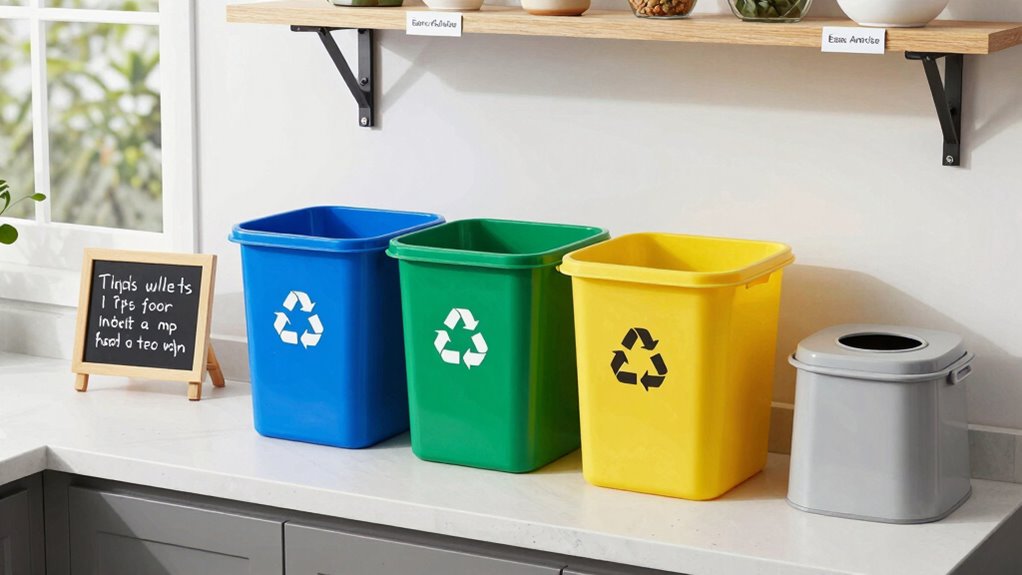
To guarantee your recycling station remains effective, regularly assess how well it’s working and make adjustments as needed. Over time, you might encounter recycling myths that lead to improper sorting or contamination. Stay informed about eco friendly materials to ensure you’re recycling correctly and reducing waste. As your household’s needs evolve, consider updating container sizes or labels for clarity. Keep an eye on your collection habits, fixing any issues like odors or overflow. Regularly review local recycling guidelines, which may change. Additionally, educate household members to stay aligned with best practices, preventing contamination. Adjusting your station helps maintain efficiency, making recycling an effortless part of your routine. Your proactive approach guarantees your recycling efforts are impactful and sustainable.
Frequently Asked Questions
How Can I Encourage Family Members to Participate in Recycling?
You can encourage family involvement in recycling by making it fun and educational. Share tips about how recycling helps the environment, and involve everyone in sorting waste. Use colorful bins and label them clearly to make participation easy. Offer small rewards for consistent recycling efforts, and lead by example. When your family sees you actively recycling, they’ll be motivated to join in, creating a positive, eco-friendly habit for everyone.
What Are Some Common Mistakes to Avoid When Setting up a Recycling Station?
To avoid setup pitfalls, steer clear of recycling misconceptions like mixing different materials or overfilling bins. Don’t forget to label containers clearly, so everyone knows what goes where. Keep the station accessible and organized to promote participation. Avoid placing it too close to heat sources or moisture, which can damage recyclables. Regularly check and clean the station to prevent odors and contamination, ensuring recycling remains effective and hassle-free for your family.
How Do I Handle Recycling of Non-Standard or Hazardous Items?
Handling non-standard or hazardous items is like steering a treacherous river. You must identify hazardous waste and non-standard items, then store them in clearly labeled, sealed containers separate from regular recyclables. Check local regulations for disposal methods, and never mix hazardous waste with other recyclables. When in doubt, contact your local waste management facility. This guarantees safety and keeps your recycling station efficient and environmentally friendly.
Can I Incorporate Composting Into My Home Recycling System?
Yes, you can incorporate composting into your home recycling system by adding a compost bin for organic waste. You should collect kitchen scraps like vegetable peels and coffee grounds, then regularly turn and maintain your compost bin to speed up decomposition. This way, you’re reducing waste sent to landfills, enriching your garden soil, and creating a sustainable, eco-friendly recycling system right at home.
What Are the Best Ways to Track My Recycling Progress Over Time?
Coincidences often highlight your habits, so use digital tracking to monitor your recycling progress over time. You can set up a simple spreadsheet or use apps designed for waste management, enabling progress visualization. Regularly update your data, and you’ll see patterns emerge—helping you identify areas for improvement. This approach keeps you motivated, makes recycling more engaging, and guarantees you stay committed to your eco-friendly goals.
Conclusion
Now you’ve got your home recycling station set up perfectly, ready to save the planet one bottle at a time! Imagine your kitchen overflowing with neatly labeled bins, humming like a well-oiled machine, transforming trash into treasure with every toss. With a little effort, you’ll turn your home into a recycling powerhouse, making waste disappear faster than you can say “eco-friendly.” Get started today and watch your space—and the planet—shine brighter than ever!
Fall Picks
fall essentials
As an affiliate, we earn on qualifying purchases.