

Construction sites generate a constant stream of decisions, instructions, evidence and unfinished tasks. Gewerkton is entering that environment with a voice-first construction documentation and defect management platform designed to turn spoken site activity into usable project records.

Get the latest gadgets delivered free — and shop member deals
- Fast, free delivery on millions of items
- Access to Prime Big Deal Days deals on October 6–7
- Prime Video, Amazon Music and more included
Tech News · Construction Records
Gewerkton enters beta with voice as the evidence layer
A German-born platform turns spoken site activity into structured records, connecting field capture, browser-based plans and operational data across global construction projects.
One branded house · three connected contexts
“On site, what counts is what’s proven.”
Cross-border operation
27 languages
Capture to report, multilingual
EU, US and APAC teams can work in their own languages while the evidence original remains unambiguous.
Bring your own AI
13 providers
Region and provider stay selectable
Users bring their own keys and choose coverage for the EU, US or Asia, including mainland China.
Built in Germany
Deep commercial integration
Data can reside in an EU cloud or on an organisation’s own infrastructure.
Agent-driven development
21 packages
Shipped in one night
A solo founder directs a Codex and Claude coding fleet; output was checked with negative controls and mutation tests.
Public infrastructure choices
0
trackers and no cookie banner
27
website languages
51+
self-produced clips and posters
The product is in beta now, with a public beta planned for fall 2026. It is aimed at global construction markets but was born in the German market, where its commercial integrations run particularly deep: GAEB, REB, XRechnung and DATEV are all part of the proposition. Beyond Germany, Gewerkton supports 27 content languages and lets organisations select AI providers by region.
The platform is organised as one branded house with three connected product lines: Gewerkton Field for site work, Gewerkton Studio for plans and models, and Gewerkton Cloud for operations and data coordination. Together, they address projects ranging from housing developments to wind farms, data centres and tunnels.
voice-activated construction documentation device
As an affiliate, we earn on qualifying purchases.
As an affiliate, we earn on qualifying purchases.
Voice first, because the work starts on site
Gewerkton’s central premise is captured in its marketing line: “On site, what counts is what’s proven.” Voice is the starting point, but the intended output is structured evidence rather than a loose collection of recordings.
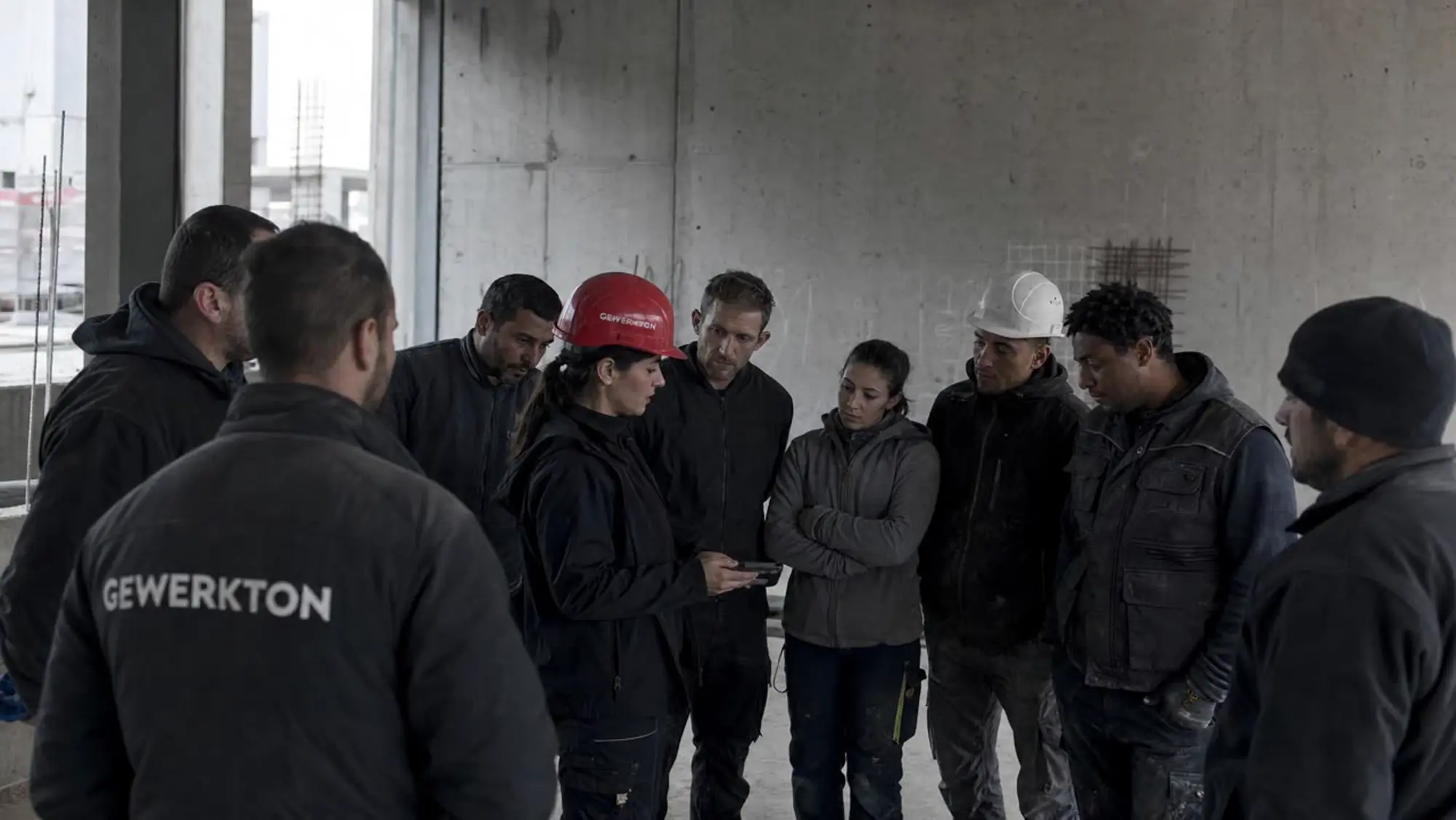
Gewerkton Field is the construction-site app. It converts dictation into evidence, defects and daywork reports, while also covering takt and portal workflows. On a housing project, that can mean recording a defect with a photo and deadline, dictating a daywork report, or collecting a signature on the device during handover.
The voice-first approach also fits projects where the physical working environment makes conventional data entry awkward. Wind farms and renewable-energy sites may be distributed over large areas, served by rotating crews and affected by dead zones. Gewerkton includes offline capture for those conditions, alongside support for field acceptance.
For infrastructure and tunnel projects, where work can run for long periods and generate many change orders, original audio can back instructions. The platform therefore treats voice as part of the evidence trail while translating what was said into material that can be used in documentation and defect management.
construction defect management software
As an affiliate, we earn on qualifying purchases.
As an affiliate, we earn on qualifying purchases.
Field, Studio and Cloud
The three product lines separate the main working contexts without presenting them as disconnected tools.
Gewerkton Field
Field handles the point of capture. Its scope includes dictation to evidence, defects, daywork reports, takt and portal functions. This is the part of the platform used where work is inspected, recorded, accepted or challenged.
Its deployment fields reflect that focus. At data centres and industrial plants, many trades can be operating in parallel under tight deadlines. Gewerkton can turn decisions made in meetings into task lists sorted by trade. At renewable-energy sites, it supports distributed teams and offline work. In building construction, it connects photos, deadlines, reports and on-device signatures with the record of what happened.
Gewerkton Studio
Gewerkton Studio is the browser workspace for plans and models. It is also intended for projects where no model exists: in that case, the site team can create one directly in the browser.
That distinction matters because model-based coordination cannot assume that every project begins with a complete model. Studio provides a place to work with the material that is available and a route for the site team to establish a model when it is not.
Gewerkton Cloud
Gewerkton Cloud coordinates operations and model or data flows between Field, Studio and third parties. It is the connecting layer across site capture, browser-based plan and model work, and external participants.

Data residency is offered as a choice: customers can use an EU cloud or their own infrastructure. That decision sits alongside the platform’s regional approach to AI provision, giving organisations control over both where data resides and which provider processes AI workloads.
As an affiliate, we earn on qualifying purchases.
Built in Germany, designed for cross-border work
Gewerkton’s German origins are most visible in its commercial integration. GAEB, REB, XRechnung and DATEV give the platform a specific connection to established German processes. The global side of the product is expressed differently: through multilingual capture and reporting, provider choice and deployment options.
The platform supports 27 content languages. On a cross-border project involving teams from the EU, the US and APAC, each participant can work in their own language while the evidence original remains unambiguous. For projects in Asia, the stated use cases include Chinese, Korean and Vietnamese crews, with multilingual handling from initial capture through to the report.
This is paired with selectable data residency and regional AI-provider choice. Organisations working across regions are not limited to a single AI vendor or a single provider geography.
multilingual construction project management tool
As an affiliate, we earn on qualifying purchases.
As an affiliate, we earn on qualifying purchases.
Bring your own AI, with 13 providers
Gewerkton’s BYO-AI model supports 13 AI providers. Users bring their own keys and select a region covering the EU, the US or Asia, including mainland China. The available provider mix spans European, American and Asian services.
The practical argument is straightforward: organisations can choose the provider and region appropriate to a project rather than being tied to one AI supplier. Gewerkton describes this as an architecture without vendor lock-in.
Regional choice is particularly relevant to the platform’s cross-border scope. A project involving several countries may have different infrastructure requirements from one operating entirely within a single region. Gewerkton’s model allows that provider decision to remain with the organisation using the platform.
A solo founder and a fleet of coding agents
The development story is unusual. Gewerkton is being built by a solo founder directing a fleet of coding agents using Codex and Claude. In one night, that fleet shipped 21 software packages. Those packages were verified with negative controls and mutation tests.
That detail gives the project a second technology angle beyond the use of AI inside the construction product itself. AI agents are also part of how the software is produced. The founder directs the work, while the coding fleet handles package delivery within a testing process that includes deliberate checks against false confidence.
Rapid package output does not change the product’s current status. Gewerkton remains in beta, and the public beta is planned for fall 2026. The agent-driven development model is part of the build process, not a claim that the platform has reached a finished general release.
A tracker-free public presence
The company’s marketing site follows a similarly deliberate infrastructure approach. The Gewerkton website is available in 27 languages and runs with zero trackers. It has no cookie banner and uses a fully egress-free architecture.
The public media bank contains more than 51 self-produced clips and posters. That material supports the multilingual site while keeping production within Gewerkton’s own media collection.
The absence of trackers is a concrete choice rather than a decorative privacy message. With no trackers present, there is no cookie banner. The egress-free architecture extends that approach to how the marketing site itself operates.
Where Gewerkton is intended to work
The deployment list is broad, but the common thread is the need to preserve what happened across complicated physical projects.
- Wind farms and renewables: distributed sites, rotating crews, field acceptance and offline capture in dead zones.
- Data centres and industrial plants: parallel trades, tight deadlines and meeting decisions converted into trade-sorted task lists.
- Housing and building construction: defects recorded with photos and deadlines, dictated daywork reports and signatures captured on a device at handover.
- Infrastructure and tunnels: long project durations, numerous change orders and instructions backed by original audio.
- Cross-border teams: EU, US and APAC participants working on the same project in their own languages while the evidence original remains unambiguous.
- Projects in Asia: Chinese, Korean and Vietnamese crews, multilingual handling from capture to report, and data residency selected by the organisation.
What is available, and what remains beta
The beta brings together Field’s voice-first site capture, Studio’s browser workspace for plans and models, and Cloud’s coordination between those environments and third parties. The wider package includes 27 content languages, German commercial integrations, BYO-AI across 13 providers, regional provider selection, and a choice between an EU cloud and an organisation’s own infrastructure.
What it does not yet represent is a completed public release. Gewerkton is in beta now. Its public beta is planned for fall 2026, so the platform, its three product lines and their connected workflows should be understood in that context.
Even at this stage, the direction is clear: capture site activity in the form people naturally produce it, connect that evidence with plans, models and operational data, and accommodate the languages and infrastructure choices of international construction teams.
Fall Picks
fall essentials
As an affiliate, we earn on qualifying purchases.