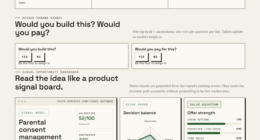

📊 Full opportunity report: AI Agent Infrastructure: Building Robust Security And Guardrails on IdeaNavigator AI — validation score, market gap, and execution plan.

Get the latest gadgets delivered free — and shop member deals
- Fast, free delivery on millions of items
- Access to Prime Big Deal Days deals on October 6–7
- Prime Video, Amazon Music and more included
TL;DR
A security proxy for MCP servers is being developed to add permission controls, audit trails, and safeguards for AI agent integrations. This addresses rising security risks as enterprises deploy MCP faster than reviews can keep up.
IdeaNavigator AI reports that a new security proxy for MCP servers is being tested to add permission controls, audit logging, and safety guardrails for enterprise AI tools. This initiative responds to increasing security risks as companies rapidly deploy MCP-based AI agent integrations without sufficient safeguards, posing potential vulnerabilities. For more on AI security, see The Agent Trap: Why 90% of AI “Launches” Are Infrastructure Liars.
The proposed security and guardrail layer is designed specifically for platform/security engineers managing MCP servers that expose internal tools to AI agents. Currently, many teams wire MCP servers into production without permission models, audit trails, or guardrails, allowing any connected agent to invoke tools with full privileges. Your Coding Agent Is an Attack Surface: The Claude Code Security Reckoning. This creates significant security vulnerabilities, especially as MCP has become the standard for agent-tool integration in 2025-2026.
The core feature of the new security layer is a proxy that sits in front of existing MCP servers, adding per-tool allowlists, per-agent identity verification, human approval gates for destructive actions, rate limiting, and a searchable audit log of all tool invocations. Learn more about security considerations for coding agents. These features aim to mitigate prompt-injection-driven tool abuse and unauthorized access. The development is currently in the testing phase, with plans to publish an open-source MCP audit proxy to gather feedback and promote adoption.
Market sources indicate that this security proxy will be offered as a per-server monthly subscription, with an enterprise tier including SSO, policy packs, and compliance exports. The initiative is driven by the need to secure AI agent infrastructure as enterprises expand their use of MCP-based tools.
Why Enterprise Security for MCP Matters Now
This development is crucial because it addresses the growing security risks associated with rapid MCP deployment in enterprise environments. Without permission controls, audit trails, or safeguards, companies face potential data breaches, malicious tool abuse, and compliance violations. Implementing these guardrails helps protect sensitive internal tools and data, reducing the attack surface for malicious actors and accidental misuse. As AI-driven automation becomes more prevalent, establishing robust security infrastructure is vital for maintaining trust and integrity in enterprise AI systems.
As an affiliate, we earn on qualifying purchases.
Rapid Adoption of MCP and Emerging Security Challenges
Since MCP became the de facto standard for agent-tool integration in 2025-2026, enterprises have accelerated deployment of MCP servers to facilitate AI automation. However, this rapid adoption has outpaced security reviews, leading to vulnerabilities such as unpermissioned tool calls and lack of auditability. Documented attack vectors, including prompt injection and privilege escalation, have increased concern among security teams. Currently, there are no standardized security guardrails for MCP, prompting the development of specialized solutions like the proposed proxy security layer.
Earlier efforts have focused on improving authentication and access controls, but comprehensive permission models and audit capabilities remain limited. Industry experts emphasize that adding a security proxy is a practical first step to mitigate risks while broader security frameworks are developed.
“Implementing a proxy with allowlists and audit logs is a critical step toward securing MCP-based AI tools in enterprise environments.”
— an anonymous security researcher
MCP server permission control tools
As an affiliate, we earn on qualifying purchases.
As an affiliate, we earn on qualifying purchases.
Unanswered Questions About Deployment and Adoption
It is not yet clear how widely the open-source MCP audit proxy will be adopted by enterprises or what specific policies will be included in the enterprise tier. The effectiveness of the proxy in preventing sophisticated attacks and integrating with existing security frameworks remains to be validated through real-world deployment. Additionally, the timeline for broader rollout and potential challenges in integration are still developing.
audit logging software for AI integrations
As an affiliate, we earn on qualifying purchases.
As an affiliate, we earn on qualifying purchases.
Next Steps for Security Proxy Development and Adoption
The team plans to publish the open-source MCP audit proxy soon to facilitate community testing and feedback. Concurrently, they will conduct interviews with twenty enterprise teams to identify key policy features needed in paid tiers. Further development will focus on refining permission controls, expanding audit capabilities, and integrating with enterprise security systems. Widespread adoption and validation are expected over the coming months, shaping future standards for MCP security.
As an affiliate, we earn on qualifying purchases.
Key Questions
How does the security proxy improve MCP server safety?
The proxy adds permission controls, audit logging, and human approval gates to prevent unauthorized tool calls, track activity, and mitigate abuse or malicious actions.
Will this solution be available for all enterprises?
The initial plan is to release an open-source proxy for testing, with enterprise tiers offering additional features like SSO and compliance tools. Adoption depends on security needs and integration efforts.
What risks remain even after deploying the proxy?
While the proxy addresses many security concerns, sophisticated attacks or misconfigurations could still pose risks. Ongoing security review and updates will be necessary.
When will broader deployment be expected?
Deployment is in early testing phases, with wider adoption anticipated over the next several months as feedback and improvements are incorporated.
How does this development fit into overall AI security strategies?
It provides a practical, first-layer safeguard for MCP-based AI tools, complementing broader security policies and controls in enterprise environments.
Source: IdeaNavigator AI
Fall Picks
fall essentials
As an affiliate, we earn on qualifying purchases.