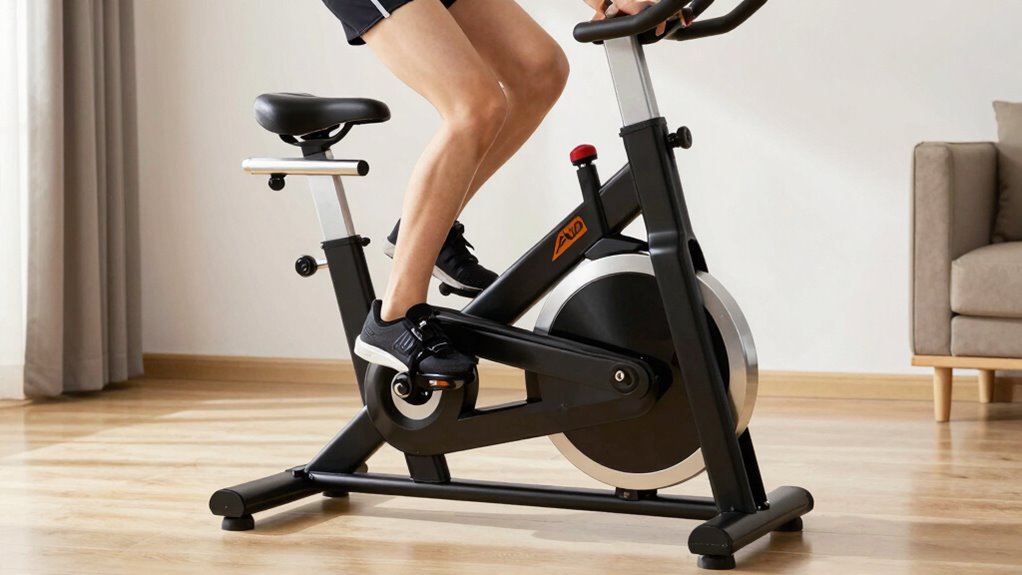
To set up your exercise bike for ideal comfort and performance, start by adjusting the seat height so your leg is slightly bent at the bottom of each pedal stroke. confirm your hips stay level and your knees align with the pedals to avoid strain. Fine-tune the fore-aft position and saddle angle for a perfect fit. For more tips on achieving the best setup and maintaining comfort during long rides, keep exploring these guidelines.

Get the latest gadgets delivered free with Prime
- Fast, free delivery on millions of items
- Prime Video, Amazon Music and more included
- Member-only deals all year
Key Takeaways
- Measure your inseam with shoes on and set the seat so your leg is slightly bent at the bottom of pedaling.
- Ensure your hips stay level and stable during riding to maintain proper posture and prevent discomfort.
- Position the saddle fore-aft so the knee aligns over the pedal axle, with a natural knee bend at the bottom of the pedal stroke.
- Adjust saddle height regularly for comfort, ensuring your heel can rest on the pedal at the lowest point with a slight knee bend.
- Fine-tune saddle angle and position, and seek professional help if persistent discomfort or improper alignment occurs.
exercise bike seat height adjustment
As an affiliate, we earn on qualifying purchases.
As an affiliate, we earn on qualifying purchases.
Why Proper Seat Height Matters for Your Exercise Bike
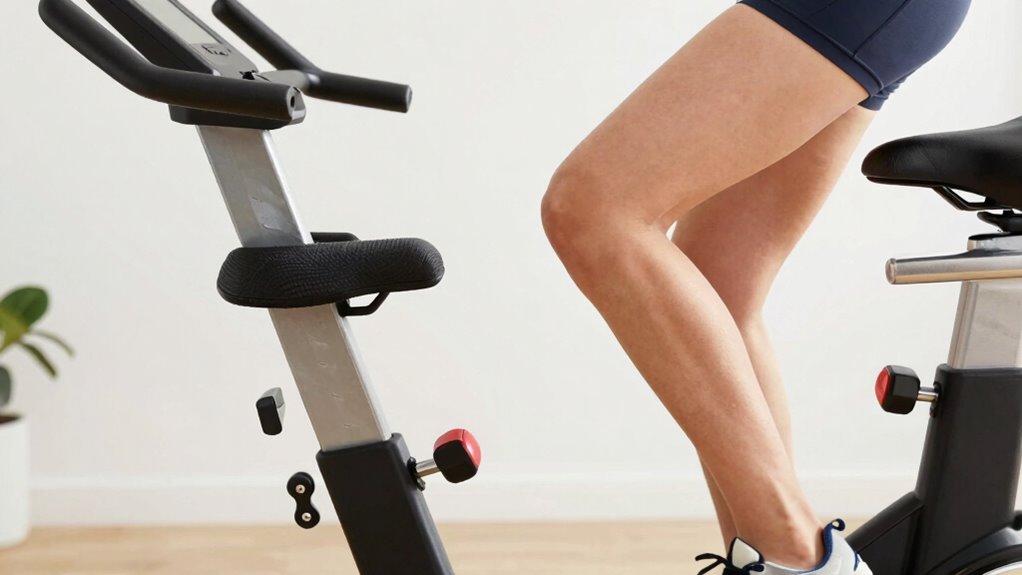
Setting your exercise bike’s seat at the correct height is essential for a comfortable and effective workout. Proper seat height improves your cycling posture, reducing strain on your knees and back. When the seat is too high or low, you’ll feel discomfort and may compromise your form, leading to less efficient pedaling. The seat materials also matter; cushioned seats or those with adjustable padding can enhance comfort during longer rides. An ideal seat height allows your leg to extend almost fully at the bottom of each pedal stroke, with a slight bend in your knee. This position ensures maximum power transfer and minimizes fatigue. Prioritizing correct seat height helps prevent injuries and makes your exercise sessions more enjoyable and productive.
As an affiliate, we earn on qualifying purchases.
How to Measure Your Inseam for Correct Seat Height
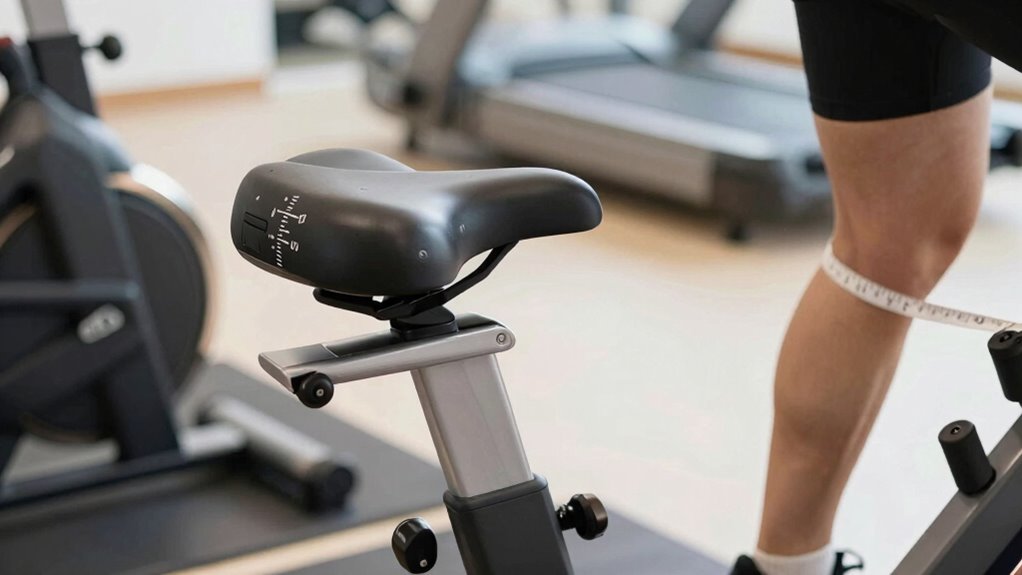
To accurately determine your ideal seat height, start by measuring your inseam. Wear your cycling shoes to ensure an accurate measurement, as they affect your leg length and positioning. Stand upright with your back against a wall, place a book or ruler between your legs, and raise it until it contacts your crotch. Mark or note the distance from the floor to the top of the book. This inseam measurement helps set your seat height so your leg is slightly bent at the bottom of each pedal stroke, optimizing power and comfort. Proper seat height also influences your heart rate during exercise—too high or low can cause inefficiency. Use this measurement as a guide to make precise adjustments, ensuring a comfortable, effective workout. Additionally, understanding durable survival gear essentials can be beneficial for maintaining equipment and ensuring safety during extended use. Knowing how to properly adjust your bike can also prevent strain and injury during rides. Regularly checking your bike components can help maintain optimal performance and safety, especially when integrating powerful marketing strategies to promote your fitness journey.
As an affiliate, we earn on qualifying purchases.
How to Adjust Your Exercise Bike Seat for Comfort and Performance
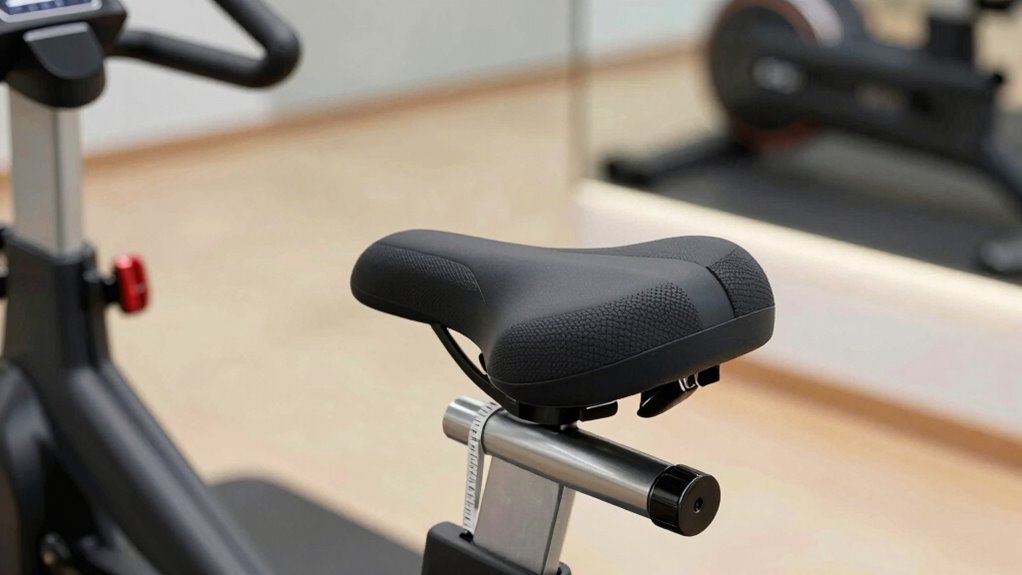
Ensuring your exercise bike seat is properly adjusted can substantially enhance your comfort and performance during workouts. Start by sitting on your bike and placing your heel on the pedal at the lowest point; your leg should be fully extended with a slight bend in the knee. Adjust the seat height if necessary, ensuring your hips stay level and stable during pedaling. Proper seat positioning helps you maximize your workout routines and prevents discomfort or injury. Consider bike accessories like cushioned seats or padded shorts if needed for added comfort. Regularly check and fine-tune your seat adjustments to maintain ideal alignment. Remember, a well-positioned seat not only improves comfort but also boosts your efficiency, helping you achieve your fitness goals more effectively. Additionally, maintaining correct posture during your workout can prevent strain and ensure a safer, more effective exercise session. To further optimize your exercise experience, familiarize yourself with ergonomic bike setup principles to prevent long-term discomfort. Incorporating proper alignment techniques can further enhance your comfort and reduce the risk of injury over time. Also, paying attention to seat padding can make long rides more comfortable and reduce pressure points. Incorporating adjustable components can allow for more precise customization of your bike setup, ensuring sustained comfort during extended sessions.
exercise bike comfort accessories
As an affiliate, we earn on qualifying purchases.
As an affiliate, we earn on qualifying purchases.
How to Recognize If Your Bike Seat Is Properly Adjusted
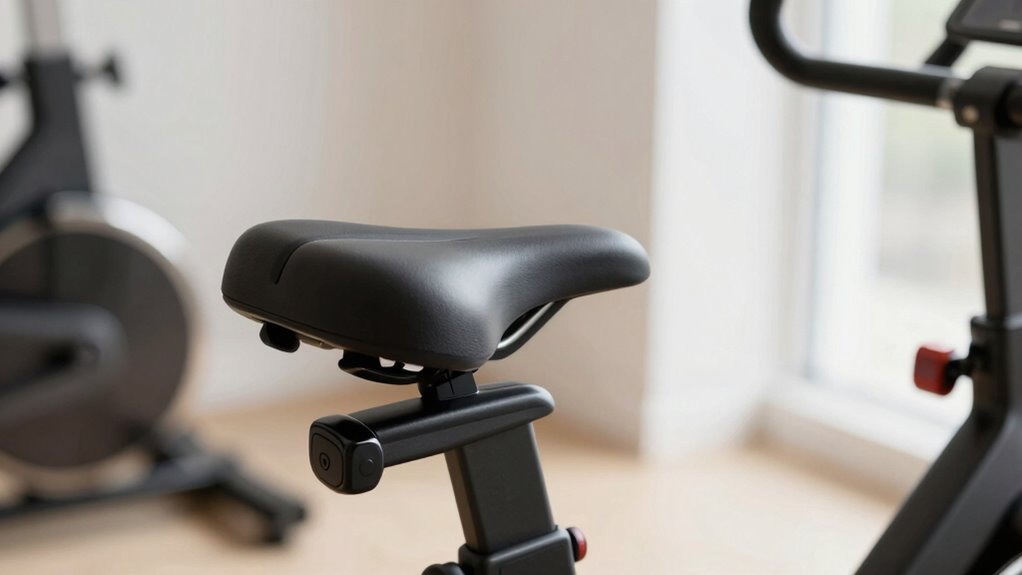
A properly adjusted bike seat should feel comfortable and allow for efficient pedaling. You’ll know it’s right if your body maintains an ergonomic posture, reducing strain and fatigue. When seated correctly, your hips stay level, and your knees bend slightly at the bottom of each pedal stroke. You should feel balanced muscle engagement without overexertion or discomfort. Ensuring the correct seat height helps prevent injury and promotes better performance during your workout. Additionally, an appropriate bike fit can enhance overall comfort and efficiency, making your exercise sessions more effective. Paying attention to ergonomic posture can also help minimize long-term joint stress and improve your cycling experience. Proper bike adjustment is crucial for maintaining comfort and avoiding common issues like saddle soreness or knee pain.
How to Set the Right Fore-Aft Position for Comfort and Efficiency
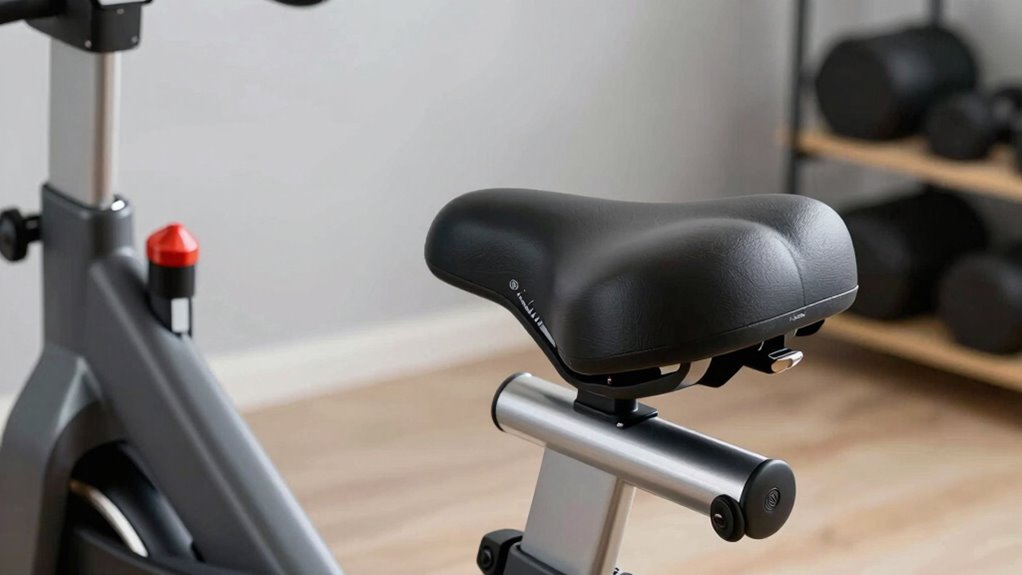
Adjusting the fore-aft position of your bike seat is crucial for both comfort and efficiency. Proper positioning ensures your hips stay stable and power transfer is optimized. To find the right spot, sit on your bike and place your feet on the pedals, then pedal backward. Use this table to fine-tune your setup:
| Pedal Type | Ideal Fore-Aft Position | Bike Accessories to Consider |
|---|---|---|
| SPD, Clipless | Ball of foot over the pedal axle | Pedal straps for control |
| Platform | Slightly forward of the pedal axle | Seat cushions for comfort |
| Toe Cage | Just behind the pedal axle | Adjustable seat posts |
| Toe Clips | Slightly behind the pedal axle | Bike mirrors or lights |
This setup maximizes efficiency while maintaining comfort, regardless of your pedal type or accessories. Additionally, understanding the correct saddle position can greatly improve your riding experience. Ensuring your bike fit is properly adjusted can also prevent discomfort and injuries over time, which highlights the importance of a proper bike setup.
How to Get Your Knee Bend and Pedal Alignment Just Right
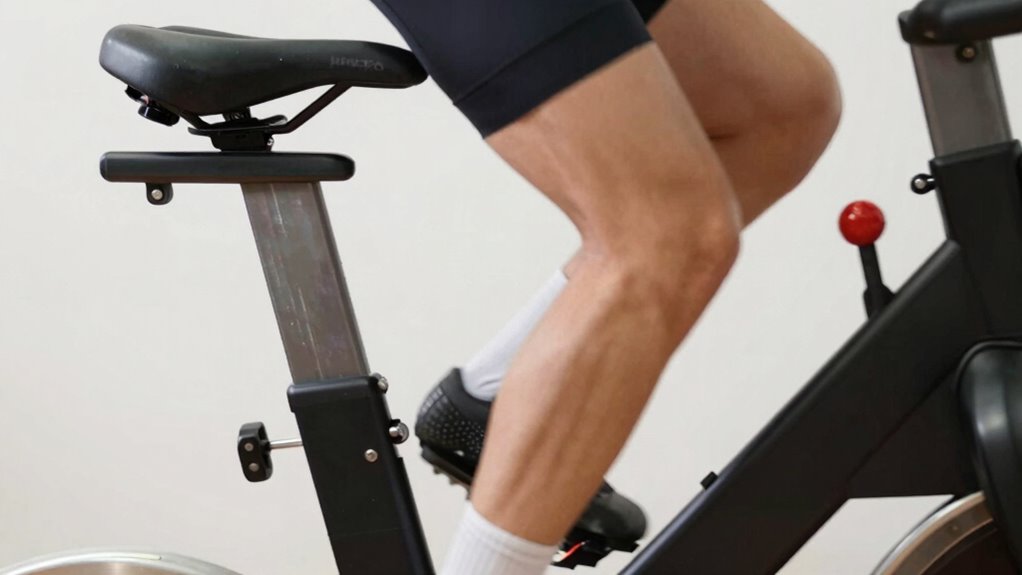
Getting your knee bend and pedal alignment just right is essential for comfort and preventing injury during your rides. Proper alignment guarantees your frame stability and allows for smooth pedal cadence. To achieve this, start by adjusting your seat height so your knee has a slight bend at the bottom of each pedal stroke. Keep your hips level and avoid shifting side to side. Check that your pedals are aligned with your knees, not too far forward or back. Remember, consistent pedal cadence helps maintain proper form. When your knee bend feels natural and your pedals stay aligned with your knee joint, you’re on the right track. Additionally, understanding proper bike fit ensures you’re aware of any potential biases in product recommendations. Ensuring your bike components are compatible with your body size and riding style can also enhance comfort. Paying attention to ergonomic principles can help optimize your setup and reduce strain. Be mindful that adjusting your saddle, including fore-aft position, can further improve your comfort and alignment during rides. Incorporating correct posture techniques can also support proper alignment and help prevent discomfort over longer distances.
How to Test and Fine-Tune Your Seat During Rides
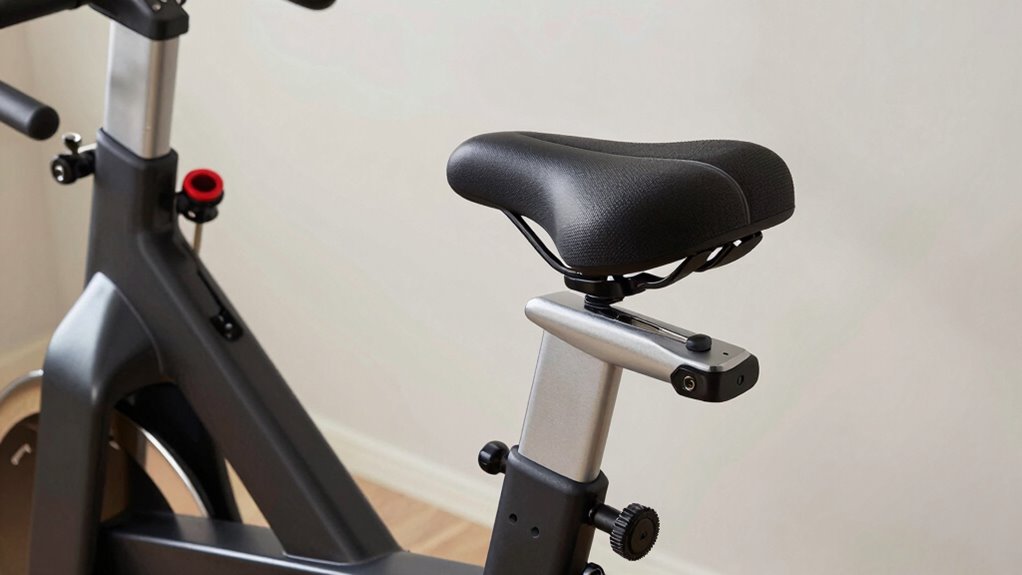
During your ride, don’t be afraid to adjust your seat mid-ride to find the best position. Keep an eye on how comfortable you feel and note any discomfort or pain. Making small tweaks as you go helps guarantee your seat stays fine-tuned for comfort and performance. Additionally, monitoring your physical activity can help optimize your setup for both safety and effectiveness. To ensure your bike setup aligns with regional cycling standards, consider how local terrain and climate might influence your seat adjustments. Being aware of environmental noise factors can also contribute to a more comfortable and distraction-free riding experience. Regularly practicing passive voice detection techniques can help improve your overall writing clarity. Remember to periodically verify your bike safety checks, especially if riding in varying environmental conditions, to maintain optimal comfort and safety.
Adjust Seat Mid-Ride
If you start to feel discomfort or notice your form slipping while riding, fine-tuning your seat mid-ride can make a significant difference. Adjusting your bike saddle selection on the fly helps maintain proper cycling posture and prevents strain. To do this effectively:
- Check if your hips are rocking—indicating the saddle is too high or low
- Slightly shift the saddle forward or back to improve knee alignment
- Test different saddle angles to reduce pressure and enhance comfort
- Maintain a steady, controlled pedal stroke during adjustments
Monitor Comfort Levels
To guarantee your saddle remains comfortable throughout your ride, it’s important to regularly monitor how it feels. Pay attention to your monitor posture, ensuring you sit upright without slouching, which can cause discomfort. During your ride, check if the seat cushioning feels firm enough but still absorbs shock where needed. If you notice persistent discomfort or pressure points, adjust the seat slightly forward or backward to relieve tension. Keep your hips stable and avoid excessive rocking, as this indicates the seat might be too high or low. Periodically test different positions during your ride to find the sweet spot. This proactive approach helps prevent strain and assures consistent comfort, allowing you to focus on your workout without distraction.
Tips for Staying Comfortable During Long and Intense Rides
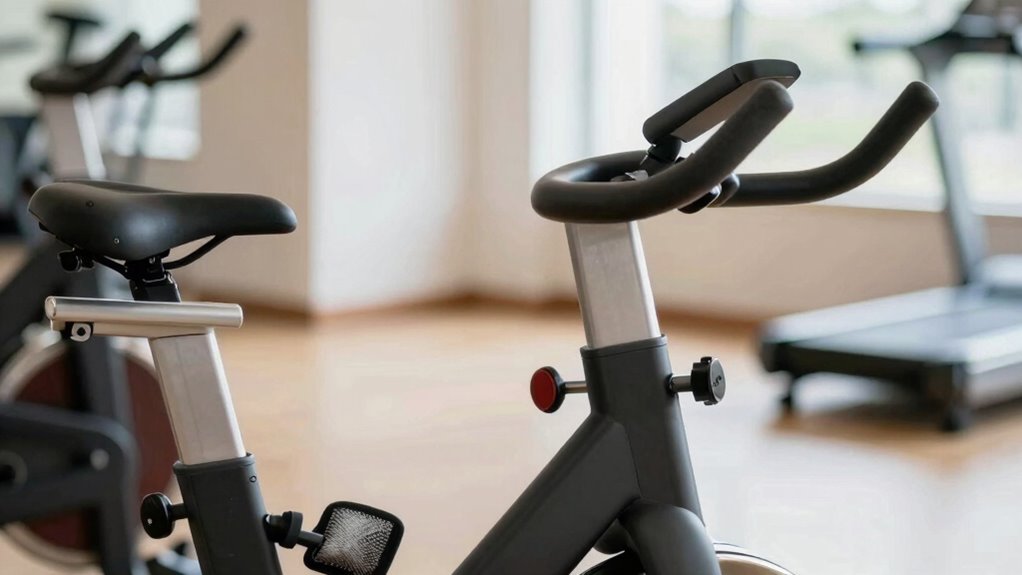
Long and intense rides can test your comfort levels, but small adjustments can make a big difference. To stay comfortable, consider optimizing your bike accessories like padded gloves or a gel seat cover. Keep your workout routines varied to prevent fatigue and soreness. Stay hydrated and take short breaks to stretch your legs. Use a fan or cooling towel to manage sweat and prevent overheating. Adjust your saddle height if you feel discomfort, ensuring proper alignment. Incorporate light stretches during breaks to loosen tight muscles. Proper bike accessories and mindful routines help you maintain focus and comfort throughout long rides. Remember, small changes can prevent discomfort from turning into pain, allowing you to enjoy extended sessions without unnecessary strain.
Troubleshooting Common Seat Adjustment Issues
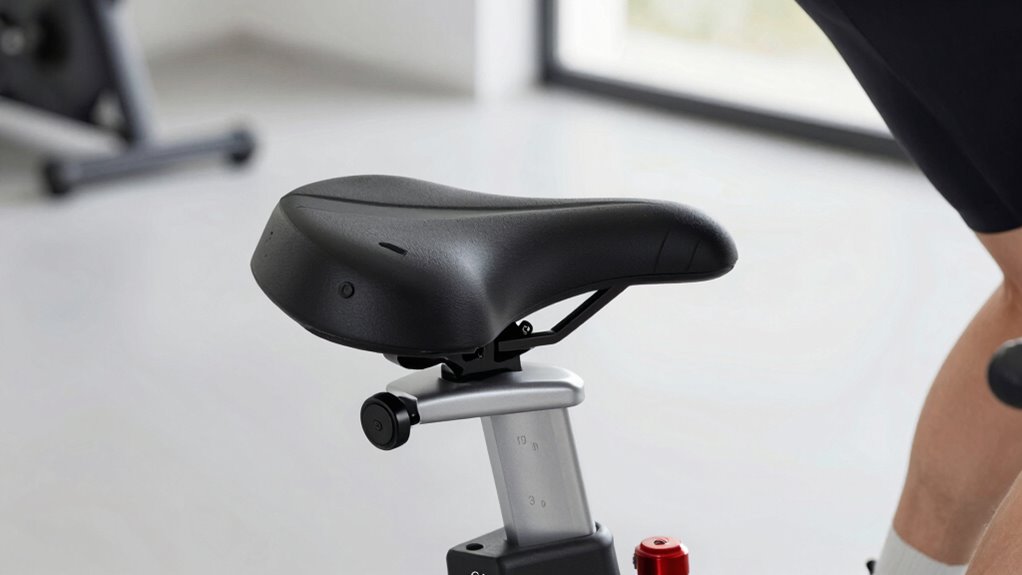
Many people make common adjustment mistakes that cause discomfort or reduce performance. If your seat isn’t properly aligned, it can lead to pain or inefficient pedaling. Checking your seat height and making necessary fixes can greatly improve your riding experience.
Common Adjustment Mistakes
Adjusting the bike seat incorrectly can lead to discomfort and reduce your workout effectiveness. Common mistakes often involve setting the seat height too high or low, which affects pedal resistance and your ability to maintain proper form. An improper seat position can also skew heart rate monitoring accuracy, making it harder to track progress effectively. To avoid these issues, watch out for these mistakes:
- Not checking if your knee slightly bends at the bottom of each pedal stroke
- Forgetting to tighten seat bolts securely after adjustment
- Ignoring your body’s feedback during rides
- Overlooking the importance of adjusting pedal resistance for different workouts
Discomfort Causes and Fixes
Incorrect seat adjustments are a common cause of discomfort during your workout, which can lead to distraction and decreased motivation. If your bike ergometer’s saddle is too high or low, you may experience knee strain or sore hips. Poor saddle padding can also contribute to discomfort, especially during longer sessions. Adjusting the saddle height properly reduces pressure on sensitive areas and ensures a smooth pedal stroke. If you feel excessive pressure on your sit bones, consider adding or upgrading saddle padding for extra cushioning. Confirming the saddle is aligned correctly and the padding is comfortable helps prevent irritation and pain. Addressing these issues promptly keeps your workout enjoyable and minimizes the risk of injury caused by improper seat setup.
Proper Seat Height Checks
To make certain your seat height is set correctly, start by standing next to your bike and positioning the pedal at the 6 o’clock position (the bottom of the pedal stroke). Check if your knee has a slight bend when the foot is on the pedal—this promotes proper cycling posture. If you feel discomfort or your hips sway, adjust the saddle height accordingly. Be mindful of saddle materials; some may cause soreness if set too high or low. Proper checks include:
- Ensuring your hips stay level during pedaling
- Confirming your knee’s bend is around 25–35 degrees
- Testing different saddle materials for comfort
- Rechecking seat height after adjustments for suitable fit
These steps help avoid common seat adjustment issues and improve your cycling experience.
When to Seek Professional Help or Consider Upgrading Your Seat
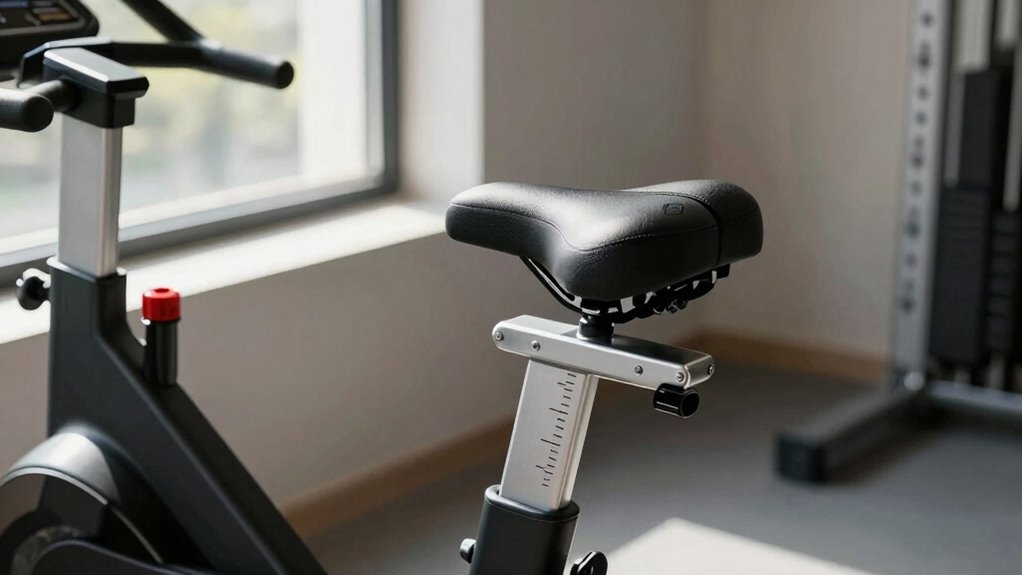
If you’ve been riding your exercise bike regularly and still experience persistent discomfort or pain, it’s a clear sign you should consider seeking professional help or upgrading your seat. Persistent soreness may indicate poor ergonomic posture, which a professional can help correct. Additionally, if your current seat material selection causes irritation or doesn’t provide enough cushioning, an upgrade might be necessary. A specialist can assess your riding position and recommend adjustments or a better-fitting seat. Sometimes, simple modifications like adjusting the angle or padding can improve comfort, but if issues persist, investing in an ergonomic seat designed for your body and riding style is wise. Recognizing when to seek expert advice ensures you enjoy your workouts without unnecessary discomfort.
Frequently Asked Questions
How Often Should I Readjust My Exercise Bike Seat?
You should readjust your exercise bike seat whenever you notice discomfort or after several weeks of regular use. Proper seat height provides ergonomic benefits, reducing strain and improving your workout efficiency. Check for seat material options that offer cushioning and support, ensuring lasting comfort. Regular adjustments help maintain proper alignment, prevent injury, and keep your ride enjoyable. Typically, reassess your seat position every 4-6 weeks or if your comfort level changes.
Can Seat Height Affect My Cycling Posture?
Yes, your seat height can substantially affect your cycling posture. If it’s too high or low, it can lead to poor saddle alignment, causing discomfort and increasing injury risk. Proper seat height guarantees your hips remain stable and your knees are slightly bent at the bottom of each pedal stroke. Adjusting your seat to match your body helps maintain ideal cycling posture, making your ride more efficient and comfortable.
What Signs Indicate My Seat Needs Replacement?
Like worn-out shoes, your bike seat shows signs when it needs replacing. If you notice the seat cushion deterioration, such as cracks or sagging, it’s time for a new one. Also, check the seat tracking mechanism; if it feels loose or doesn’t lock in place properly, replacement is necessary. Ignoring these signs can lead to discomfort and poor posture, so address them promptly for safer, more comfortable rides.
Is It Safe to Modify the Seat Height Beyond Recommendations?
Modifying your bike ergonomics by adjusting the seat height beyond recommendations isn’t safe, especially considering seat material and support. Doing so can cause discomfort, strain, or injury. Always follow manufacturer guidelines to guarantee proper fit and comfort. If you need a higher or lower position, consult a professional to make safe adjustments, preserving both your safety and the integrity of the seat material.
How Do I Choose a Seat Cushion for Extra Comfort?
You can choose a seat cushion that boosts comfort by focusing on ergonomic design and cushion material. Don’t worry—some might think extra padding makes pedaling harder, but a well-designed ergonomic cushion offers support without bulk. Look for memory foam or gel-infused materials for pressure relief, and confirm it fits your bike seat properly. This way, you stay comfortable and maintain good posture during your ride.
Conclusion
Getting your bike seat right isn’t just about comfort—it’s about performance and safety too. While a perfectly adjusted seat can make your rides smoother and more enjoyable, ignoring proper setup might lead to discomfort or even injury. Think of your bike as an extension of your body: when everything’s aligned, your ride feels effortless. So, take the time to fine-tune your setup, and you’ll experience the difference between just riding and truly enjoying every mile.
Columbus Day / Indigenous Peoples' Day Picks
long weekend sales
As an affiliate, we earn on qualifying purchases.