
Understanding resistance types helps you choose the right rowing machine and improve your technique. Magnetic resistance offers smooth, quiet adjustability, perfect for beginners and home gyms. Air resistance increases naturally with effort, great for high-intensity workouts. Water resistance mimics real water rowing, providing an immersive experience, while mechanical resistance is simple, durable, and ideal for learning proper form. Mastering these basics alongside proper posture and stroke technique guarantees a safer, more effective workout as you continue exploring.

Get the latest gadgets delivered free with Prime
- Fast, free delivery on millions of items
- Prime Video, Amazon Music and more included
- Member-only deals all year
Key Takeaways
- Understand different resistance types: magnetic (smooth, quiet), air (dynamic, effort-dependent), water (authentic feel), hydraulic (compact, adjustable).
- Adjust resistance levels appropriately for your fitness goals and ensure instant response for varied workouts.
- Maintain proper rowing form: sit upright, engage core, drive with legs, then back and arms, pulling handle to lower ribs.
- Use legs first to generate power, avoid over-relying on arms, and control the return phase for safety and efficiency.
- Regularly check and clean your machine’s components to ensure consistent resistance and prolong equipment lifespan.
magnetic resistance rowing machine
As an affiliate, we earn on qualifying purchases.
As an affiliate, we earn on qualifying purchases.
What Are the Main Resistance Types in Rowing Machines?

Have you ever wondered how rowing machines create resistance to make your workout effective? The answer lies in the main resistance types that influence rowing biomechanics and overall comfort. Magnetic resistance uses electromagnetic fields to provide smooth, adjustable force, while air resistance employs a fan that increases resistance with your effort. Water resistance mimics the feel of real rowing, using a water-filled tank to generate natural, flowing resistance. Hydraulic resistance relies on pistons to produce a compact, portable option. The ergonomic design of each resistance type affects how comfortably you can maintain proper form throughout your workout. Additionally, filtration and pump protection are crucial for maintaining consistent performance and protecting the equipment components. Proper resistance mechanisms understanding helps you choose a machine that suits your fitness level and goals, ensuring a safe and efficient rowing experience. maintenance practices help extend the lifespan of your equipment and keep resistance levels consistent over time.
As an affiliate, we earn on qualifying purchases.
How Does Resistance Influence Your Rowing Goals?
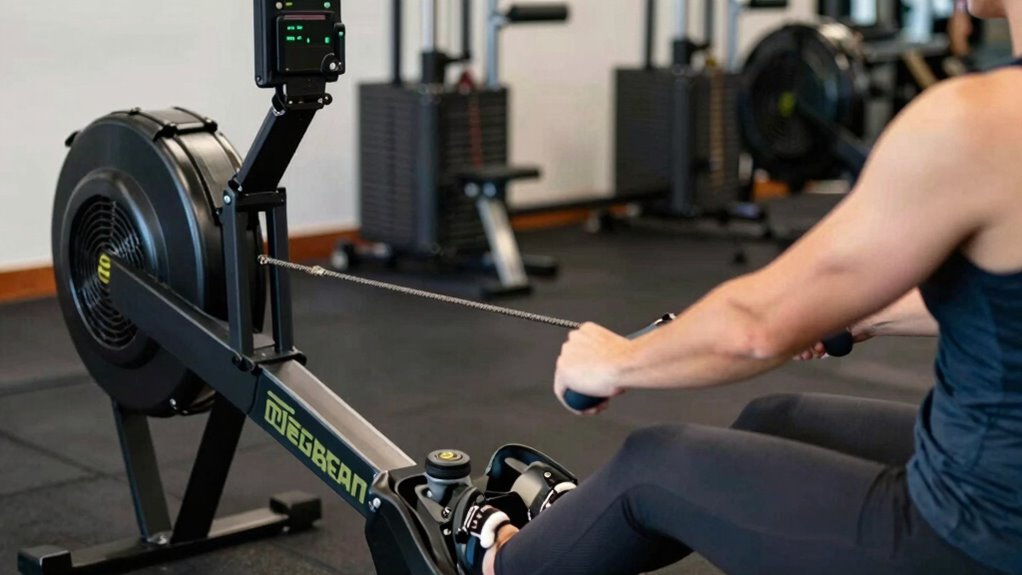
The type of resistance on your rowing machine directly shapes how you achieve your fitness goals. If your aim is to build endurance, lower resistance levels allow you to focus on maintaining a steady rowing posture and consistent rowing rhythm for longer sessions. For strength training, higher resistance challenges your muscles more and requires deliberate control of your form. Resistance influences how you engage your core and legs, impacting your overall rowing posture. When you adjust resistance, you may find it easier or harder to keep a smooth rhythm, which is key to effective workouts. Understanding how resistance affects effort helps you tailor your sessions, whether you’re aiming for cardio endurance or muscle strength, ensuring your rowing technique aligns with your specific goals. Choosing the right resistance type also plays a crucial role in optimizing your workout results. Additionally, selecting appropriate resistance mechanisms can enhance your comfort and prevent injury during training. Awareness of resistance variability can help you adapt your technique for different workout intensities and goals. Incorporating resistance adjustment strategies can further personalize your training experience to match your progress. Recognizing the influence of resistance levels can help you better plan your progression and avoid plateaus.
As an affiliate, we earn on qualifying purchases.
Mechanical Resistance: Pros and Cons for Beginners
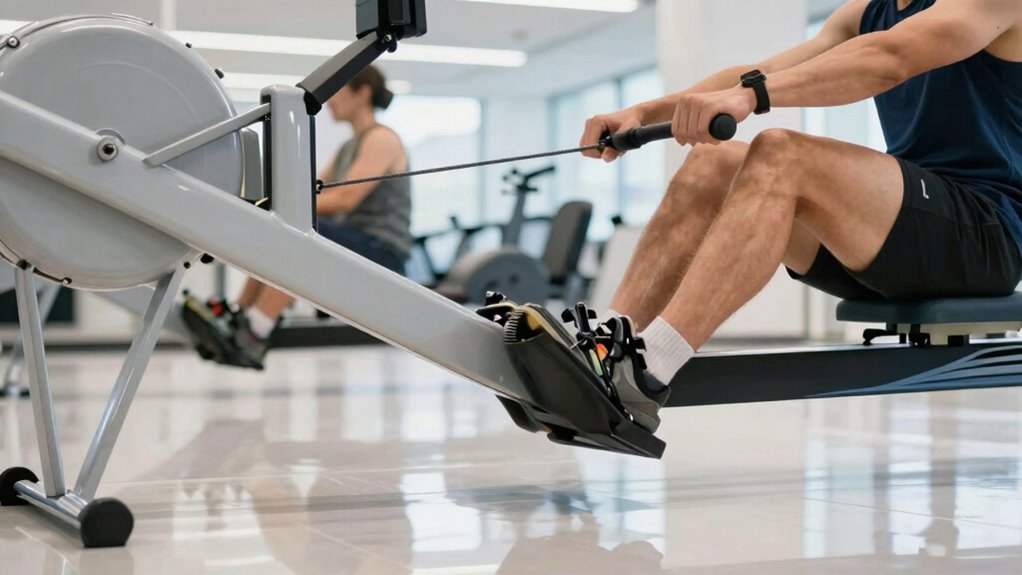
Mechanical resistance rowing machines are simple and easy to use, making them ideal for beginners. You can adjust resistance levels to match your fitness, but they may require regular maintenance to stay in good shape. While durable and straightforward, they might lack the advanced features found in more complex systems. Incorporating basic training techniques can further enhance your workout effectiveness. Regularly checking and maintaining the resistance mechanism helps ensure consistent performance over time. Additionally, understanding the different resistance types can help you select a machine that best suits your fitness goals. Properly setting up your machine according to manufacturer protocols can also improve safety and longevity. Exploring regional variations in fitness equipment preferences can help you choose a machine that aligns with your local availability and support services.
Simplicity and Accessibility
Because mechanical resistance rowing machines are straightforward to operate, they’re often a top choice for beginners seeking simplicity and accessibility. Their simple design makes it easy to maintain proper ergonomic posture, reducing the risk of discomfort or injury. Quotes on authenticity and existence highlight how focusing on fundamental principles can lead to more effective training. You don’t need to adjust complex settings or learn complicated controls, so you can focus on your form and workout. This ease of use encourages consistent exercise, helping you build cardiovascular benefits over time. Mechanical machines often feature basic, intuitive handles and foot straps that support proper alignment. Plus, their durability means they require minimal maintenance, making them accessible for home use. Additionally, the Free Floating resistance mechanism allows for a more natural rowing motion, enhancing the overall workout experience. The simple design also contributes to lower manufacturing costs, making these machines more affordable for most users. Their straightforward operation can also reduce training time, enabling beginners to start exercising quickly and confidently. Overall, their simplicity helps you stay motivated while safely gaining the full benefits of rowing, especially if you’re new to fitness or prefer a straightforward workout experience.
Variable Resistance Levels
Variable resistance levels on mechanical rowing machines allow you to adjust the intensity of your workout by changing the resistance, giving you control over how hard you row. This flexibility lets you tailor your session to match your fitness level and goals. With adjustable settings, you can easily switch between light warm-ups and more challenging rows. Resistance levels respond instantly, so you can increase or decrease difficulty on the fly. Additionally, essential oils can be incorporated into recovery routines to promote relaxation and reduce muscle tension after your workout. Incorporating tax planning strategies can help maximize your overall fitness investment by making your training more efficient and cost-effective. Embracing inclusive casting in fitness equipment design ensures that rowing machines accommodate diverse body types and abilities, enhancing accessibility for all users. Benefits include: – Precise control over workout intensity – Suitable for beginners and advanced users – Encourages gradual progression. Some resistance mechanisms may also incorporate mechanical resistance adjustments that require minimal maintenance, contributing to a smoother workout experience. Additionally, adjustable resistance allows users to fine-tune their workout according to specific performance goals. However, some drawbacks are that adjusting resistance levels can sometimes be less smooth than other resistance types, and maintaining consistent settings might require fine-tuning. Overall, variable resistance offers a versatile, customizable experience for all fitness levels.
Maintenance and Durability
Maintaining a rowing machine with mechanical resistance is straightforward, making it a good choice for beginners. Regular user maintenance helps keep the machine in top shape and extends its durability. You should check the machine calibration periodically to ensure smooth operation and consistent resistance levels. Mechanical resistance systems are generally durable, but moving parts like pulleys and resistance pads require occasional inspection and cleaning. Lubricate components as needed to prevent wear and tear. Avoid excessive force during workouts to protect the resistance mechanism. Proper maintenance minimizes breakdowns and ensures your rowing machine performs reliably over time. Since mechanical systems are less complex than electronic ones, they typically demand less technical upkeep, making them a practical, long-lasting option for home use. Additionally, understanding the seasons and environmental factors can help you optimize storage and prolong the lifespan of your equipment. Regularly monitoring component wear can further enhance the longevity of your rowing machine. Incorporating proper storage techniques can also shield your equipment from environmental damage and extend its functional life. Moreover, paying attention to environmental conditions such as humidity and temperature can prevent corrosion and deterioration of metal parts, ensuring your equipment remains in optimal condition over the years.
As an affiliate, we earn on qualifying purchases.
How Air Resistance Machines Work and When to Use Them
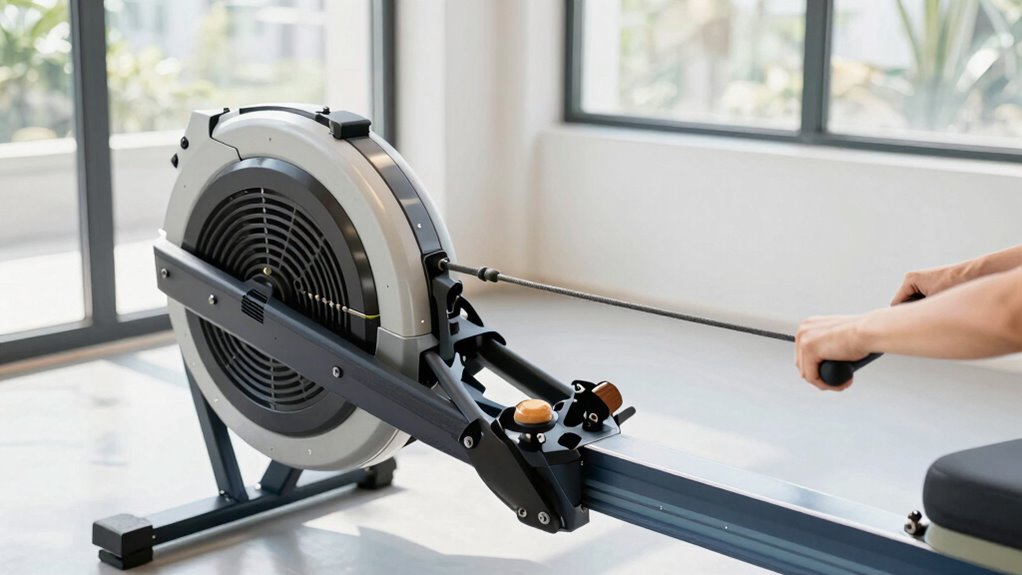
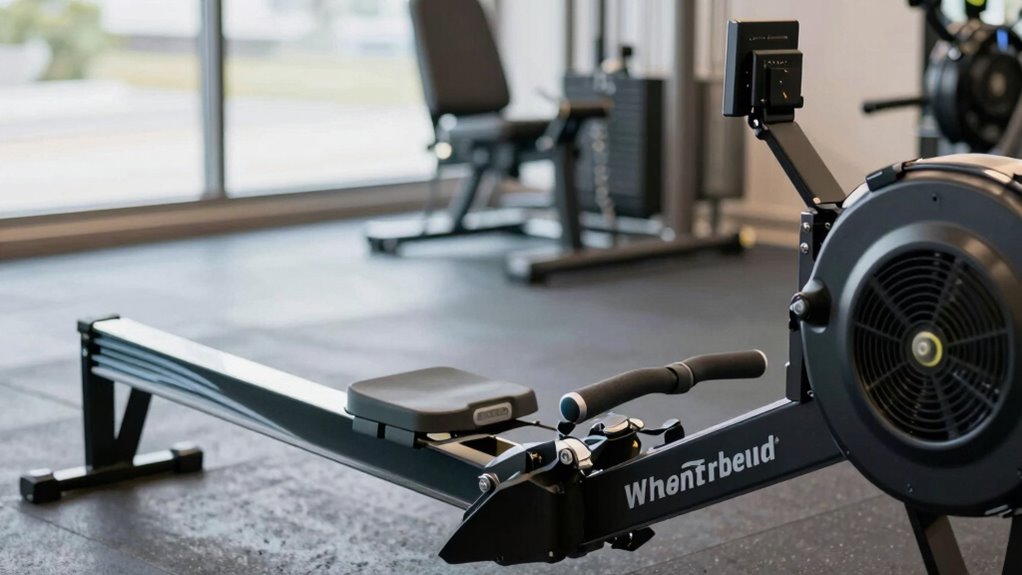
Air resistance rowing machines work by using a fan or turbine that spins as you pull the handle, creating resistance through airflow. This design relies on air resistance mechanics, which means the harder you row, the greater the resistance. The rowing machine airflow adjusts automatically based on your effort, providing a natural and dynamic workout.
Air resistance rowing machines adjust resistance automatically based on your effort for a natural workout.
When to use air resistance machines:
- For high-intensity cardio sessions that challenge your stamina
- When you want a smooth, natural rowing feel
- If you prefer a machine that’s easy to maintain and requires minimal adjustments
Because of their responsive rowing machine airflow, these machines are ideal for athletes and beginners alike. They deliver a consistent, scalable workout that adapts to your effort level, making them versatile and effective.
Magnetic Resistance: Smooth, Quiet, and Adjustable Options
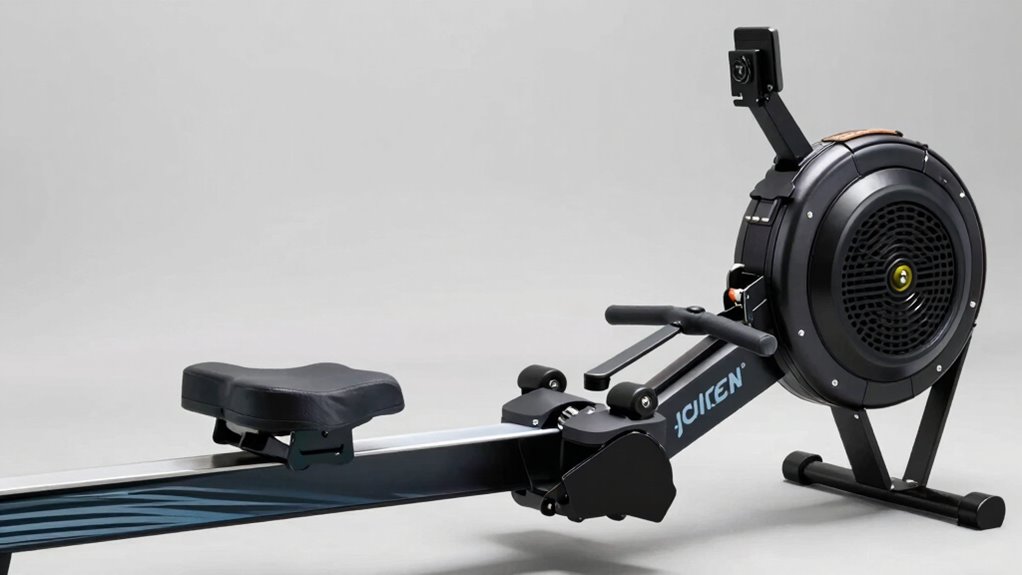
Magnetic resistance rowing machines offer a smooth and quiet workout experience, making them popular for home gyms and quiet environments. They use magnets positioned near a metal flywheel to create resistance, which can be easily adjusted with a simple control panel or knob. This adjustable resistance allows you to customize your workout intensity quickly, whether you’re warming up or pushing for a high-intensity session. Because magnetic resistance operates quietly, it’s ideal if you want minimal noise during your exercise. Plus, the smooth glide helps reduce wear and tear on the machine, providing consistent resistance throughout your row. With these features, magnetic resistance rowers give you a quiet, customizable, and reliable workout that fits seamlessly into your fitness routine.
Water Resistance: Mimicking Real Water Rows and Their Benefits
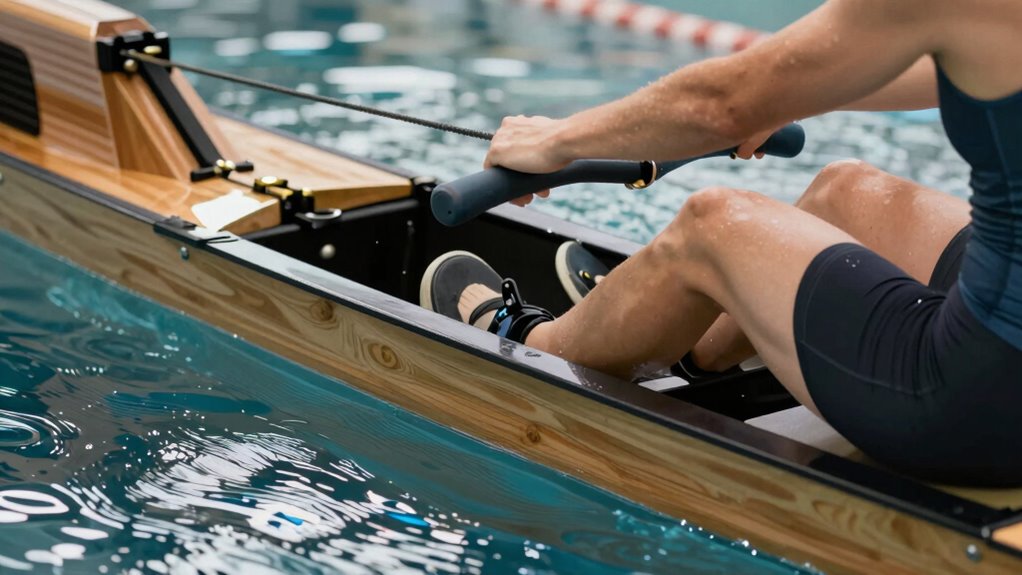
Water resistance gives you a realistic water feel, making your workout more authentic and engaging. You can easily adjust the resistance with a simple change in water level, providing gentle and smooth modifications. This setup helps you stay motivated and comfortable during your rowing sessions.
Authentic Water Feel
When you use a rowing machine with water resistance, you experience a smooth, natural feel that closely mimics rowing on actual water. This authentic water feel enhances your workout by providing resistance authenticity that responds dynamically to your effort. You’ll notice how the resistance increases as you row harder, offering a more realistic and engaging experience.
With water resistance, you benefit from:
- A fluid, seamless stroke that feels natural and consistent
- Resistance that adjusts instantly to your intensity, mimicking real water dynamics
- A calming, soothing sound that enhances motivation and focus
This resistance type creates an immersive environment, making every row feel like you’re gliding across a lake. It’s ideal for those seeking genuine water feel and authentic resistance during their workouts.
Gentle Resistance Adjustment
As you increase your effort on a water resistance rowing machine, you’ll notice how the resistance adjusts smoothly and gradually, closely mimicking the gentle resistance changes experienced when rowing on real water. This gradual adjustment allows for a more natural, flowing stroke, making your workout feel authentic and fluid. Water resistance machines are often beginner friendly options because they provide consistent, progressive resistance without sudden jumps, helping you build strength and endurance safely. The seamless resistance change means you can easily control your intensity, whether you’re just starting or pushing toward a more vigorous session. This realistic feel promotes proper form and coordination, making water resistance rowing machines an excellent choice for athletes of all levels seeking a smooth and adaptable workout experience.
How to Perfect Your Rowing Technique for Safety and Effectiveness
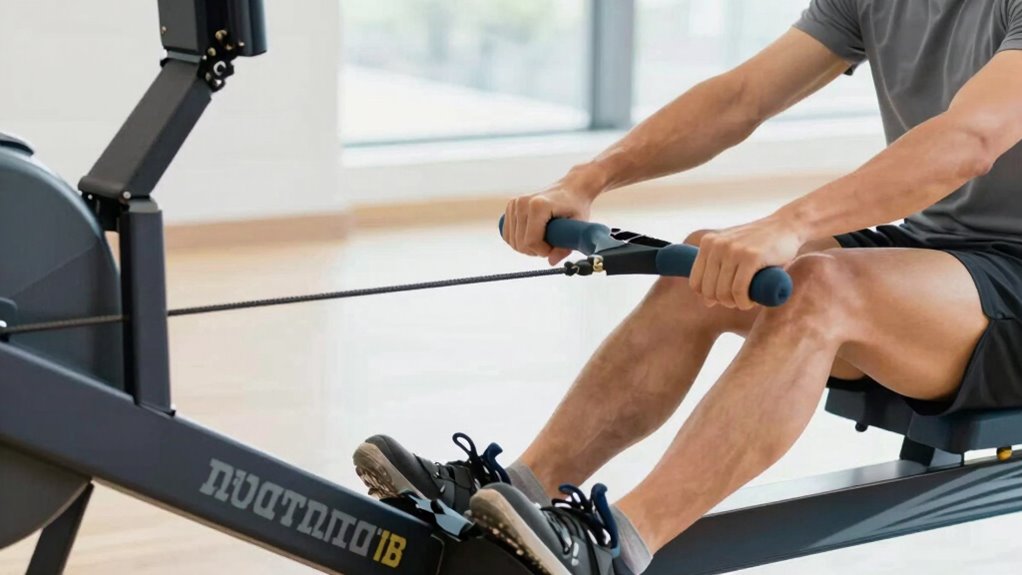
To maximize safety and effectiveness while rowing, it’s essential to master proper technique from the start. Focus on maintaining proper posture—sit upright with shoulders relaxed and core engaged. This supports stroke efficiency and prevents injury. As you row, ensure your legs drive the movement, followed by your back and arms in a smooth, continuous motion. Keep your movements controlled and avoid jerking or overextending. Key tips include:
- Keep your back straight and avoid hunching.
- Drive through your legs rather than pulling with your arms.
- Maintain a steady, consistent pace for better control and endurance.
Common Resistance-Related Mistakes to Avoid While Rowing
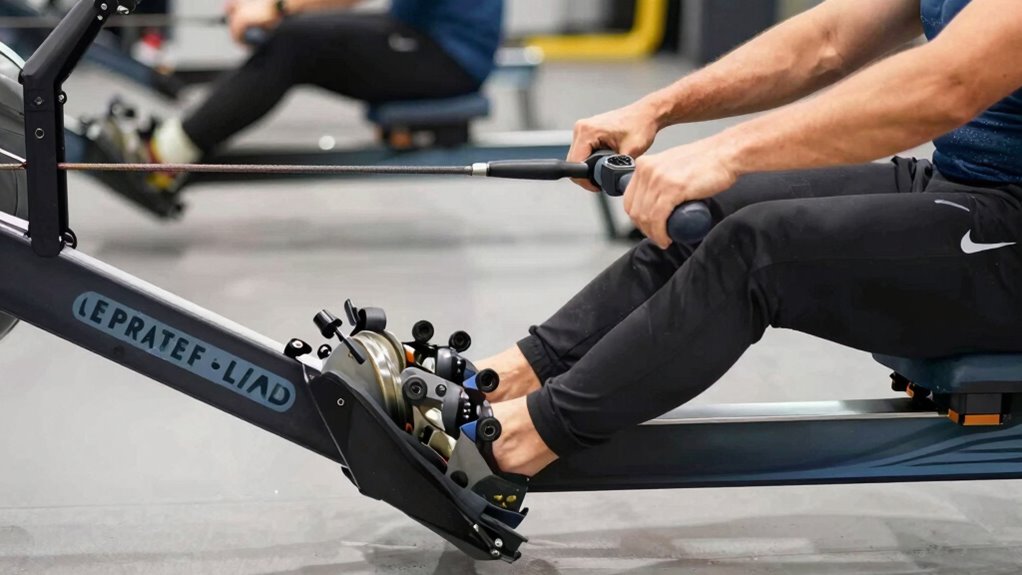
One common resistance-related mistake is relying too heavily on the arms instead of engaging your legs and core. Poor user posture can also undermine your workout, leading to ineffective resistance calibration and increased injury risk. If you don’t set the resistance correctly, you may find yourself overexerting or underchallenged, which hampers progress. Avoid slouching or leaning too far back, as this reduces efficiency and strains your back. Focus on maintaining a straight back, engaging your core, and using your legs to drive the stroke. Regularly check and adjust resistance settings to match your fitness level. Proper resistance calibration ensures consistent effort and prevents your form from faltering, helping you maximize the benefits of each session while minimizing fatigue and injury.
How to Choose the Right Resistance Level for Your Fitness Level
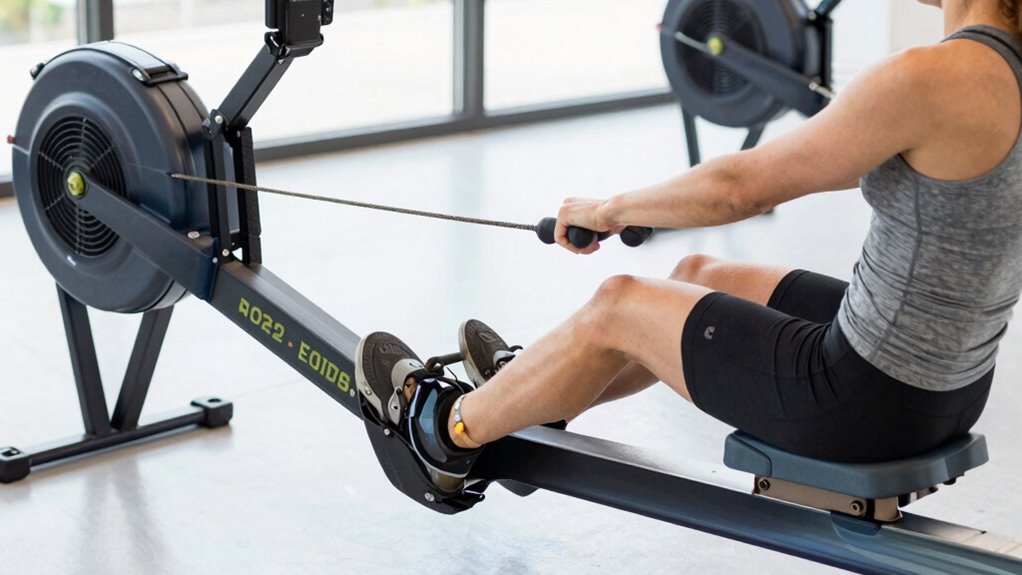
Choosing the right resistance level begins with understanding your current fitness and goals. If you’re aiming for calorie burning, opt for a moderate resistance that challenges you without sacrificing form. For muscle engagement, higher resistance can help build strength but may reduce your calorie burn if too intense. Consider these tips:
- Start with a lower resistance to master proper form and avoid injury
- Gradually increase resistance as your strength and endurance improve
- Focus on maintaining consistent effort to maximize calorie burning and muscle engagement
Adjusting resistance appropriately guarantees you get the most out of each session, whether your goal is weight loss, muscle building, or overall fitness. Listening to your body and tracking progress helps you find the perfect level for your current fitness level.
Frequently Asked Questions
What Are the Best Maintenance Tips for Rowing Machines?
To keep your rowing machine in top shape, regularly clean the machine using a damp cloth to remove sweat and dust, which helps prevent corrosion. Check and adjust the resistance settings as needed to ensure smooth operation. Also, lubricate the chain or slide track periodically, and inspect for loose bolts or worn parts. Proper maintenance prolongs your equipment’s lifespan and guarantees a consistent, effective workout every time you row.
How Do I Track Progress and Measure Performance?
You can track your progress by regularly monitoring key metrics like distance, stroke rate, and calories burned. Use the built-in display or a fitness app to log your sessions and set performance benchmarks. Keep an eye on improvements over time, such as increased stroke efficiency or faster times. Consistently tracking these metrics helps you stay motivated and clearly see your progress, making your workouts more effective and goal-oriented.
Can I Customize Resistance for Different Workout Types?
Yes, you can customize resistance for different workout types, turning your rowing machine into a chameleon that adapts to your needs. Resistance customization allows you to tailor your workout variation, whether you’re aiming for endurance, strength, or interval training. Most machines let you adjust resistance levels easily, giving you control over intensity and ensuring your workouts stay fresh and effective. This flexibility helps you target specific fitness goals with precision.
Are Rowing Machines Suitable for Rehabilitation Exercises?
Rowing machines are suitable for rehabilitation exercises because they offer low-impact, full-body workouts that promote recovery and strength building. They provide significant rehabilitation benefits, especially for improving cardiovascular health and muscle tone without stressing joints. However, always consider safety considerations like proper form and resistance settings, and consult your healthcare provider before starting, to make sure the machine fits your specific recovery needs and prevents injury.
How Do I Prevent Common Injuries While Rowing?
To prevent common injuries while rowing, focus on proper form and injury prevention techniques. Keep your back straight, engage your core, and avoid overextending your arms or legs. Use smooth, controlled movements and listen to your body. Regularly stretch before and after workouts, and start with lower resistance to build strength gradually. Following these tips helps protect your joints and muscles, ensuring a safe, effective rowing experience.
Conclusion
Choosing the right resistance type and mastering proper form can transform your rowing workouts. For example, if you’re just starting, a water resistance machine might feel more natural and engaging, helping you stay motivated. Remember, focusing on technique and adjusting resistance to match your fitness level guarantees safety and progress. With the right setup, rowing becomes not just effective but also enjoyable — making it easier to reach your goals, one stroke at a time.
Fall Picks
fall essentials
As an affiliate, we earn on qualifying purchases.